
Fri Jun 13 13:37:44 UTC 2025: **Summary:**
A report on Tamil Nadu’s financial contributions to central schemes reveals that the state often provides a larger share of funding than the Union government, despite official cost-sharing ratios. This disparity is seen in schemes like the National Social Assistance Programme (NSAP), Pradhan Mantri Awas Yojana (PMAY)-Rural, Pradhan Mantri Matsya Sampada Yojana (PMMSY), and Jal Jeevan Mission (JJM). Chief Minister M.K. Stalin has highlighted this issue, emphasizing the state’s significant financial commitment to implementing these centrally sponsored programs. While the Centre provides base funding, the State Government enhances the benefit to the people of Tamil Nadu by contributing much larger amounts.
**News Article:**
**Tamil Nadu Government Footing Larger Share of Central Scheme Bills, Claims Disparity in Funding**
**CHENNAI, June 13, 2025** – The Tamil Nadu government is bearing a significantly larger portion of the financial burden for several central government schemes, despite official cost-sharing agreements, according to government documents. Chief Minister M.K. Stalin addressed the issue at an event in Salem, stating that the state contributes over 50% of the cost even for schemes named after the Prime Minister.
An analysis of funding for key programs like the National Social Assistance Programme (NSAP), Pradhan Mantri Awas Yojana (PMAY)-Rural, Pradhan Mantri Matsya Sampada Yojana (PMMSY), and the Jal Jeevan Mission (JJM) reveals discrepancies. For example, under the NSAP pension schemes, the Union government provides a base amount, but the state government provides a significantly larger top-up to ensure beneficiaries receive a more substantial pension.
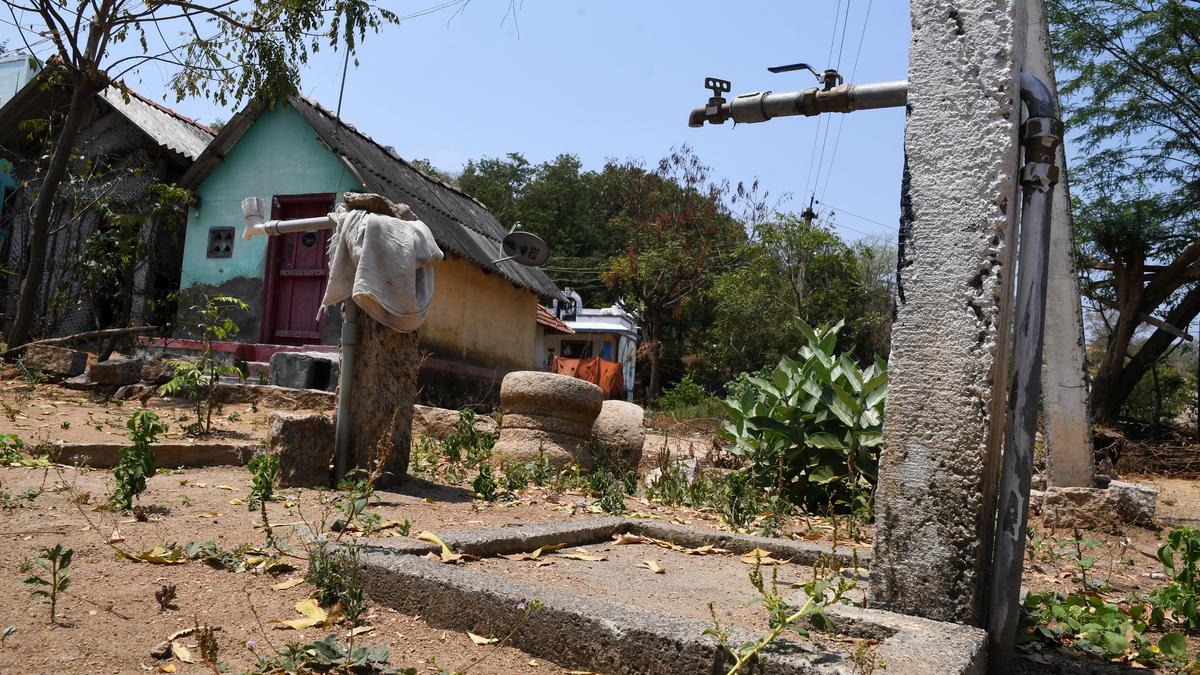
Similarly, under PMAY-Rural, while the cost-sharing ratio is supposed to be 60:40 between the Centre and the State, Tamil Nadu effectively contributes 61% of the unit cost of a house. For PMMSY, the state’s contribution is a disproportionate 73% and for JJM it is 55% in implementation.
These findings raise questions about the equitable distribution of resources between the Union government and states, particularly regarding centrally sponsored schemes. The Tamil Nadu government’s substantial financial commitment underscores its dedication to welfare initiatives, even with the burden of shouldering a larger share of the expenses.
 First Piper