
Tue Jun 10 07:02:54 UTC 2025: **News Article:**
**QWERTY’s Quirky Rise: A Look at the Accidental Keyboard Standard**
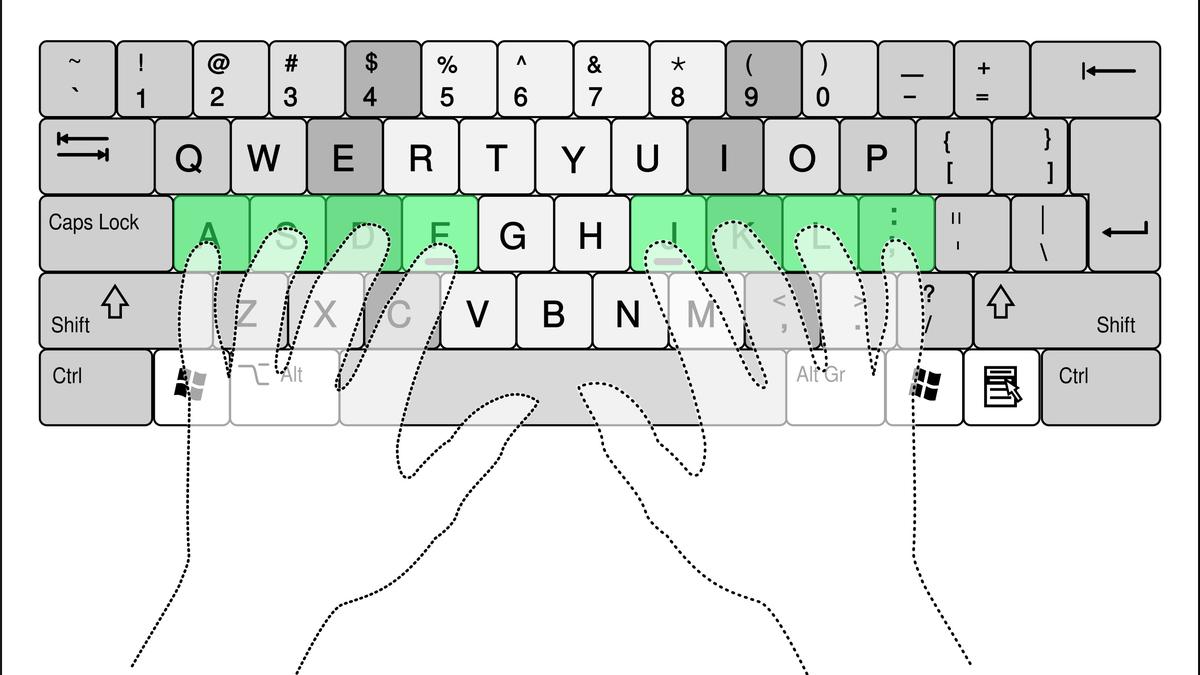
**New Delhi, June 10, 2025 (The Hindu):** In a world dominated by touchscreens and voice assistants, the humble keyboard remains a crucial tool for communication. But have you ever wondered about the seemingly random arrangement of letters on your QWERTY keyboard?
Today’s Cache takes a deep dive into the history of QWERTY, revealing that its ubiquity isn’t due to superior design, but rather a quirky solution to a 19th-century engineering problem.
The QWERTY layout wasn’t an intentional design to maximize typing speed. Instead, it emerged from the limitations of early mechanical typewriters. Christopher Latham Sholes, an American inventor, initially arranged the keys alphabetically on his early typewriters. However, this intuitive layout led to frequent key jams when typists typed quickly, causing the mechanical arms to collide.
Sholes and his team then made an adjustment to slow down the typing to reduce the risk of the typewriter jamming when typed too quickly. They strategically separated commonly paired letters to prevent the mechanical arms from colliding.
The QWERTY layout gained traction when Remington, a major typewriter manufacturer, adopted it. Widespread adoption in typing schools and businesses solidified QWERTY as the standard, creating a network effect that made switching to more efficient layouts difficult.
The QWERTY story serves as a reminder that technological dominance doesn’t always equate to optimal design. Sometimes, a “good enough” solution, adopted at the right time, can become entrenched, hindering the adoption of superior alternatives. History, habit, and practicality often shape our technology as much as pure innovation.
 First Piper