
Sat May 31 10:20:00 UTC 2025: **Summary:**
A new COVID-19 variant, NB.1.8.1, is gaining traction globally and has been detected in the U.S. While it appears more transmissible than the current dominant strain, LP.8.1, it doesn’t seem to evade vaccine protection or cause more severe illness. Experts are monitoring it, but don’t anticipate a large surge in cases in the US. Experts suggest a potential increase in cases this summer due to waning immunity and limited booster uptake. Current vaccines are expected to provide some protection, and updated vaccines are being developed for the fall.
**News Article:**
**New COVID Variant NB.1.8.1 Arrives in the U.S., Experts Monitor for Potential Summer Uptick**
WASHINGTON – A new COVID-19 variant, designated NB.1.8.1, is making its presence known in the United States after gaining momentum globally, raising concerns about a possible summer increase in infections. The World Health Organization (WHO) is monitoring the variant, which has been detected in Europe, Southeast Asia, and North and South America, following a rise in cases in several parts of the world.
Experts say NB.1.8.1 appears to be more transmissible than the dominant LP.8.1 strain, but current data suggest it does not evade protection from vaccines or prior infection any more than the current variant. The WHO also reports no evidence of increased disease severity.
“It’s an important one to track, but it doesn’t show any signs so far of being able to drive a large surge in Covid-19 cases — at least in the U.S.,” said Andrew Pekosz, a virologist at Johns Hopkins Bloomberg School of Public Health.
Despite the lack of evidence of increased severity, some infectious disease doctors warn that NB.1.8.1 could lead to a small surge of infections this summer, citing waning population immunity due to time since the last wave and low booster uptake.
“It may unfortunately come back with a little bit of vengeance on us. Let’s hope that doesn’t happen, but I am concerned that we may be setting ourselves up for that with this combination of factors,” said Dr. Thomas Russo, chief of infectious diseases at the University at Buffalo Jacobs School of Medicine and Biomedical Sciences.
The Centers for Disease Control and Prevention (CDC) reports fewer than 20 sequences of NB.1.8.1 reported in the U.S. to date. State health departments in Arizona and Rhode Island have also confirmed detections. The variant is now dominant in China.
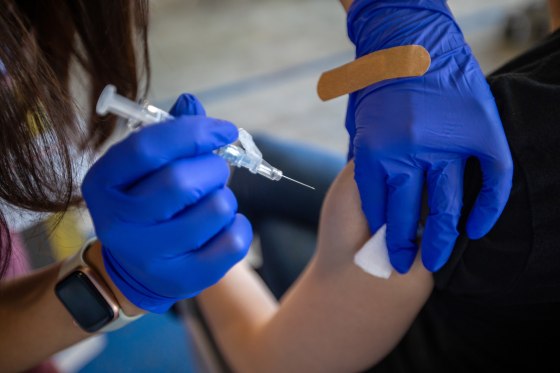
Current COVID-19 vaccines should offer some protection against NB.1.8.1. Updated vaccines targeting the LP.8.1 variant are being developed for the fall, with data suggesting they will also provide protection against the new strain. However, the FDA has indicated that eligibility for the updated shots may be limited to older adults and individuals with underlying medical conditions.
Experts encourage individuals who haven’t been recently vaccinated or infected to consider getting a booster, especially if eligible. Doctors express concern that limiting vaccine access could leave pregnant people and children vulnerable to more severe outcomes, even if the overall impact of NB.1.8.1 appears mild.
 First Piper