
Sun May 25 09:17:15 UTC 2025: **Summary:**
A new species of loach, *Schistura densiclava*, has been discovered in an underground cave in Meghalaya, India. The fish, a type of troglophile, is adapted to cave environments but can also survive above ground. Researchers from Gauhati University identified the fish, noting its distinct thick stripe and unique genetic makeup. The discovery adds to the growing list of cave-dwelling fish species found in Meghalaya, a region known for its extensive cave systems. The cave where the fish was found, Krem Mawjymbuin, has previously been in the news due to a conflict over a religious structure within it.
**News Article:**
**New Cave-Dwelling Fish Species Discovered in Meghalaya**
**Guwahati, May 25, 2025** – A team of zoologists has discovered a new species of loach, *Schistura densiclava*, in an underground cave in Meghalaya, India. The discovery was made in Krem Mawjymbuin, a cave known for both its unique geological formations and recent controversies surrounding a Shivalinga-like structure.
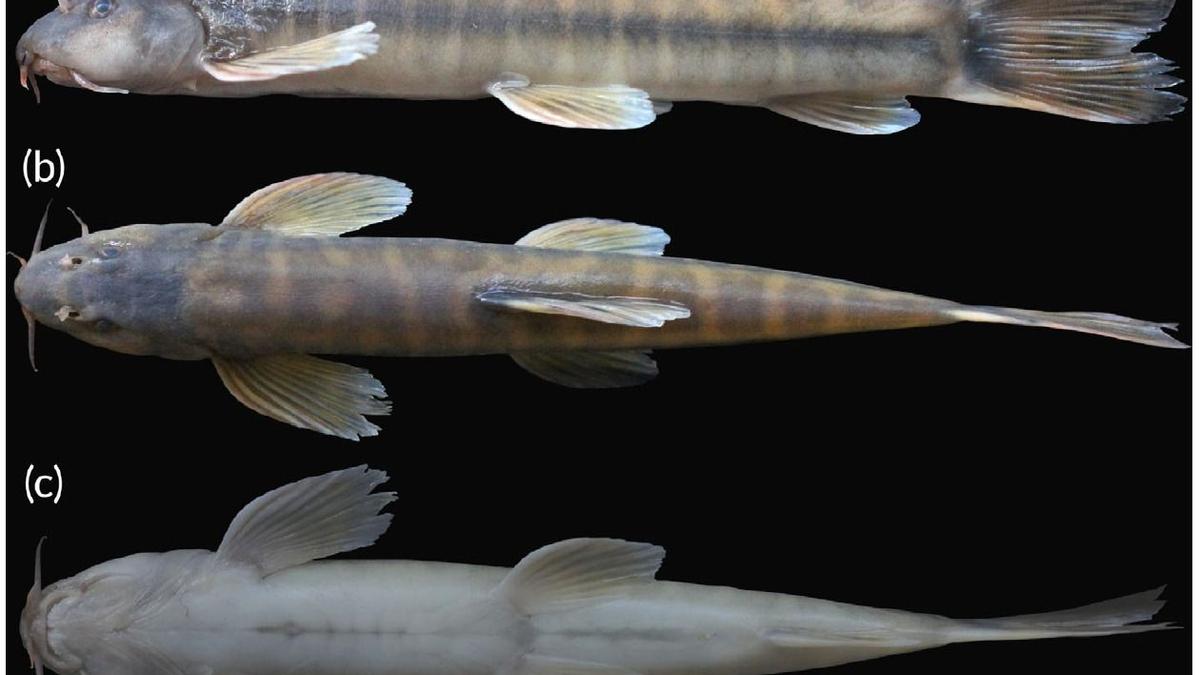
Led by Kangkan Sarma of Gauhati University’s Department of Zoology, the research team identified the fish as a troglophile, an animal adapted to cave environments but capable of surviving above ground. *Schistura densiclava* possesses a pale yellow-green body marked with distinctive greyish-black bars and a prominent thick stripe near its dorsal fin, which inspired its Latin name.
Unlike some other cave-dwelling fish in the region, *Schistura densiclava* retains both pigment and eyesight. Genetic testing confirmed its unique species status, with researchers concluding that its distribution is likely limited to the cave system, suggesting endemism.
The discovery marks the sixth cave-dwelling fish species recorded in Meghalaya, highlighting the region’s rich biodiversity and intricate cave systems. Krem Mawjymbuin, the site of the discovery, has a surveyed length of approximately 1.6 kilometers and made headlines last year when a local village institution banned the worship of a rock formation resembling a Shivalinga inside the cave citing ecological concerns.
The findings, published in the *Journal of Fish Biology*, underscore the importance of continued exploration and conservation efforts in the unique and fragile ecosystems of Meghalaya’s underground caves.
 First Piper