
Sat May 24 05:19:01 UTC 2025: **News Article:**
**Archaeologist Stands Firm on Keezhadi Excavation Report, Disputes ASI Request for Revision**
**Sivaganga, Tamil Nadu – May 24, 2025** – Archaeologist K. Amarnath Ramakrishna is standing his ground regarding his report on the groundbreaking excavations at Keezhadi, an ancient site in Sivaganga district. The Archaeological Survey of India (ASI) requested that he rewrite and resubmit the report, but Mr. Ramakrishna is defending his original findings and conclusions.
In a letter addressed to Hemasagar A. Naik, Director of Exploration and Excavation at the ASI, Mr. Ramakrishna pushed back against suggestions to re-examine the sequence of findings. He stated that his report, submitted in January 2023, already adheres to standard archaeological procedures.
The ASI’s request for revision stemmed from concerns about the nomenclature and justification of the three chronological periods identified at the site, particularly Period I (8th century BCE to 5th century BCE). Mr. Naik cited suggestions from experts calling for “necessary corrections”.
Mr. Ramakrishna clarified that he had previously accepted certain nomenclature changes, communicating them to the ASI in April 2023. He further emphasized that the Keezhadi chronology was meticulously evaluated using stratigraphic sequences, cultural deposits, material culture, and Accelerator Mass Spectrometry (AMS) dating.
Despite the ASI citing authenticity issues with the original report, Mr. Ramakrishna insists that his conclusions are based on detailed findings and comprehensive documentation. He has also promised to address any potential missing data, such as layer numbers. All maps, plates, and drawings were submitted to the ASI in high resolution formats.
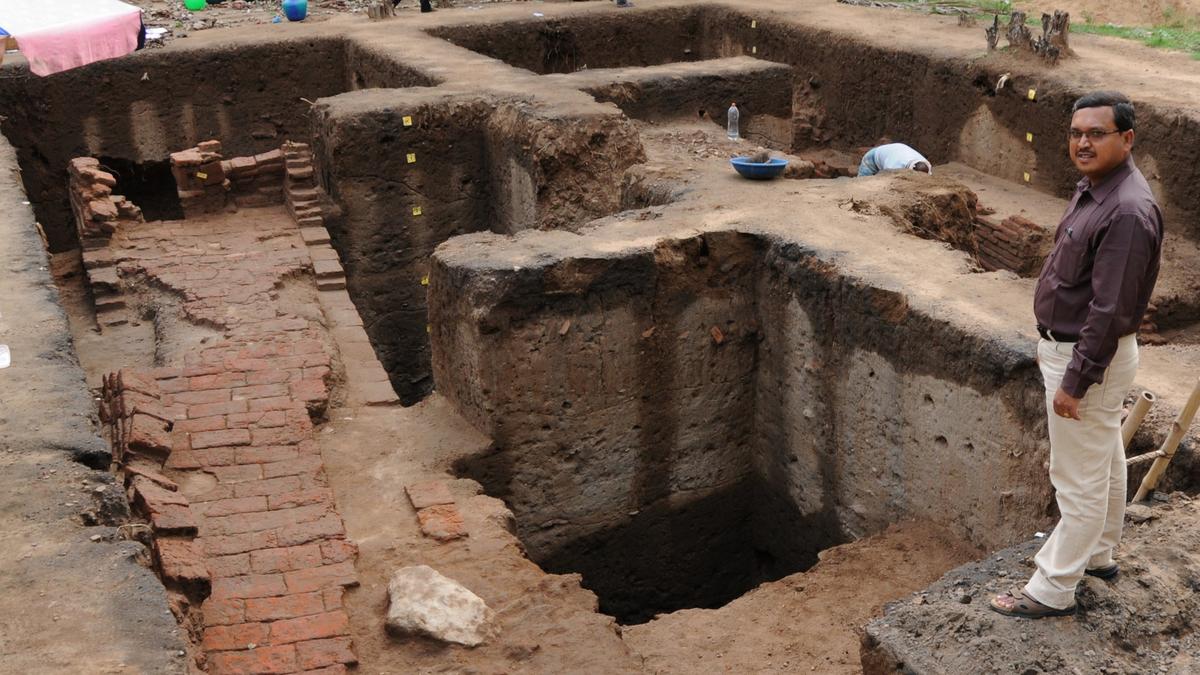
The Keezhadi excavation is considered a significant find, potentially shedding light on an ancient Tamil civilization in the Vaigai Valley dating back to the Sangam era. The ongoing dispute over the excavation report raises questions about the interpretation and presentation of these vital historical discoveries.
 First Piper