
Fri May 09 18:50:00 UTC 2025: ## German Scientists Bunsen and Kirchhoff Discover Caesium, Swedish Chemist Setterberg Isolates It
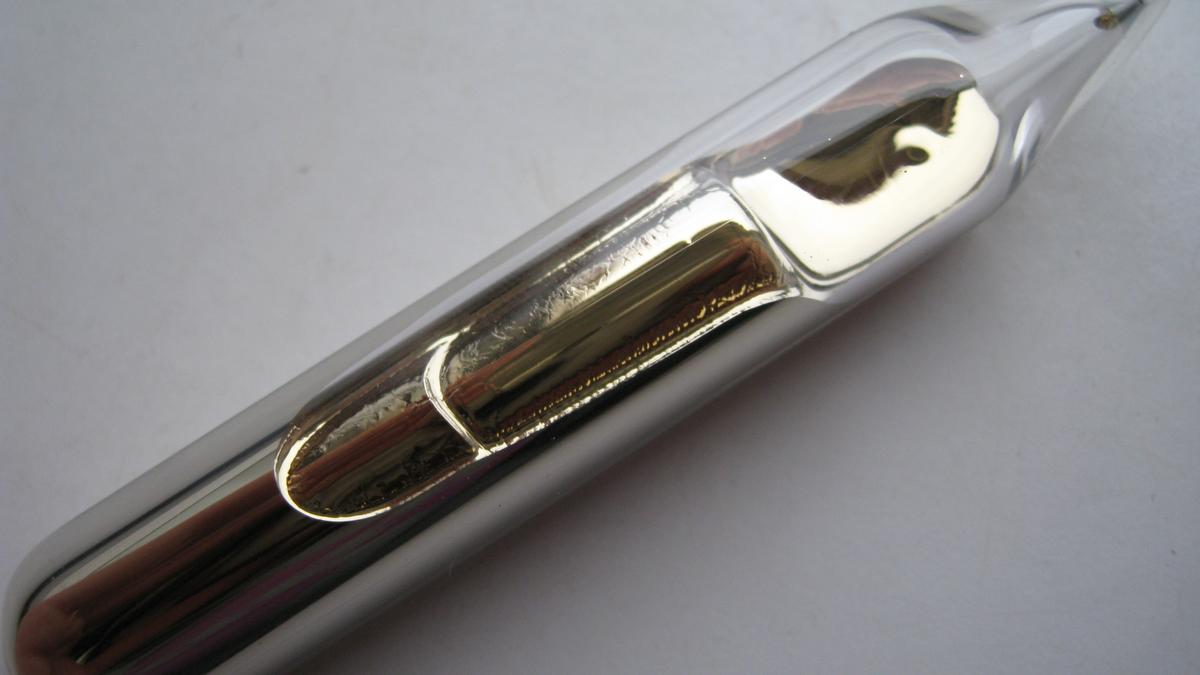
**CHENNAI, INDIA (May 10, 2025)** – The story of caesium, a highly reactive, silvery-gold alkali metal, is one of scientific collaboration and individual achievement. While Robert Bunsen and Gustav Robert Kirchhoff are widely credited with the element’s discovery in 1860, a lesser-known scientist, Carl Theodor Setterberg, achieved the crucial next step: its isolation.
Bunsen and Kirchhoff, renowned German scientists, identified caesium through its distinct spectral lines while analyzing spring water. Their innovative spectroscopic techniques, which involved using filters to isolate specific colors and employing a prism to analyze light, enabled them to detect the element’s unique sky-blue emission. They announced their discovery on May 10, 1860, but only managed to obtain a minuscule amount of caesium chloride.
Swedish chemist Carl Theodor Setterberg later took on the challenge of isolating the element. Working with waste material from lithium extraction, Setterberg employed fractional crystallization and electrolysis, finally isolating caesium in 1882. This allowed him to characterize its properties, including its melting point and density. Despite Setterberg’s significant contribution, his role is often overlooked in the narrative of caesium’s discovery, highlighting the complex and sometimes uneven attribution of credit in scientific breakthroughs. Today, caesium’s most notable application is in atomic clocks, underpinning our precise measurement of time.
 First Piper