
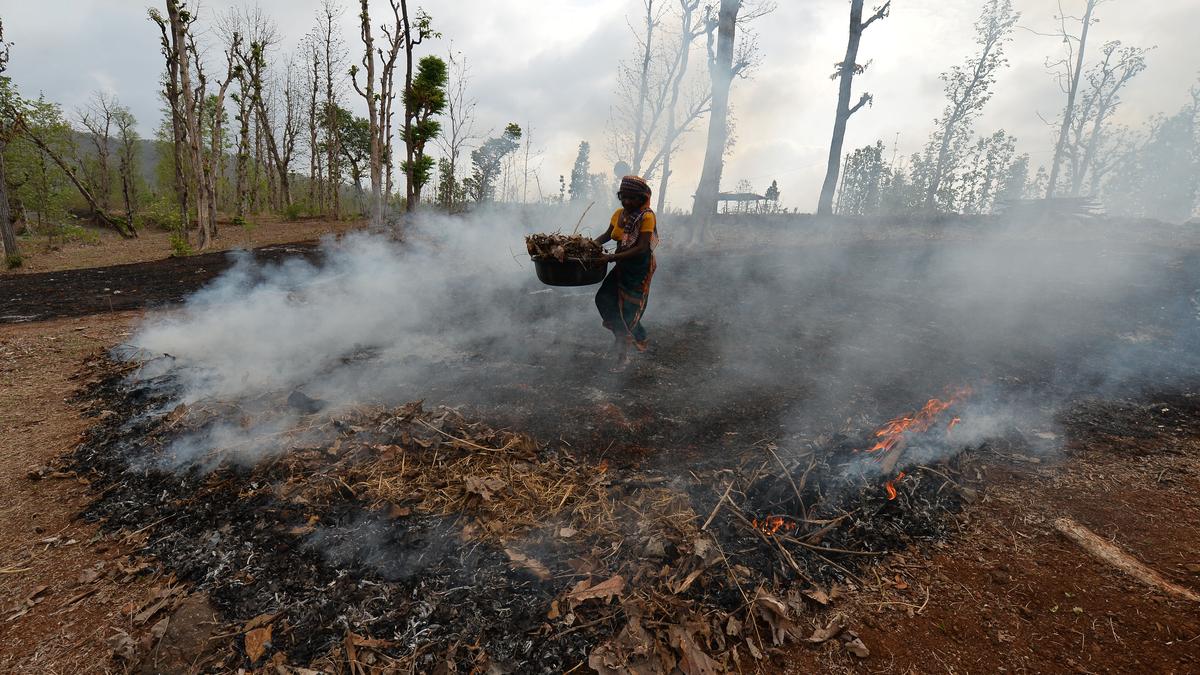
Tue May 06 00:00:00 UTC 2025: ## India’s Balancing Act: Protecting Biodiversity While Upholding Indigenous Rights
**NEW DELHI, May 6, 2025** – India faces a critical challenge: balancing its commitment to global biodiversity conservation with the rights of its indigenous communities, particularly Adivasis. While internationally lauded for its progressive legislation like the Forest Rights Act (FRA) of 2006, which recognizes the crucial role of local communities in conservation, India’s implementation struggles with legacy laws and a centralized approach.
A recent analysis by researchers Aditi Vajpeyi and Prakriti Mukerjee highlights the conflict between globally adopted conservation models, often rooted in colonial practices, and the rights of indigenous peoples and local communities (IPLCs). These models, they argue, frequently displace millions by establishing protected areas that exclude traditional inhabitants, criminalizing their presence despite their historical role as biodiversity custodians.
India, a signatory to the Convention on Biological Diversity (CBD) and possessing a rich history of community-led conservation, enacted its Biological Diversity Act (BDA) in 2002. However, the legacy of the Wildlife Protection Act of 1972 and Project Tiger, which established numerous protected areas resulting in the displacement of at least 600,000 people, continues to overshadow more recent, community-focused initiatives.
The FRA, a significant step forward, recognizes the rights of forest dwellers and links them to forest management and conservation. It empowers village councils (gram sabhas) to govern resources, a decentralized approach at odds with the more centralized control often favored by state forest departments.
Although India actively participates in international efforts, such as the Kunming-Montreal Global Biodiversity Framework (KMGBF) – which aims for 30% of land and marine areas under protection by 2030 and promotes IPLC inclusion – implementing these goals remains challenging. The researchers point out that India’s updated National Biodiversity Strategy and Action Plan (NBSAP) relies heavily on under-resourced local Biodiversity Management Committees and doesn’t clearly integrate the FRA’s decentralized approach.
The researchers warn that the KMGBF’s focus on expanding protected areas, while laudable, could inadvertently jeopardize IPLC rights if not carefully implemented. They suggest that the “other effective area-based conservation measures” (OECMs) proposed by the KMGBF, could become tools of exploitation if not coupled with robust legal frameworks that prioritize the rights and prior informed consent of affected communities. They advocate for greater synergy between the BDA and FRA, emphasizing the gram sabha’s role in resource management and ensuring compliance with the FRA before designating biodiversity heritage sites.
The researchers conclude that despite international recognition of IPLC rights and India’s progressive legislation, the struggle for equitable conservation practices remains ongoing. Successful implementation requires a genuine shift towards decentralized, community-led conservation that fully respects the traditional knowledge and rights of indigenous communities, preventing the repetition of past dispossession and injustice.
 First Piper