
Mon Apr 21 00:00:00 UTC 2025: **Scientists Develop Water-Based Solution for Recycling Perovskite Solar Panels**
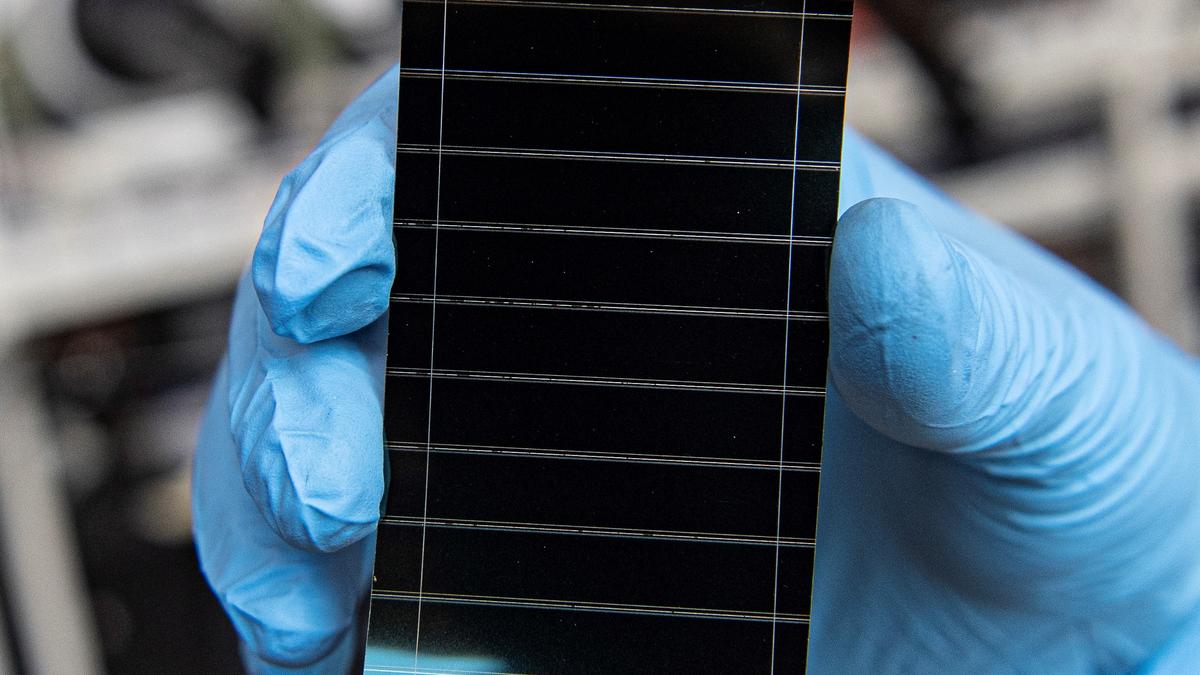
Bengaluru, India (April 21, 2025) – Researchers have developed a groundbreaking water-based method for recycling perovskite solar panels, a significant step towards making solar energy more environmentally friendly and economically viable. The technique, detailed in a recent *Nature* paper, addresses concerns surrounding the toxicity of lead in perovskite crystals and the use of harmful organic solvents in current recycling processes.
Lead author Xun Xiao of Linköping University in Sweden, along with colleagues, successfully created a water solution incorporating sodium acetate, sodium iodide, and hypophosphorous acid. This solution efficiently dissolves the lead-containing perovskite layer, creating a highly soluble lead acetate that can be easily processed. The other salts facilitate the regeneration of high-quality perovskite crystals, enabling reuse in new solar cells. The process achieves a near-perfect recovery rate (99%) of various components, with the recycled cells exhibiting comparable efficiency to those made with fresh materials, even after five recycling cycles.
This eco-friendly approach contrasts sharply with existing methods that rely on toxic organic solvents. Experts like Rhys Charles of Swansea University highlight the importance of this advancement in promoting a circular economy for solar energy. The development not only reduces waste but also lowers the environmental impact and cost of solar energy generation. While perovskite solar cells offer high efficiency and low cost, their shorter lifespan and the need for sustainable recycling processes have been major hurdles. This research appears to overcome these challenges. Professor Matthew Davies of Swansea University emphasizes that this work lays the groundwork for perovskite solar cells to fulfill their promise as a sustainable energy solution. The researchers also successfully developed methods for recycling other components of the solar cells using ethanol and ethyl acetate, further enhancing the sustainability of the overall process.
However, researchers stress the need for comprehensive life cycle assessments to ensure the long-term environmental benefits of this technology. The next step involves scaling up the process for commercial application. If successful, this water-based recycling method could significantly boost the adoption and sustainability of perovskite solar technology.
 First Piper