
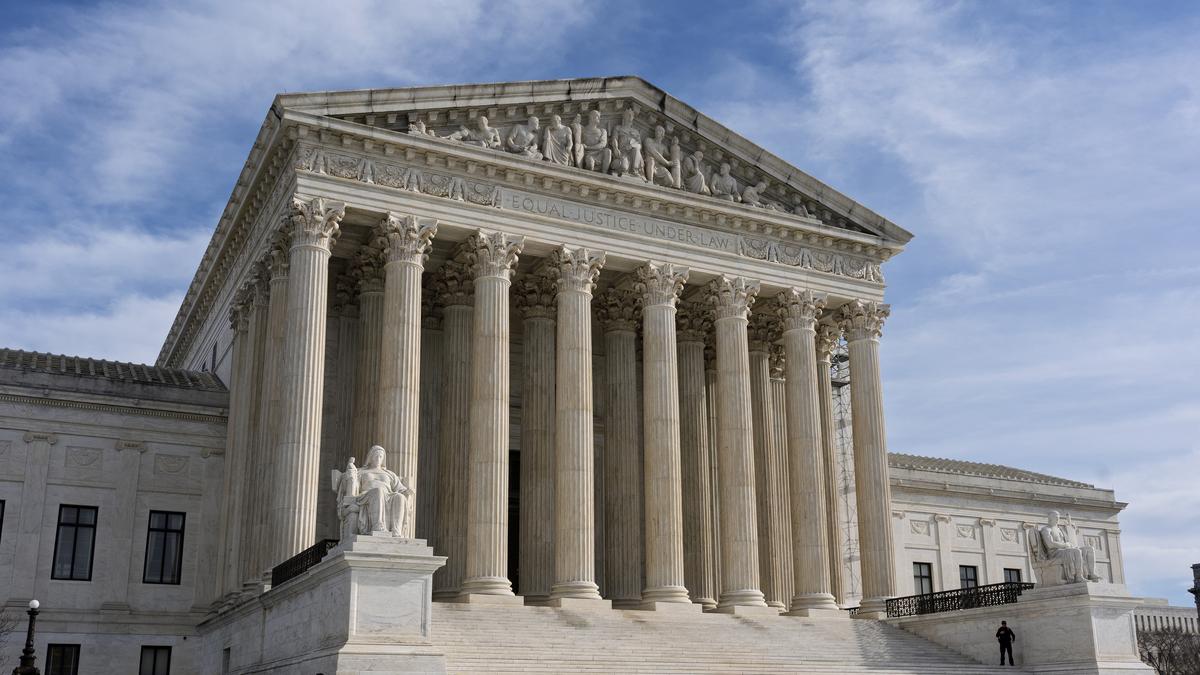
Sat Apr 19 07:55:53 UTC 2025: **Supreme Court Halts Deportations of Venezuelans Under 18th-Century Law**
WASHINGTON, D.C. — In a last-minute intervention, the U.S. Supreme Court on Saturday temporarily blocked the Trump administration’s planned deportation of Venezuelans held at the Bluebonnet Detention Center in northern Texas. The deportations were to be carried out under the Alien Enemies Act of 1798, a wartime law invoked only three times previously in U.S. history.
The Court’s order, issued in response to an emergency appeal by the American Civil Liberties Union (ACLU), prevents removals “until further order of this court.” Justices Clarence Thomas and Samuel Alito dissented. The ACLU argued that the detainees, accused of being members of the Tren de Aragua gang, were facing deportation without due process. They contended that immigration authorities were circumventing earlier Supreme Court rulings that mandated detainees be given a chance to challenge their removal in court.
Lower courts had previously refused to intervene, with one judge citing the lack of evidence that deportations had begun. However, the ACLU presented sworn declarations from immigration lawyers stating that their clients had received deportation notices with little opportunity to contest the action, including instances where notices were given in English to Spanish-speaking individuals.
The ACLU alleges that the administration is strategically moving detainees to facilities where no court orders preventing deportation are in place, shifting them from south Texas, where such an order exists, to Bluebonnet. The administration is expected to appeal the Supreme Court’s temporary stay.
The Alien Enemies Act’s use in this context has raised serious concerns about due process and the potential for human rights abuses. Some Venezuelans deported under this act have previously been sent to El Salvador and held in its notoriously harsh main prison. The case highlights the ongoing legal battles surrounding the Trump administration’s immigration policies and the use of historic legislation in modern contexts.
 First Piper