
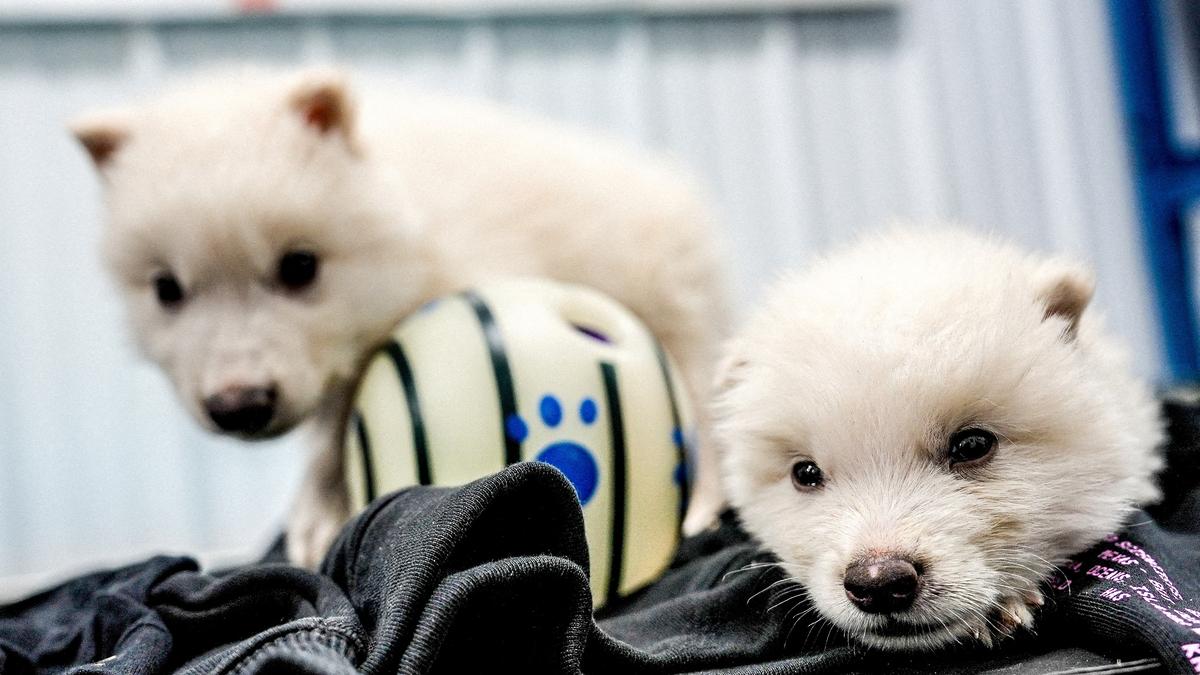
Fri Apr 18 03:00:00 UTC 2025: ## “Resurrected” Dire Wolves Raise Concerns, Not Triumphs: Scientists Question De-Extinction Project
**Chennai, India – April 18, 2025** – The recent announcement by Colossal Biosciences of the birth of three “dire wolf” pups has sparked controversy within the scientific community. While the Texas-based biotechnology company claims to have resurrected the extinct predator through genetic modification of a gray wolf, experts question the accuracy and implications of this feat.
Colossal Biosciences claims a 99.94% genetic similarity between gray wolves and dire wolves, a difference they’ve addressed through genetic edits. However, critics highlight that this seemingly small difference equates to 1.47 million base pairs – a substantial divergence, far exceeding the genetic difference between humans and chimpanzees. The company’s edits, focused primarily on cosmetic features like size and fur, result in a genetically modified gray wolf that merely resembles a dire wolf, falling far short of a true resurrection.
Furthermore, a 2021 study in *Nature* casts doubt on the very premise of the project. The study reclassified dire wolves as a distinct canid lineage, *Aenocyon dirus*, suggesting significant behavioral and ecological differences from modern wolves. Reintroducing a genetically modified animal with such uncertainties poses substantial ecological risks. The environmental conditions that supported dire wolves no longer exist, and introducing such animals could disrupt modern ecosystems.
Concerns also extend beyond the scientific realm. The announcement has been cited by some as justification for weakening endangered species protections. This highlights the potential for such projects to misinform policy decisions and undermine conservation efforts. Instead of focusing on de-extinction, scientists argue that resources should be prioritized towards preserving existing ecosystems and protecting endangered species.
While the “resurrection” marks a potential new era in biotechnology, the scientific community emphasizes the need for caution and a critical reassessment of the ethical and ecological implications of de-extinction projects. The birth of these pups, rather than a triumph, serves as a warning to reconsider current approaches to conservation.
 First Piper