
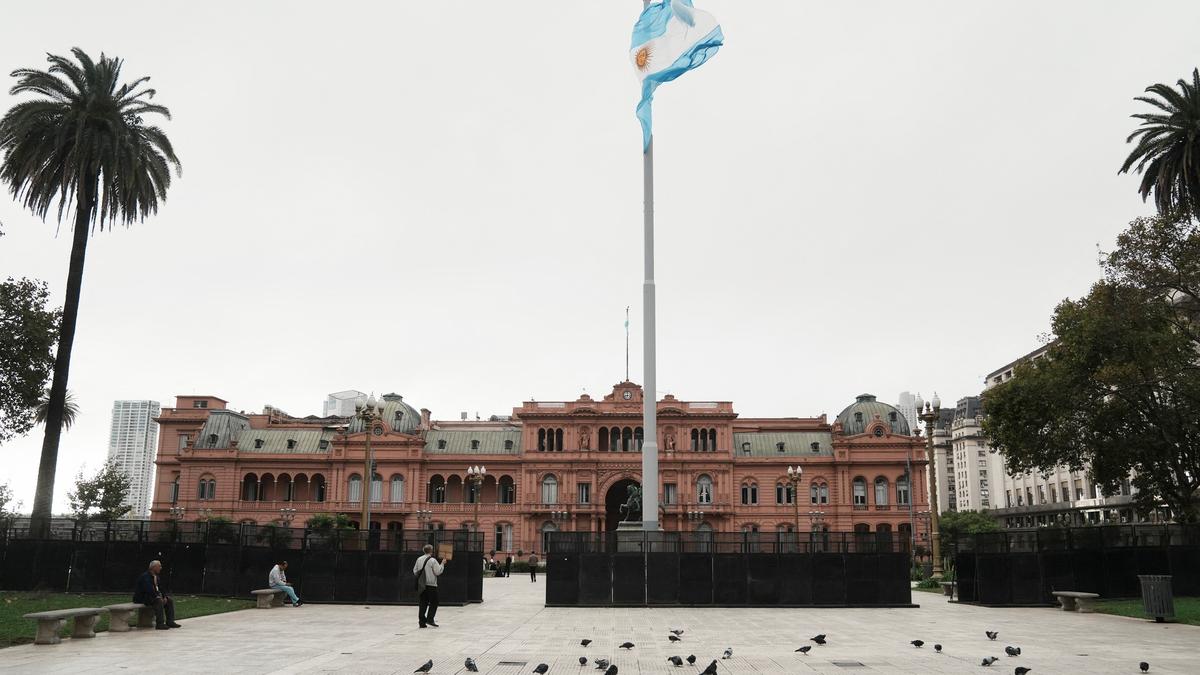
Sat Apr 12 15:41:46 UTC 2025: ## Argentina Receives $42 Billion in International Aid to Stabilize Economy
**Buenos Aires, Argentina –** Three major international financial institutions—the International Monetary Fund (IMF), the World Bank, and the Inter-American Development Bank (IDB)—have jointly announced a $42 billion aid package for Argentina, aimed at bolstering its struggling economy. The move comes as President Javier Milei pushes an aggressive reform agenda.
The IMF’s contribution is a $20 billion, four-year bailout, while the World Bank and IDB are providing $12 billion and $10 billion respectively. A significant portion of this funding, including an immediate $12 billion tranche from the IMF and $1.5 billion from the World Bank, is expected to flow within the next week. This injection of capital is intended to support the Argentine peso and stabilize the country’s financial system.
President Milei, a libertarian known for his budget cuts and market-oriented policies, has declared that Argentina will experience unprecedented economic growth over the next 30 years. He attributes this optimistic forecast to the success of his economic reforms, which include slashing public spending, reducing the number of government ministries, and eliminating inflation-aligned pension increases. These measures have resulted in Argentina’s first budget surplus in a decade, albeit at the cost of job losses and reduced consumer spending.
However, Milei’s policies have also fueled concerns about social unrest and currency instability. The IMF’s approval of the loan, while seen as a vote of confidence in Milei’s approach, has also triggered some anxieties regarding potential devaluation of the peso. To address concerns, the Central Bank will allow the peso to float within a controlled range and lift restrictions on citizens accessing US dollars.
The $42 billion package marks the 23rd IMF bailout for Argentina since 1956 and builds upon a previous $44 billion loan agreement. While the latest injection of funds aims to curtail inflation (currently at 55.9 percent annually, down from 211 percent at the end of 2023), the long-term effects of the government’s economic strategy remain to be seen. US Treasury Secretary Scott Bessent is expected to visit Argentina next week to show US support for the reforms. The success of this ambitious rescue package will hinge on Argentina’s ability to implement lasting structural changes and navigate the challenges of high inflation and political volatility.
 First Piper