
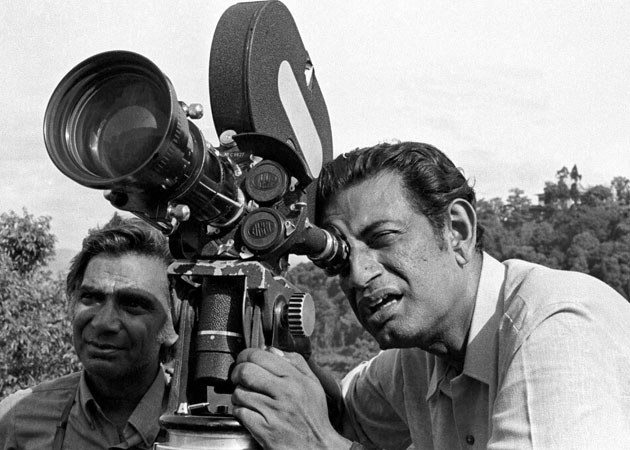
Mon Apr 07 11:25:00 UTC 2025: ## India’s Selective Embrace of Satyajit Ray: A Postmortem of Neglect and Mythmaking
**NEW DELHI** – The global acclaim for Satyajit Ray’s cinematic genius stands in stark contrast to the complex and often ambivalent reception he received within India, both during his lifetime and posthumously. A new analysis reveals how Indian institutions, while ostensibly celebrating Ray, frequently assimilated, tempered, and even censored his work, highlighting a larger institutional malaise in supporting intellectuals and artists.
Ray, recipient of the Bharat Ratna in 1992, saw his documentary *Sikkim* (1971) banned by the government, a clear indication of the tension between his artistic vision and the state’s agenda. His film *Teen Kanya* (1961) was reduced to *Two Daughters* for state television, deemed too intellectually demanding for Indian audiences.
Film scholar Utpal Dutt criticized the post-mortem designation of Ray as a harbinger of an “Indian Renaissance,” calling it a “bureaucratic invention” designed to compensate for years of neglect. Dutt contrasted this manufactured narrative with the genuine “Bengal Renaissance” of the early 19th century, which arose from tangible social and political pressures. He argued that Ray’s posthumous glorification only occurred after Hollywood recognition forced India to acknowledge his significance.
The apathy towards Ray wasn’t solely from state actors, but also stemmed from societal structures. Some critics dismissed his work as apolitical, overlooking the ideological layers and anticolonial Bengali liberalism woven into films like *Jalsaghar*, *Charulata*, and *Shatranj Ke Khilari*. These films, far from being mere period pieces, explored gender dynamics, colonial impacts, and the complexities of postcolonial identity. While not overtly political, Ray’s work subtly critiqued patriarchal structures and explored Indian culture’s non-western aspects.
The misconception of Ray as a supporter of Nehruvian policies further fueled the misinterpretation of his work. While some suggest his films aligned with Nehru’s vision, others argue his work consistently defied the state’s construction of national identity through its exploration of displacement, social division, and fragmented modernity. Films like *Sadgati* and *Ganashatru* directly criticized social injustice and class inequalities.
The author concludes that the posthumous elevation of Ray as a national icon served to mask uncomfortable truths about India’s social contradictions. The delayed recognition, while seemingly a celebration, actually represents a depoliticization of his work and legacy, obscuring the critical commentary embedded within his films. Ray’s legacy underscores the ongoing tension between artistic expression and the selective embrace of cultural figures by the Indian state and society.
 First Piper