
Fri Apr 04 00:00:00 UTC 2025: ## Global Markets Plunge After Trump Announces Worldwide Tariffs
**London/New York** – Global markets suffered their worst day since the 2020 pandemic following President Donald Trump’s announcement of sweeping new tariffs on imports from most countries. The Dow Jones, Nasdaq, and S&P 500 experienced significant plunges, with the S&P 500 seeing its largest single-day drop since March 2020.
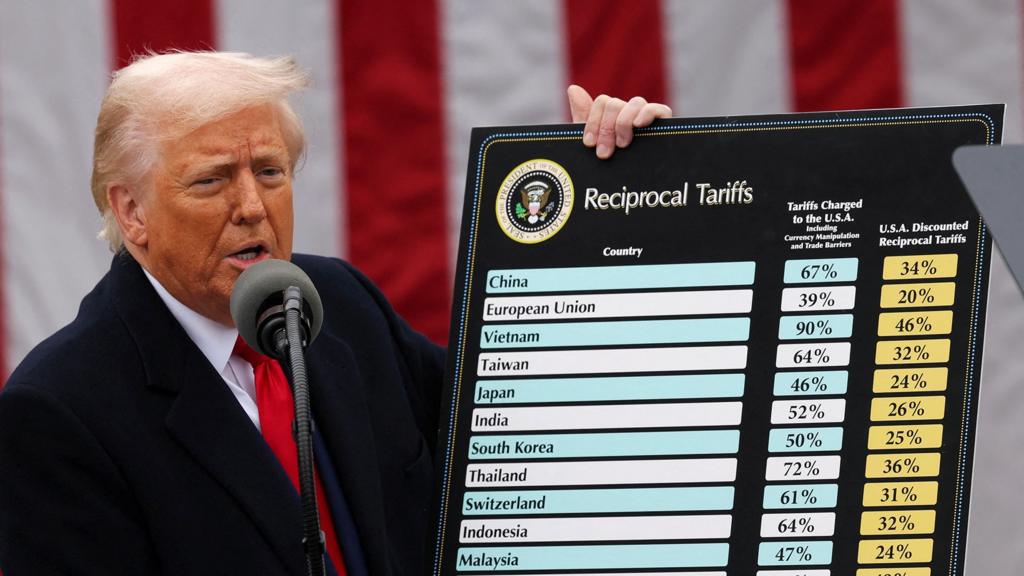
Trump’s plan involves a minimum 10% tariff on all imports starting April 5th, with higher rates for major trading partners taking effect April 9th. The White House maintains the tariffs will ultimately boost the US economy, a claim met with skepticism by investors and economists alike.
Several countries swiftly announced retaliatory measures. Canada, under Prime Minister Mark Carney, imposed a 25% tariff on US vehicles, declaring the close US-Canada relationship effectively over. Mexico, in contrast, opted not to retaliate. The UK unveiled a 400-page list of US goods that could face tariffs, signaling a tougher stance than previously anticipated. The EU is yet to formally respond, but several member states have condemned the tariffs as damaging.
The impact is already being felt. Canadian consumers are actively avoiding US products, while Italian olive oil exporters worry about the impact on their US importers. India, meanwhile, sees potential opportunities to gain market share in textiles and electronics due to higher tariffs imposed on competitors like China and Bangladesh. However, analysts caution that this may simply be a bargaining chip in Trump’s trade strategy.
The World Trade Organization (WTO) has drastically lowered its global trade growth forecast due to the tariffs, predicting a 1% contraction instead of the previously projected 3% growth. The WTO’s ability to mediate remains uncertain, given the Trump administration’s reduced funding and past disregard for WTO rulings.
The automotive sector is particularly vulnerable. Workers at Ford and Stellantis plants in Canada fear job losses and potential plant closures due to the tariffs. Concerns extend to the US, with similar fears emerging in Michigan.
President Trump, while acknowledging the market downturn, remained defiant, asserting that the measures would ultimately lead to economic boom. This statement contrasted with the widespread concern among investors, who anticipate a potential global trade war and US recession. Lesotho, a small African nation heavily reliant on US textile exports, is sending a delegation to Washington to plead for leniency.
The situation remains highly fluid, with global markets anxiously awaiting further developments and the full-scale response from the EU and other major economies. The long-term consequences of Trump’s tariff strategy are still uncertain, but the immediate impact is a significant blow to global markets and trade confidence.
 First Piper