
Fri Apr 04 03:30:00 UTC 2025: ## Coastal Karnataka Sees Surge in Olive Ridley Sea Turtle Nesting, Conservation Efforts Intensify
**Mangaluru, April 4, 2025** – Coastal Karnataka is experiencing a significant increase in sea turtle nesting activity, primarily involving Olive Ridley turtles, during the December-March breeding season. Hundreds of turtles are flocking to beaches to lay eggs, prompting intensified conservation efforts by the Forest Department and local communities.
Five species of marine turtles, all protected under Schedule I of the Wildlife (Protection) Act, 1972, are found in Indian waters. While Olive Ridleys dominate the Karnataka coast, Green turtles are also occasionally sighted. Following a period of low nesting activity, a resurgence has been observed since 2020-2021 across the three coastal districts. This increase coincides with the 2021 launch of the National Marine Turtle Action Plan by the Union Ministry of Environment, Forest, and Climate Change (MoEFCC), outlining strategies for conservation.
The plan emphasizes the ecological importance of marine turtles, their role as indicators of healthy marine ecosystems, and their economic value through ecotourism. It sets five goals, including habitat conservation, improved understanding of turtle ecology, public awareness campaigns, sustainable ecotourism, and international cooperation.
Uttara Kannada district, particularly the Honnavar Forest Division, shows the highest concentration of nesting sites and hatchlings. However, nesting occurs along the entire 320 km coastline, with significant numbers also reported in Dakshina Kannada and Kundapur divisions.
Forest department initiatives include the creation of artificial hatching centers to protect eggs from predators and high tides, and the implementation of both in-situ (on-site) and ex-situ (off-site) conservation models. Fishermen and local communities are actively involved, receiving cash incentives for reporting nesting sites. Night patrols are conducted to deter predators, and CCTV cameras monitor nesting areas. The department also guides hatchlings towards the sea at night to avoid disorientation from artificial lights.
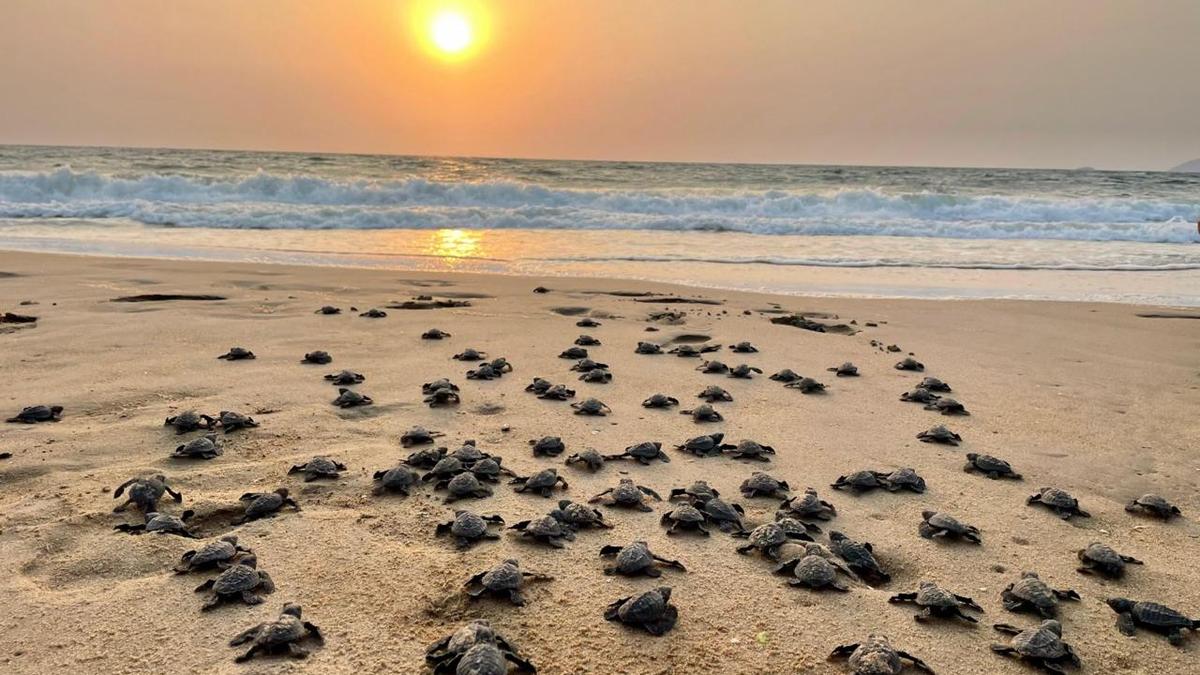
This year, thousands of hatchlings have already been released into the Arabian Sea across the four coastal divisions, showcasing the success of collaborative conservation efforts. The long-term success of the conservation mission hinges on continued public participation and awareness, the Forest Department emphasizes.
 First Piper