
Tue Mar 18 00:00:00 UTC 2025: ## Major International Physics Experiment Yields New Neutrino Mass Constraints
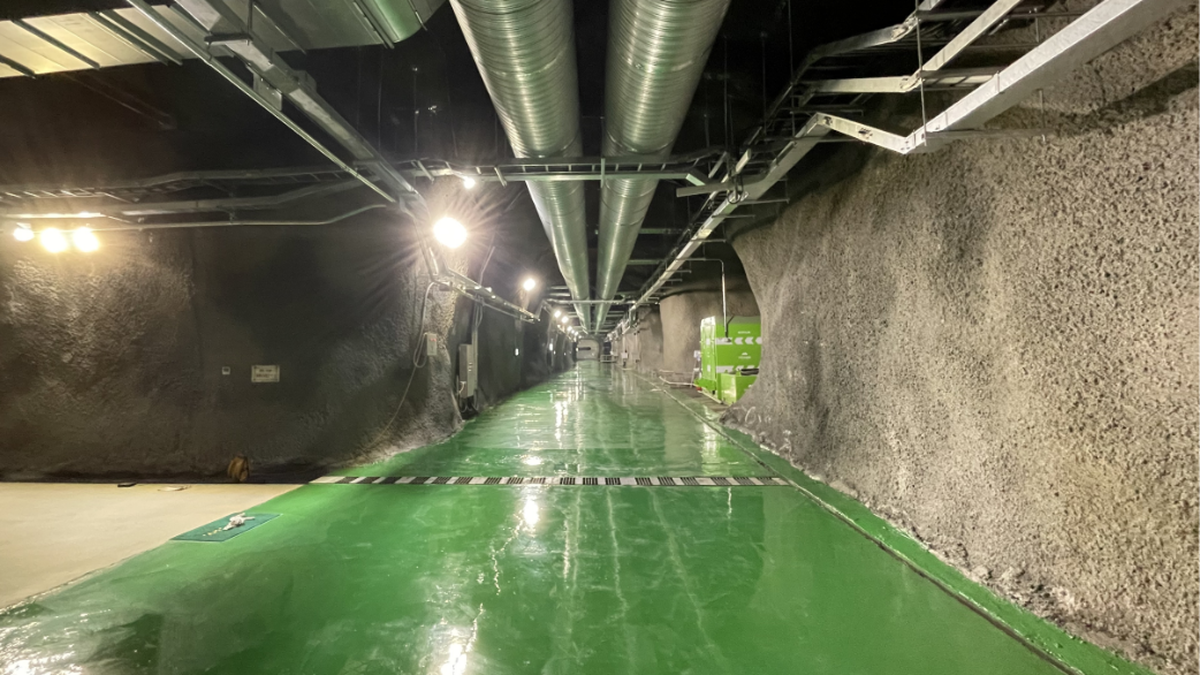
**SEOUL, South Korea** – The AMoRE collaboration, conducting experiments at the Yemilab underground research facility in South Korea, has released findings from their search for neutrinoless double beta decay (0vßß). While the experiment did not detect 0vßß, the results provide new constraints on the mass of neutrinos, a fundamental particle of the universe.
The AMoRE experiment, which uses 3 kg of molybdenum-100 nuclei cooled to extremely low temperatures, aims to detect 0vßß, a rare decay process that would prove neutrinos are Majorana particles – particles that are their own antiparticles. The detection of 0vßß would also reveal the mass of neutrinos, a currently unknown quantity.
In a paper published in *Physical Review Letters*, the team reported not observing 0vßß. However, this non-detection provides a lower bound on the half-life of molybdenum-100 decay through 0vßß at 10²⁴ years. Furthermore, the results constrain the mass of each neutrino to be less than 0.22-0.65 billionths of a proton’s mass.
Though this doesn’t confirm a zero mass, it challenges the Standard Model of particle physics, which predicts massless neutrinos. The presence of even a tiny neutrino mass indicates a gap in our understanding of subatomic particles.
The AMoRE collaboration plans to upgrade their experiment using 100 kg of molybdenum-100, significantly increasing the chances of detecting 0vßß and gaining a clearer picture of neutrino properties, providing valuable insights into the universe’s fundamental building blocks. This research follows recent announcements about advancements in quantum computing, though this experiment is distinct and focuses purely on fundamental physics.
 First Piper