
Thu Mar 13 06:25:16 UTC 2025: ## Ancient Facial Bones Rewrite Early Human History in Europe
**Burgos, Spain –** Scientists have unearthed remarkably well-preserved fossilized facial bones in Spain, potentially representing a previously unknown human species and reshaping our understanding of early human presence in Europe. The fossils, nicknamed “Pink,” are estimated to be between 1.1 and 1.4 million years old, making them among the oldest human fossils ever discovered in Europe.
Recovered from the Sima del Elefante cave site near Burgos, the fossils comprise about 80% of the left side of an adult’s midface, including portions of the cheekbone and upper jaw. The researchers, whose study was published in *Nature*, noted that Pink’s facial anatomy is more primitive than that of *Homo antecessor*, a species previously known to have inhabited Western Europe. While Pink shows similarities to *Homo erectus*, it also displays unique features, raising the possibility of a new species entirely. The researchers tentatively classified the fossil as *Homo affinis erectus*.
The discovery is significant because it introduces a new player in the early occupation of Europe. Prior to this, the earliest widely accepted human fossils in Europe were those of *Homo antecessor*, dating back approximately 850,000 years. The discovery of Pink suggests that human migration into Europe occurred earlier than previously thought, potentially predating *Homo antecessor*.
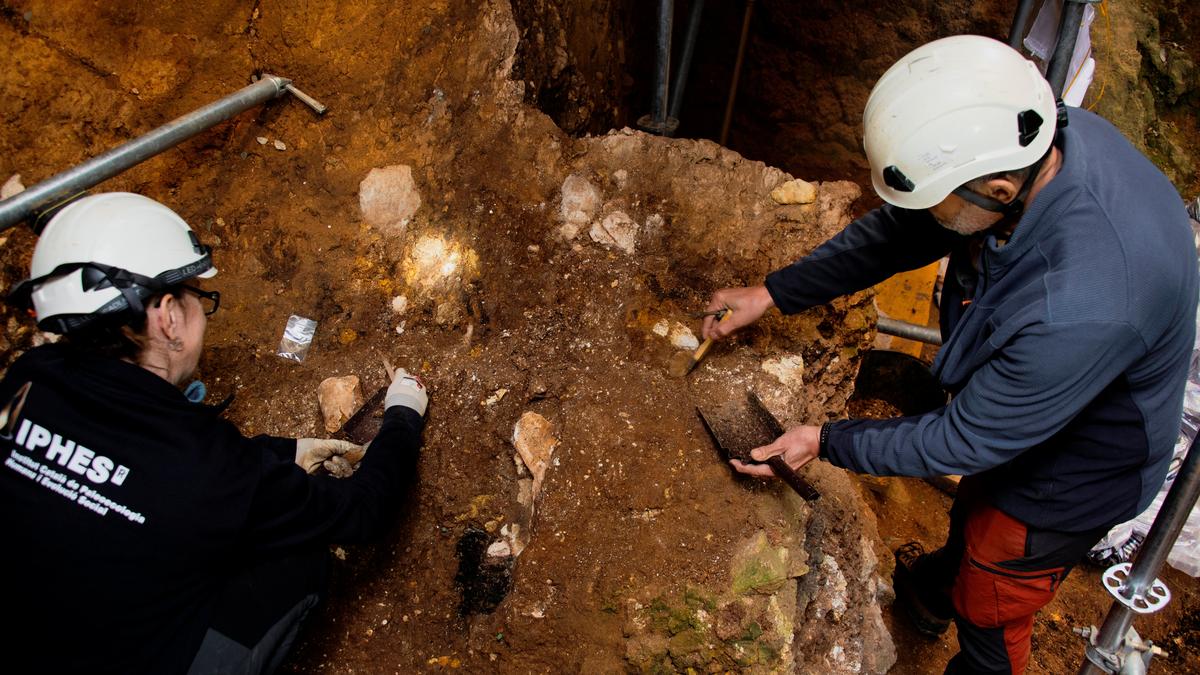
The Sima del Elefante site has yielded other significant finds, including a jawbone fragment estimated to be 1.2 million years old. The discovery of Pink, unearthed from a deeper layer, indicates even older human occupation. Furthermore, simple stone tools and butchered animal bones were found near the fossils, suggesting early human activity at the site.
While further research is needed to confirm whether Pink represents a new species, the discovery undoubtedly opens up new avenues for exploring human evolution in Europe. The researchers plan to continue their investigation, aiming to recover more fossil remains and shed more light on the species’ characteristics and its place in the human family tree.
 First Piper