
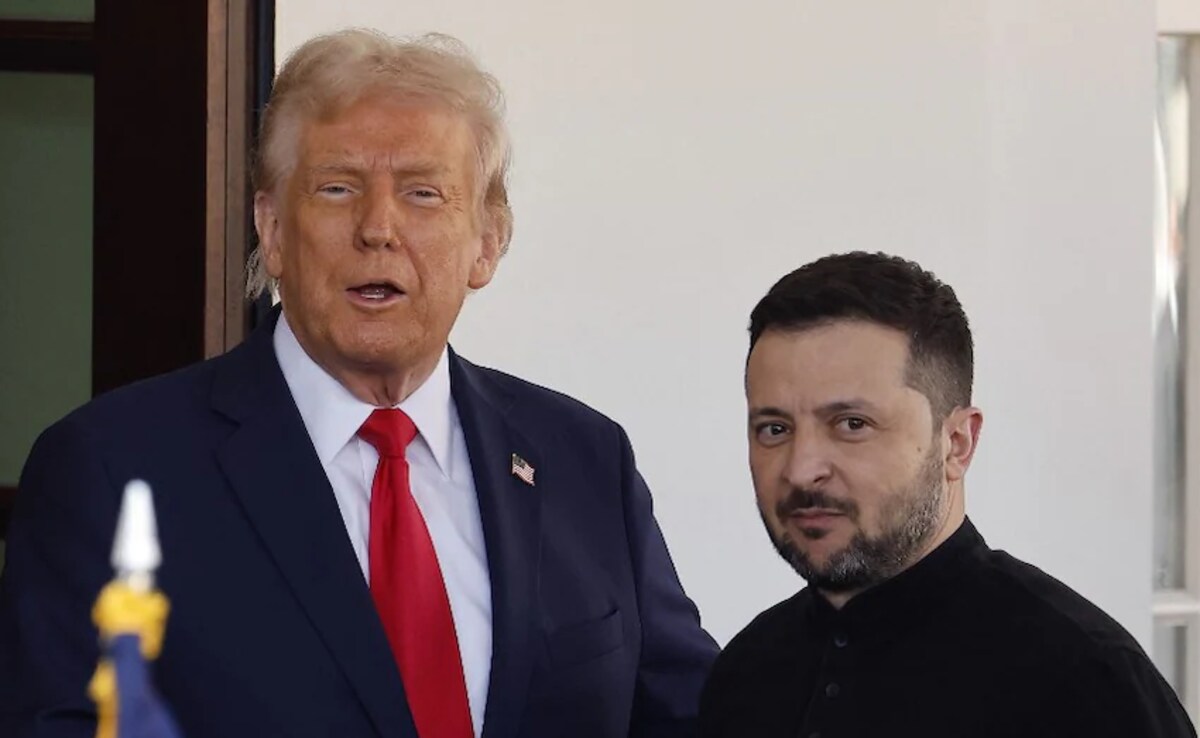
Wed Mar 12 13:32:04 UTC 2025: ## Ukrainian President Zelensky Faces Wardrobe Criticism During Tense White House Meeting
**Washington D.C.** – A meeting between Ukrainian President Volodymyr Zelensky and former US President Donald Trump took an unexpected turn when Trump and his deputy, JD Vance, criticized Zelensky’s choice of attire. Zelensky, wearing his signature military-style sweatshirt, was reportedly rebuked for not wearing a suit, a perceived slight against the dignity of the office.
The incident, which occurred on February 28th, unfolded during a crucial meeting aimed at easing US-Ukraine tensions. Instead, the Oval Office became the stage for a televised disagreement over Zelensky’s clothing, prompting Trump to suspend military aid to Ukraine.
Zelensky’s attire, a black sweatshirt featuring the Ukrainian trident, has become a symbol of his solidarity with Ukrainian troops fighting the ongoing war with Russia. He has consistently worn this style of clothing during international meetings since the war began in 2022.
The incident highlights a double standard in the perception of formal attire among world leaders. While Western leaders often adhere to traditional suit-and-tie conventions, the Trump administration’s apparent disregard for dress codes, as evidenced by frequent casual appearances by figures like Elon Musk, has drawn attention to the inconsistency. Musk, despite his casual attire during White House visits, faced no similar criticism.
The author argues that this focus on Zelensky’s clothing choice demonstrates cultural insensitivity and bullying, particularly given the context of the ongoing war. The article points to other world leaders, such as Indian Prime Minister Narendra Modi and former presidents Nelson Mandela and Fidel Castro, who have frequently worn clothing reflecting their cultural identities during international engagements, without attracting similar levels of criticism.
The author concludes that prioritizing diplomacy and collaboration over superficial concerns like clothing is crucial in international relations. The incident, they argue, represents a regrettable focus on optics rather than substance.
 First Piper