
Mon Mar 10 07:50:00 UTC 2025: ## Indian Chandrayaan-3 Data Reveals Unexpected Moon Water Potential
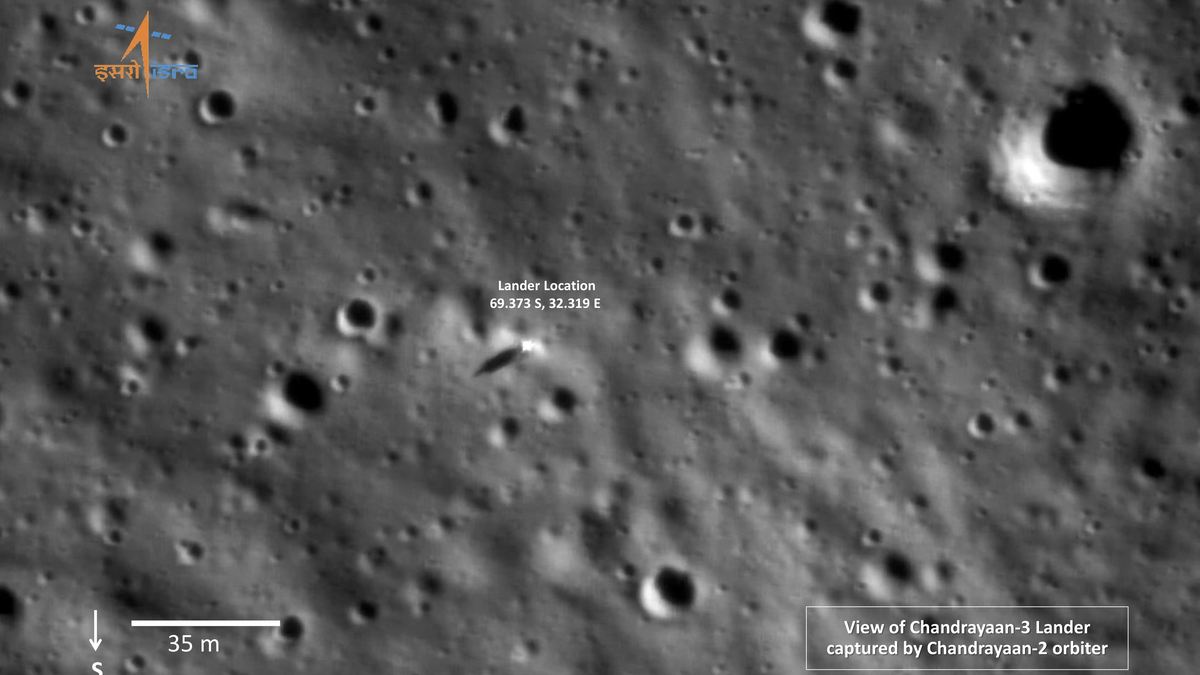
**Udupi, Karnataka, March 10, 2025** – New research based on data from India’s Chandrayaan-3 mission has revealed that the moon may hold significantly more easily accessible water ice than previously thought. A study published in *Communications Earth & Environment* by researchers at the Physical Research Laboratory (PRL) in Ahmedabad utilized the Chandrayaan-3’s ChaSTE instrument to measure lunar surface temperatures at the Vikram lander’s landing site, Shiv Shakti point, near the lunar south pole.
The ChaSTE instrument’s thermal probe measured temperatures down to 10 centimeters below the surface, revealing a surprisingly wide temperature swing. Daytime temperatures reached a peak of 82°C, higher than predictions from NASA’s Lunar Reconnaissance Orbiter. Nighttime temperatures plummeted to -181°C. This dramatic temperature variation, particularly the higher daytime temperature attributed to the sun-facing slope of the landing site, suggests unique thermophysical properties of the lunar surface.
Further analysis, using a model built on ChaSTE data, indicated that even at a mere meter away, the temperature dropped to 58.85°C. This significant variation in temperature over such short distances implies that slopes angled away from the sun could maintain lower temperatures, creating conditions ideal for water ice to accumulate beneath the surface. Since these higher-latitude locations are more accessible than the lunar poles, this finding significantly expands the potential areas for harvesting lunar water ice.
This discovery has major implications for future lunar exploration and potential human settlements. Lunar water ice is not only a crucial resource for drinking water and sanitation but can also be used as rocket fuel, reducing the need for transporting vast quantities of fuel from Earth. The study marks a significant advancement in understanding the moon’s thermal environment and its implications for water ice distribution, paving the way for more efficient and effective strategies for future lunar missions.
 First Piper