
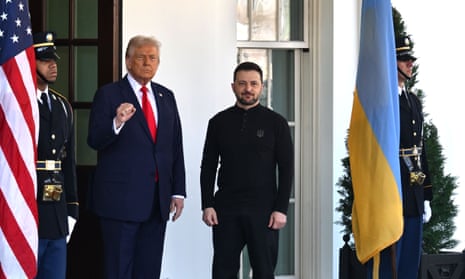
Mon Mar 03 09:00:00 UTC 2025: ## Transatlantic Tensions Rise as US Weighs Ukraine’s Future
**Washington D.C./Kiev** – A high-stakes diplomatic crisis is brewing between the US and its European allies over the future of Ukraine. The Trump administration’s approach to the conflict, characterized by mixed messaging and an apparent unwillingness to offer strong security guarantees to Ukraine, is causing deep concern in Kyiv and European capitals.
The core of the disagreement centers on the US’s proposed path to ending the war: either a swift negotiated settlement or a complete US withdrawal, unless Russia obstructs a ceasefire. This stance, coupled with a refusal to commit to Ukraine’s NATO membership or postwar security guarantees that could risk direct conflict with Russia, is perceived differently across the Atlantic.
European leaders fear a potential US abandonment of Ukraine, interpreting the administration’s actions – such as initial efforts to reopen diplomatic relations with Russia and a reluctance to strongly condemn Russian aggression – as alarming signs of alignment with Vladimir Putin. Others remain more optimistic, hoping to persuade the US to provide a security backstop for a potential European military force in Ukraine after the fighting concludes.
However, Ukrainian President Volodymyr Zelenskyy has firmly rejected a ceasefire without robust US security guarantees, stating that a European-led military force would be ineffective without significant American support. His position has been echoed by other European leaders, who are pushing for a US commitment to bolster a potential European peacekeeping force.
The Trump administration, however, shows little inclination to offer such guarantees, fearing entanglement in a direct war with Russia. This reflects a long-standing US policy of avoiding direct military intervention in Ukraine, a policy maintained by previous administrations and even by President Biden.
This impasse risks a major transatlantic rift. If the US refuses to provide security guarantees, it could lead to a complete withdrawal of US support for Ukraine and a potential deal with Russia – a scenario that would severely damage US-European relations and leave Ukraine vulnerable.
Experts suggest an alternative approach: focusing on bolstering Ukraine’s military capabilities through Western training and supplies, and committing to heavily arming Ukraine in case of future Russian aggression. This approach, while not offering the desired guarantees, could provide a credible deterrent to further Russian actions.
The situation demands urgent transatlantic cooperation to avoid a catastrophic outcome. A common strategy that addresses both the US’s security concerns and Ukraine’s need for protection is crucial to securing a peaceful resolution and preserving the stability of Europe.
 First Piper