
Tue Feb 18 17:06:46 UTC 2025: ## New Chief Election Commissioner Takes Office Amidst Legal Challenge
**New Delhi, Feb 19, 2025** – Gyanesh Kumar assumed office as India’s 26th Chief Election Commissioner (CEC) today, just hours after the Supreme Court began hearing a petition challenging the legality of his appointment. Kumar’s appointment, made under a new law passed last year, grants the central government a significant role in the selection process, a point of contention for opposition parties.
The new law, the “Chief Election Commissioner and other Election Commissioners (Appointment, Conditions of Service and Term of Office) Act, 2023,” replaces the previous system where the President appointed CECs based on government recommendations. The Supreme Court had previously mandated a selection panel comprising the Prime Minister, Leader of the Opposition, and Chief Justice of India, a ruling the new law effectively altered by substituting the CJI with a Union Minister.
Opposition parties, including the Congress, voiced their concerns, with Leader of Opposition Rahul Gandhi submitting a dissenting note during the selection process. They urged the government to postpone the appointment until the Supreme Court ruled on the legality of the new law.
Kumar, a former Kerala cadre IAS officer, served as Secretary in the Ministry of Cooperation and held key positions in the Union Home Ministry, including overseeing the formation of the Shri Ram Janmabhoomi Theertha Kshetra Trust and heading the Jammu and Kashmir Division during the revocation of Article 370. His term as CEC will last until January 2029.
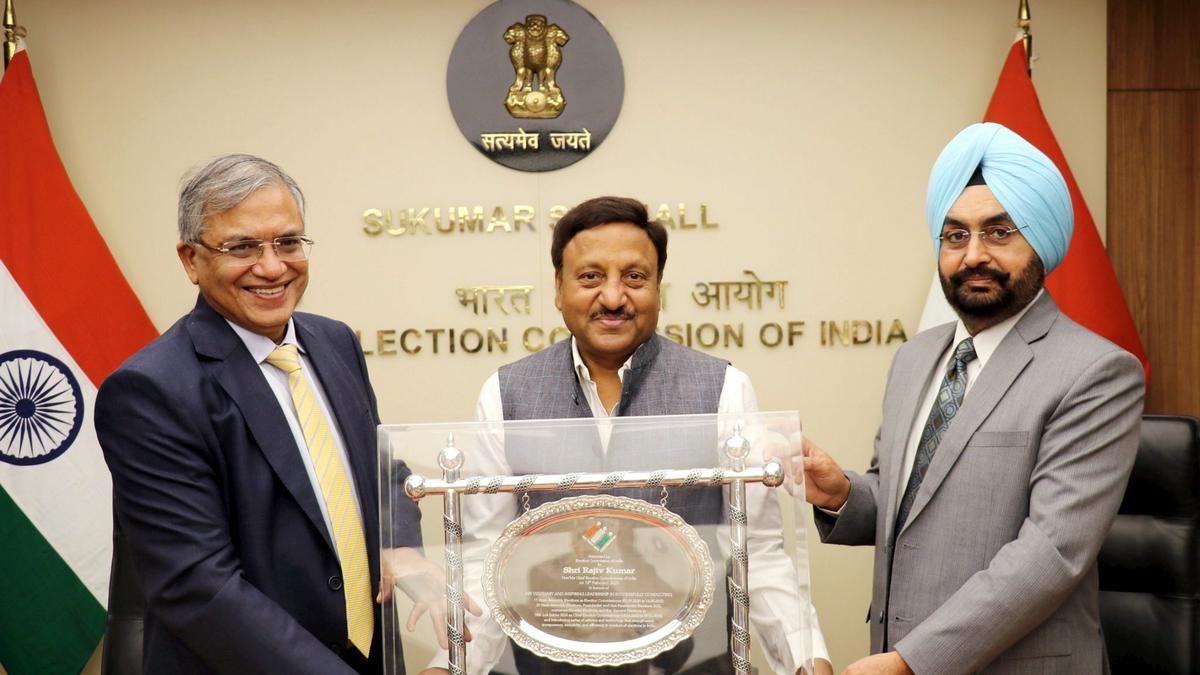
Meanwhile, outgoing CEC Rajiv Kumar, whose tenure oversaw the 2024 Lok Sabha elections and the Jammu and Kashmir Assembly polls, demitted office amidst accusations of bias from opposition parties. In his farewell address, he expressed concerns about the timing of certain legal proceedings, suggesting they could impact the electoral process.
Kumar’s tenure as CEC will include overseeing crucial state assembly elections in Bihar later this year and in Kerala, Puducherry, Tamil Nadu, and West Bengal in 2026, as well as the Presidential and Vice-Presidential elections in 2027. The Supreme Court’s decision on the legality of his appointment remains pending.
 First Piper