
Tue Feb 11 23:30:00 UTC 2025: **Bangladesh: Historic Residence of Sheikh Mujibur Rahman Demolished Amidst Post-Uprising Tensions**
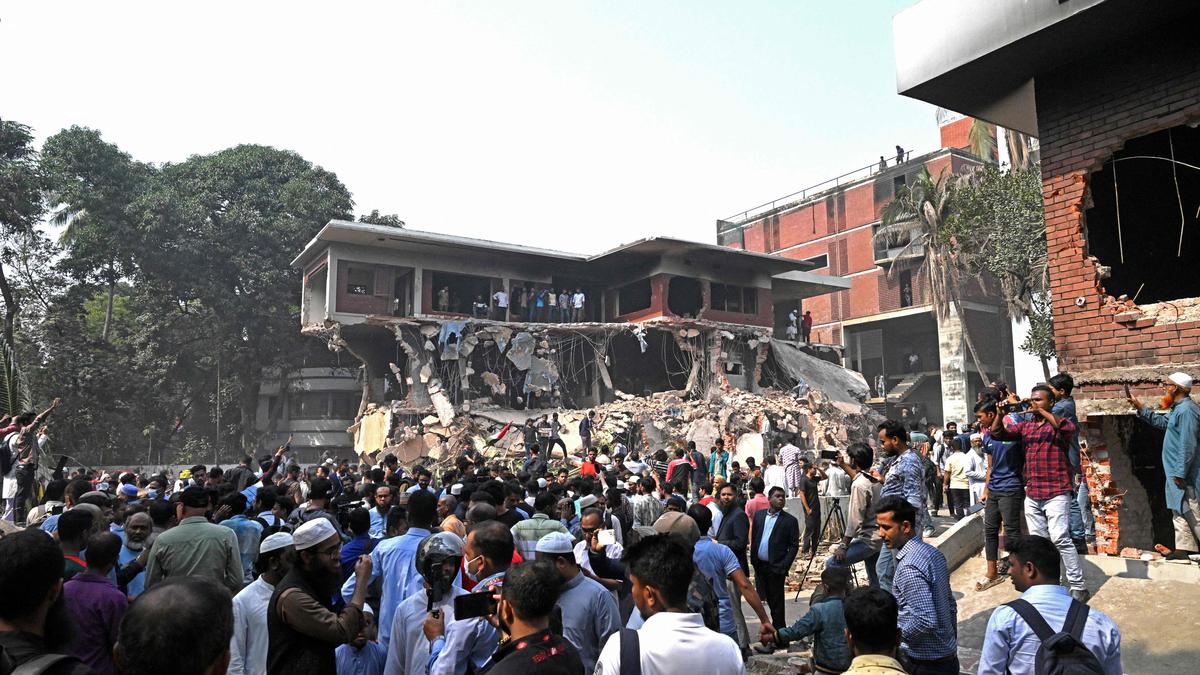
DHAKA, BANGLADESH—February 12, 2025—The historic Dhanmondi-32 residence of Sheikh Mujibur Rahman, the father of ousted Prime Minister Sheikh Hasina and leader of Bangladesh’s liberation war, was demolished on February 6th following a mass protest. Thousands gathered to witness the event, many actively participating in the vandalism that began the previous night.
The demolition occurred six months after a mass uprising ousted Hasina’s 16-year regime. The protests, fueled by a planned Facebook address by Hasina, escalated into a “Bulldozer March” targeting Dhanmondi-32 and her own residence, Sudha Sadan, which was set ablaze. Students and activists, motivated by what they termed the symbolic representation of “fascism” embodied by the residence, were prominent participants in the destruction.
While some onlookers simply watched, others actively tore down walls and used heavy machinery to raze the building, which also housed the Bangabandhu Memorial Museum. The military briefly intervened but withdrew. Even after the excavators left, the crowd continued to dismantle the remaining structure, looting salvaged materials. Two individuals supporting the Awami League were attacked by the crowd.
Similar incidents of vandalism targeting Awami League figures and symbols occurred across the country, including the demolition of Sheikh Hasina’s uncle’s residence and attacks on party offices.
The Awami League strongly condemned the events, viewing them as an attack on Bangladesh’s history. They blamed the interim government, led by Nobel Laureate Muhammad Yunus, for orchestrating the destruction under the guise of public protest. The interim government, however, blamed Hasina’s provocative statements from India for inciting the violence. Bangladesh filed a protest with India, urging them to prevent Hasina from making further inflammatory remarks.
Political analysts suggest that while the demolition temporarily unified protesters, the interim government’s failure to address the underlying issues could lead to further unrest. The incident highlights the deep political divisions and ongoing tensions in Bangladesh following the recent regime change.
 First Piper