
Thu Feb 06 00:00:00 UTC 2025: ## AI’s Rise Illuminates Mysteries of the Human Brain
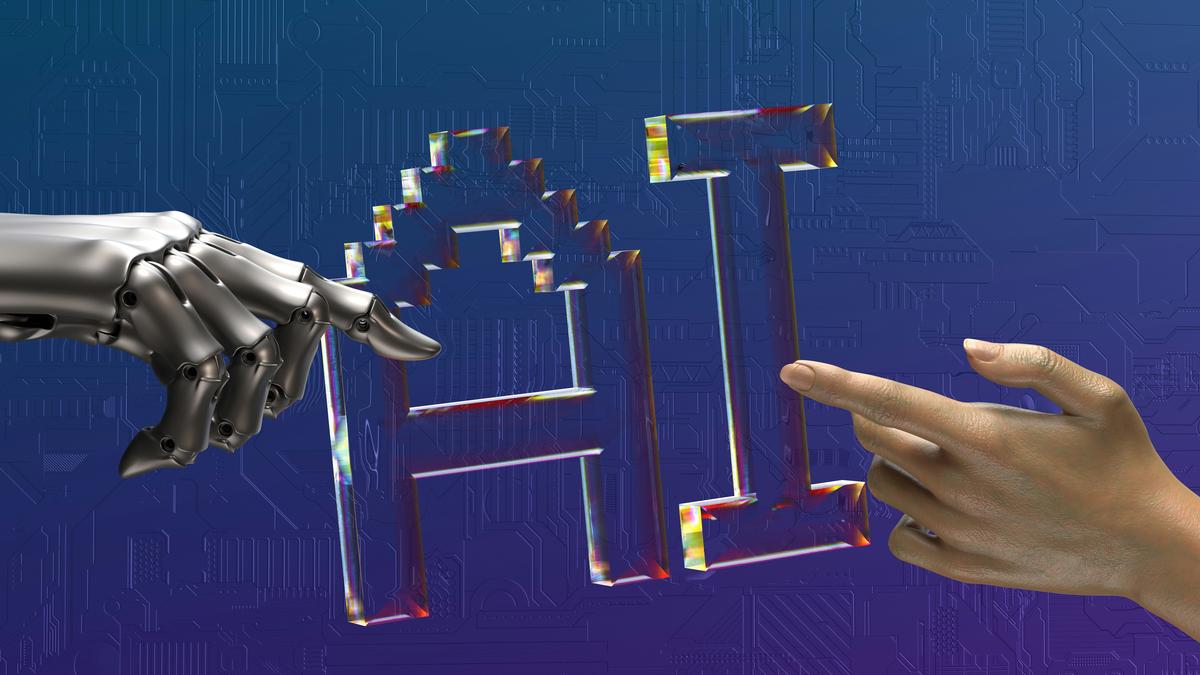
**New Delhi, February 6, 2025** – The rapid advancement of artificial intelligence (AI) is not only revolutionizing technology but also offering unprecedented insights into the workings of the human brain, according to leading researchers. While AI excels at tasks like data analysis and pattern prediction, it struggles with abilities that come naturally to children, such as understanding motives and exhibiting curiosity.
This contrast highlights fundamental differences between human and machine learning. Humans learn efficiently with relatively little data, leveraging past experiences and readily adapting to new contexts, a skill known as “transfer learning.” AI, on the other hand, often requires massive datasets and struggles with generalization. For instance, AlphaZero, a top chess AI, needed 40 million training games to reach grandmaster level, while humans achieve similar proficiency with tens of thousands.
Researchers attribute this disparity to several factors. Human learning is a dynamic interaction between organism and environment, shaped by evolutionary pressures to meet immediate needs and adapt to unpredictable circumstances. The human brain’s low energy consumption and ability to rapidly process information using abstractions and generalizations are also key advantages. Furthermore, humans excel at motor skill learning, an area where current AI models falter.
Conversely, AI models, trained to search exhaustively for optimal solutions, often surpass human capabilities in specific tasks, discovering strategies that even experts find surprising. However, their higher energy consumption and lack of adaptability in novel contexts remain significant limitations.
The ongoing research comparing human and machine learning processes is shedding light on how the brain stores and accesses memories, and prompting a reconsideration of long-held assumptions about the nature of human intelligence. Scientists are exploring whether symbolic or connectionist models better represent human learning, with some suggesting current AI, while powerful, learns fundamentally differently than humans. Ultimately, the study of AI’s strengths and weaknesses promises to significantly advance our understanding of the human brain.
 First Piper