
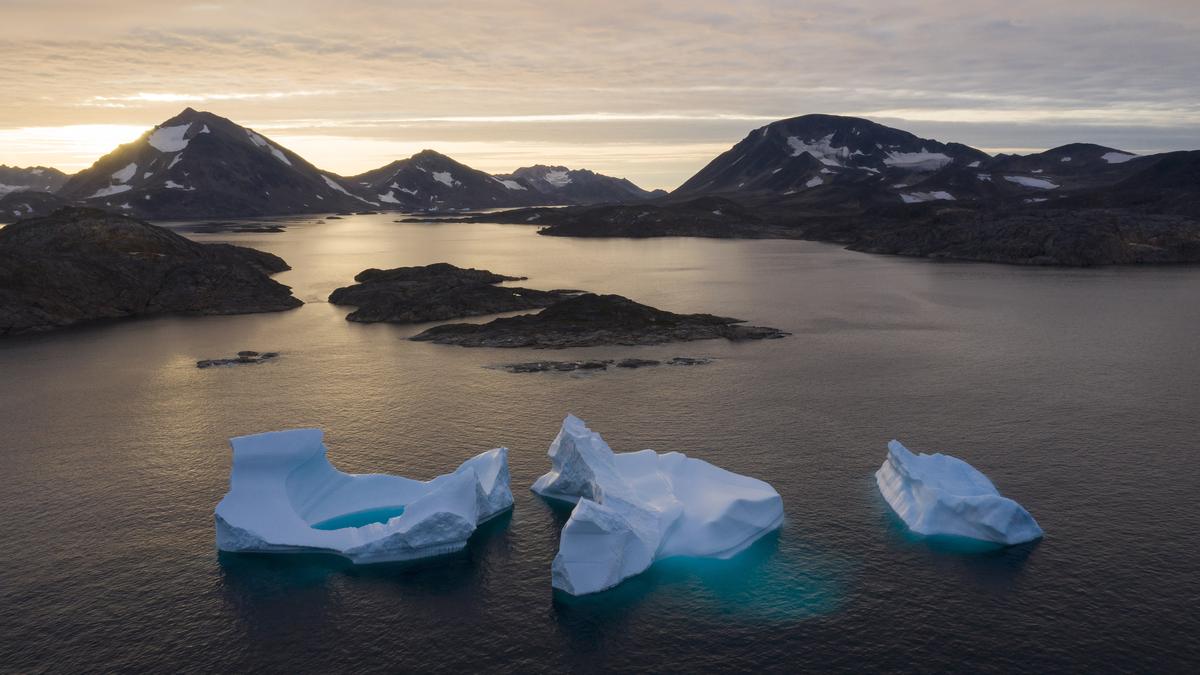
Wed Jan 08 08:21:36 UTC 2025: ## Greenland’s Melting Ice: A Geopolitical and Climate Crisis
**Washington, D.C. – January 8, 2025** – Greenland’s melting ice sheet is not just an environmental concern; it’s a looming geopolitical and climate crisis, experts warn. The world’s largest island, strategically located between the US, Russia, and Europe, holds vast reserves of rare earth minerals, oil, and gas, making it a coveted prize in the increasingly competitive Arctic region.
The accelerating melting of Greenland’s ice, which is occurring four times faster than the global average, poses a significant threat to global sea levels. Scientists estimate that the complete melting of the ice sheet would raise sea levels by 24 feet, drastically reshaping coastlines and altering weather patterns worldwide. A significant portion of this ice, dubbed “zombie ice,” is already destined to melt regardless of future emissions reductions. Since 1992, Greenland has lost an average of 182 billion tons of ice annually, with losses peaking at 489 billion tons in 2019.
Beyond sea-level rise, the melting ice is disrupting the Atlantic Meridional Overturning Circulation (AMOC), a crucial ocean current that influences global weather patterns. A slowdown or collapse of the AMOC, a feared climate tipping point, could trigger extreme weather events and drastically alter temperature and precipitation patterns across the globe. The melting ice also changes Greenland’s albedo, shifting from reflective white ice to energy-absorbing land and ocean, further accelerating warming.
Greenland’s strategic importance is amplified by its location and the opening of Arctic shipping routes. The US, among other nations, has long held an interest in Greenland, partly due to its existing military base and its rich mineral resources. However, Denmark, Greenland’s governing power, has suspended offshore oil development, highlighting the complexities surrounding resource exploitation and environmental preservation.
The consequences of Greenland’s melting ice are already being felt globally. The island’s changing weather patterns have contributed to extreme weather events, such as Superstorm Sandy in 2012 and the current deep freeze across much of the United States. The scientific community emphasizes the urgent need for global cooperation to address this multifaceted crisis, highlighting the far-reaching consequences of inaction.
 First Piper