
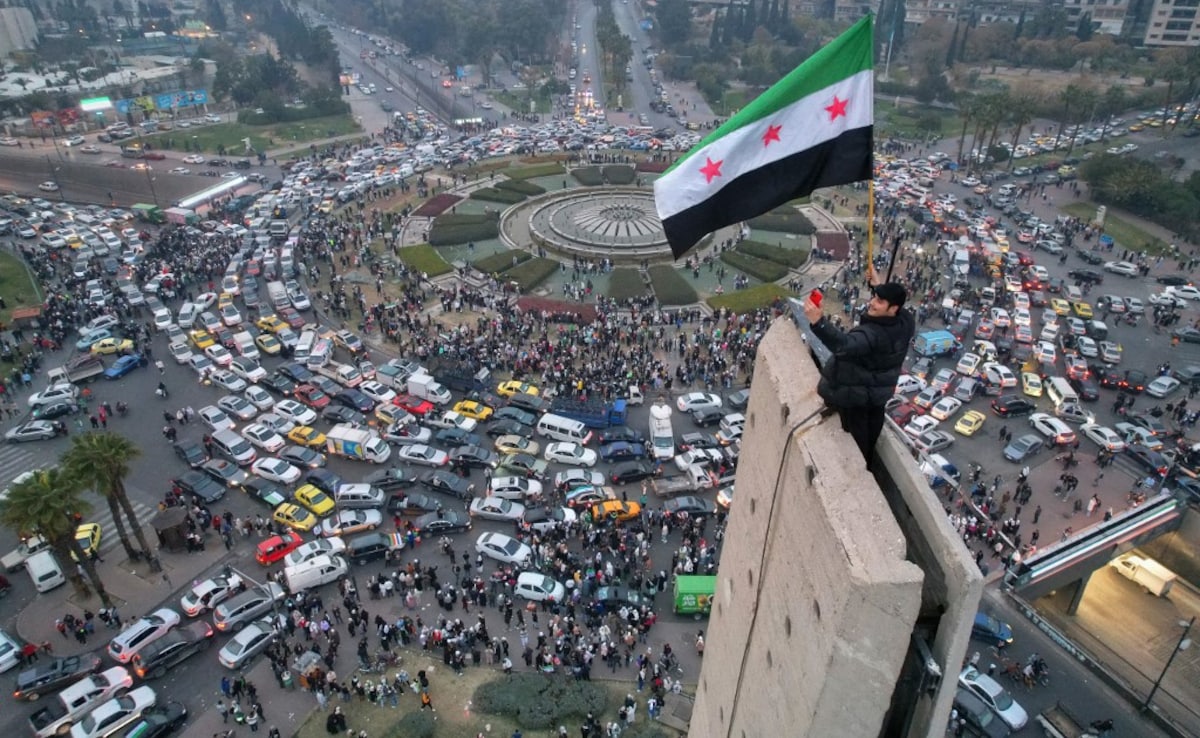
Tue Dec 31 11:20:48 UTC 2024: ## Syria’s Uncertain Future: A Post-Assad Power Struggle
**Damascus, Syria –** The fall of Bashar al-Assad’s regime in Syria has ushered in a period of unprecedented uncertainty, leaving the country teetering on the brink of either a fragile recovery or a descent into further chaos. As 2024 draws to a close, Syria finds itself at the center of a complex geopolitical game, with multiple actors vying for influence.
The interim government, led by the formerly militant Hayat Tahrir al-Sham (HTS), presents a best-case scenario of a potential transition to a democratically elected government, facilitating the return of refugees and economic recovery. However, a far more likely worst-case scenario involves HTS imploding due to internal conflict, triggering a power grab by various factions including the Turkish-backed Syrian National Army (SNA) and the US-backed Syrian Democratic Forces (SDF). Russia, Israel, the US, and Iran all maintain a significant military presence, further complicating the situation.
HTS, attempting a political makeover, is navigating a precarious path, attempting to appease Western powers while maintaining control. Turkey continues to support the SNA, clashing with US support for the SDF. Iran seeks to maintain its influence, while Israel has significantly increased airstrikes within Syria. The Islamic State, meanwhile, is experiencing a resurgence, adding another layer of instability.
The broader West Asian context is equally volatile. The Israel-Hamas conflict resulted in tens of thousands of Palestinian casualties and widespread destruction in Gaza, leading to unprecedented International Criminal Court (ICC) arrest warrants for Israeli leaders. The fragile peace between Iran and Saudi Arabia, brokered in 2023, shows signs of strain, with Syria becoming a point of contention.
The US, focusing on its strategic competition with China, is perceived by some analysts to be reducing its involvement in the region, creating space for regional power plays between Turkey, Iran, and Saudi Arabia. Turkey, having reopened its embassy in Damascus, is positioning itself as a key player in Syria’s reconstruction and potentially a regional stabilizer. The European Union’s commitment of additional funding for refugee support underscores the strategic importance of a stable Syria for the West.
The looming question of the incoming Trump administration’s foreign policy approach adds another layer of uncertainty. The author concludes that West Asia’s future remains highly unpredictable, with the choices made by both regional and global actors dictating whether 2025 brings renewal or further regression.
 First Piper