
Thu Dec 26 03:30:00 UTC 2024: ## Bengaluru’s Accessibility Crisis: A City Failing its Disabled Citizens
**Bengaluru, December 26, 2024** – Bengaluru, a rapidly growing tech hub, faces a stark accessibility crisis, leaving its disabled citizens struggling for basic mobility and independence. Despite a 2011 census identifying 2.74 lakh disabled citizens in the urban district alone, the city’s infrastructure remains largely inaccessible, highlighting a critical failure in urban planning and government support.
A significant reduction in government funding for disability-related programs – an 80% cut, partially restored later – has exacerbated the problem. The meager ₹10 crore allocated for the entire state in 2024-25 is woefully inadequate to address the extensive needs.
Challenges faced by disabled citizens include:
* **Lack of ramps:** Many public buildings, including a prominent eye hospital, lack ramps, forcing wheelchair users and the elderly to navigate steps. This violates the National Building Code of India (NBC) which mandates ramps of at least 1.2 meters wide.
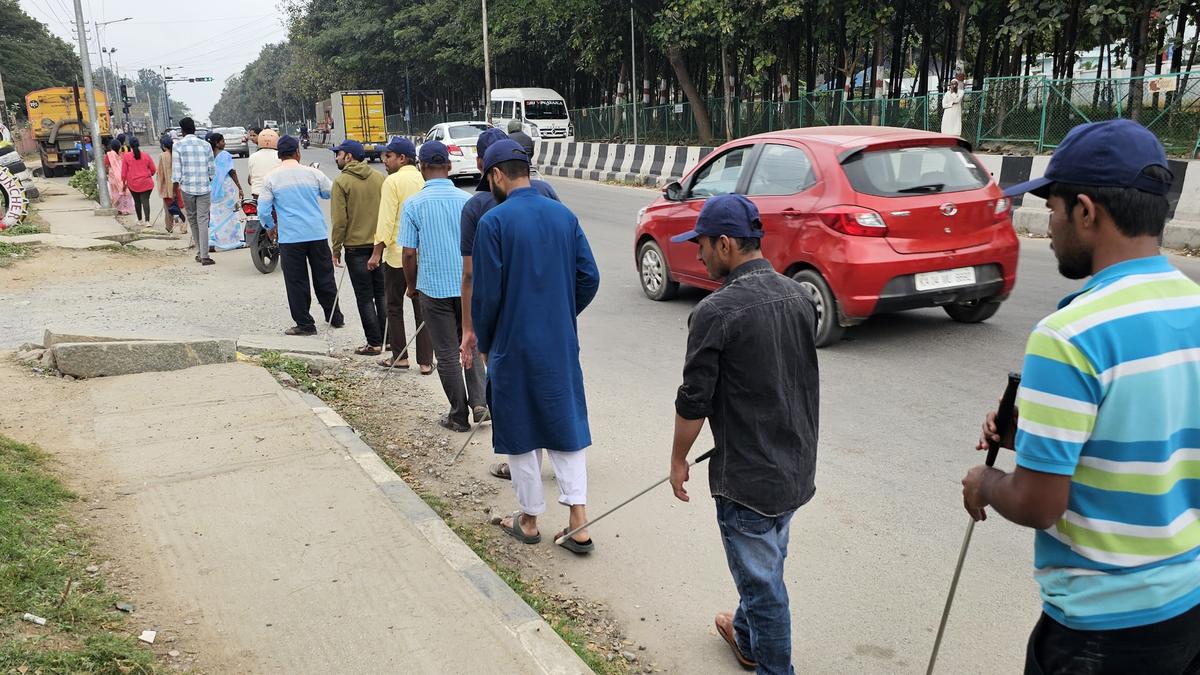
* **Impassable footpaths:** Dilapidated footpaths, often encroached upon by parked vehicles and motorcyclists, force visually impaired individuals to risk their safety by walking on the road. The existing footpaths frequently fail to meet Indian Road Congress (IRC) guidelines regarding height, surface condition, and drainage.
* **Inadequate public transport:** Many buses lack announcement systems, leaving visually impaired passengers reliant on others for information. Even tactile tiles, where installed, are often incorrectly implemented, rendering them useless. Metro stations also lack consistent and correctly implemented tactile infrastructure.
* **Poor signage:** Information for the hearing impaired is virtually non-existent.
Experts, including representatives from Samarthanam Trust for the Disabled and Sensing Local, highlight the need for immediate action. They emphasize the feasibility of cost-effective solutions, such as implementing the Onboard device used in Mysuru to help visually impaired individuals board buses, retrofitting existing infrastructure with ramps and correctly installed tactile tiles, and ensuring adherence to NBC and IRC guidelines. The call for a comprehensive audit of tactile infrastructure in all Metro stations is also highlighted as critical.
The situation underscores a pressing need for policy changes and increased funding to make Bengaluru a truly inclusive city for all its citizens. The current state of affairs reflects not only a lack of infrastructure but also a fundamental disregard for the needs and rights of the disabled community.
 First Piper