
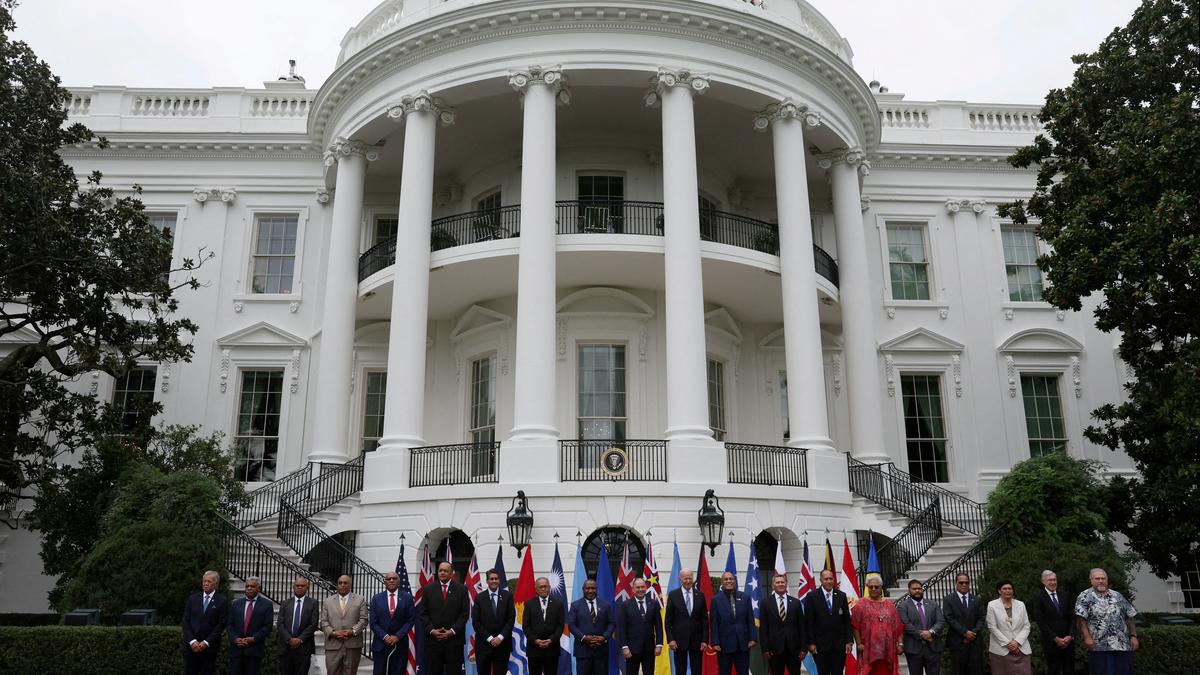
Wed Dec 11 07:52:54 UTC 2024: ## Pacific Island Nations Navigate Shifting Sands of US-China Rivalry Under Trump’s Shadow
**Washington, D.C. –** The Pacific Islands, a region increasingly caught in the strategic tug-of-war between the United States and China, faces uncertainty as President-elect Donald Trump prepares to take office. While a recent $3.5 billion US defense deal with Papua New Guinea (PNG) – providing infrastructure upgrades and military access – signals continued American engagement, Pacific leaders express concern about escalating tensions and being forced to choose sides.
The PNG defense agreement, publicly confirmed by Foreign Minister Justin Tkatchenko, includes improvements to runways, wharfs, and fuel storage facilities. However, a US State Department spokesperson clarified that no specific dollar amount is associated with the deal. This investment follows a Chinese security pact with the Solomon Islands, prompting the US to strengthen its presence in the region. The US has also engaged in diplomatic overtures with Fiji and increased coast guard patrols and aid.
Despite the increased US military presence, PNG, like many Pacific Island nations, intends to maintain its trade relationship with China. This reflects a broader sentiment among Pacific leaders wary of being drawn into a direct confrontation between the superpowers. Meg Taylor, former secretary-general of the Pacific Islands Forum, emphasized the region’s desire to avoid choosing sides.
The incoming Trump administration’s approach is a key concern. While former President Trump demonstrated understanding of the region’s strategic importance, his potential Secretary of State, Marco Rubio, known as a China hawk, might adopt a more aggressive stance. This includes potentially blocking Chinese investment in subsea cables. Concerns remain about the impact of a potential withdrawal from the Paris Agreement on US climate funding crucial for the region’s adaptation to rising sea levels.
Despite these anxieties, some diplomats suggest that US climate funding might continue, even if under different names. The emphasis remains on navigating the complex geopolitical landscape without being drawn into a direct confrontation, and preventing the US from alienating key regional leaders. The overarching sentiment is that while a stronger US presence is welcomed, increased confrontation would ultimately work against US interests in the region.
 First Piper