
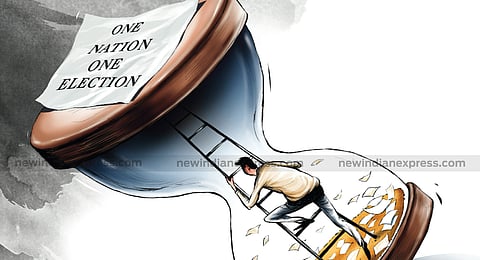
Fri Dec 13 15:31:47 UTC 2024: ## Government Pushes “One Nation, One Election” Amidst Opposition Backlash
**New Delhi** – The Indian Union Cabinet has approved two bills, including a constitutional amendment, to implement the controversial “One Nation, One Election” (ONOE) plan. This aims to synchronize Lok Sabha (national parliament) and state assembly elections, a key promise of the ruling Bharatiya Janata Party (BJP) since 2014.
The move, however, has sparked fierce opposition from various parties who argue it undermines India’s democratic structure and federalism. The proposed amendment would facilitate simultaneous elections, while a second bill addresses necessary adjustments for Union Territories with legislative assemblies.
The bills, following recommendations from a high-level committee chaired by former President Ram Nath Kovind, are expected to be introduced in Parliament’s Winter Session. The government anticipates referring the constitutional amendment bill to a Joint Parliamentary Committee (JPC) for broader discussions and consensus-building.
The Kovind panel’s report, totaling 18,626 pages, argues that simultaneous elections would reduce election expenditure and minimize disruption to governance. While 32 political parties supported the concept during consultations, 15 opposed it, citing concerns about the potential violation of the Constitution’s basic structure and marginalization of regional parties.
The proposed legislation faces significant hurdles. The constitutional amendment requires a two-thirds majority in both houses of Parliament, a threshold the ruling National Democratic Alliance (NDA) currently lacks. Even with support from allies, securing the necessary votes will require substantial cross-party cooperation.
Opposition parties, including the Congress, have vehemently criticized the proposal. Statements from leaders such as Congress President Mallikarjun Kharge, West Bengal Chief Minister Mamata Banerjee, Samajwadi Party chief Akhilesh Yadav, Tamil Nadu Chief Minister MK Stalin, and Punjab Chief Minister Bhagwant Mann, express concerns about the bill’s anti-democratic and anti-federal nature. Some opposition parties have called the proposal a maneuver to consolidate power and undermine regional voices. Others, like the BRS, have called for more clarity before taking a stance.
Even former Chief Election Commissioner S.Y. Quraishi has expressed reservations about the practicality and potential flaws in the proposal. The path to enacting “One Nation, One Election” remains uncertain, hinging on the ability of the ruling coalition to navigate significant political opposition and secure the necessary parliamentary votes.
 First Piper