
Sat Dec 07 20:51:00 UTC 2024: ## Global Plastic Treaty Talks Fail to Reach Agreement in Busan
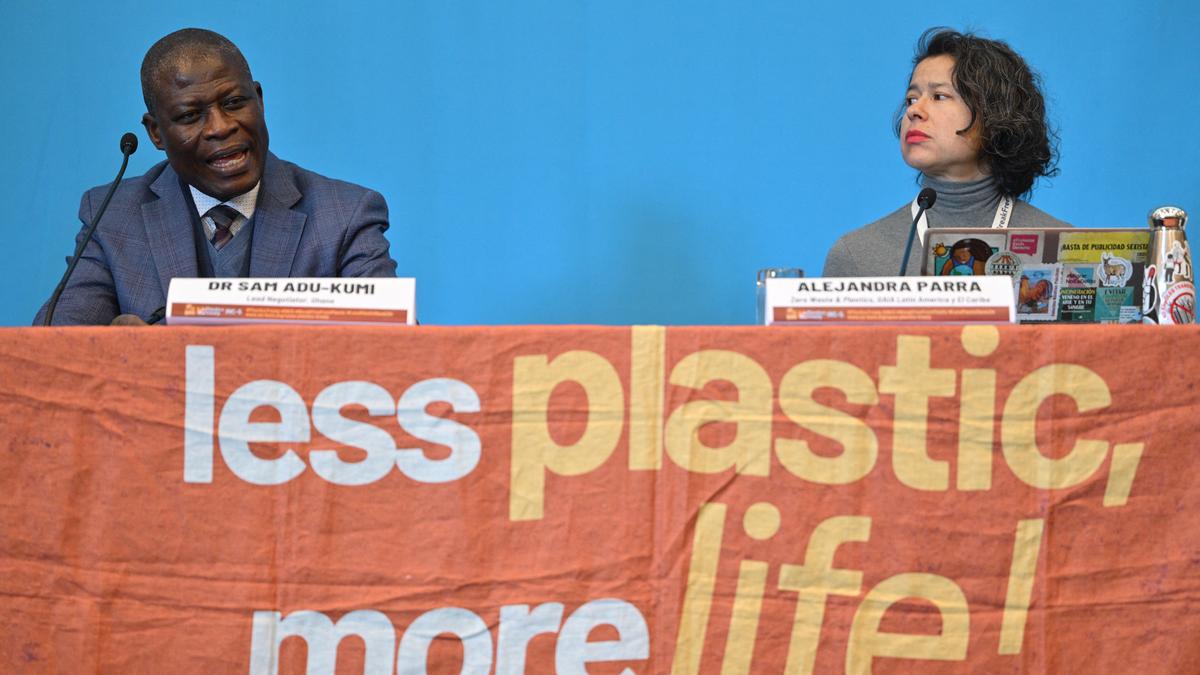
**Busan, South Korea –** The fifth Intergovernmental Negotiating Committee (INC-5) meeting aimed at creating a legally binding global treaty to combat plastic pollution concluded in Busan without achieving its mandate. Despite a week of negotiations involving nearly 170 countries, deep divisions prevented the creation of a treaty to curb plastic production and address the global waste crisis.
The meeting, intended to be the final round of talks before the end-of-year deadline set by the United Nations Environment Assembly (UNEA), failed to bridge the gap between nations viewing plastic pollution as a waste management issue and those demanding a reduction in plastic production at its source. Many countries, including significant plastic producers and petro-states, resisted proposals to limit plastic production, citing concerns about trade and development.
The current annual global plastic waste generation stands at approximately 400 million tonnes, a figure projected to reach 1.1 billion tonnes by 2050 if current trends persist. A significant portion (36%) of plastic production is used in packaging, with the vast majority ending up in landfills or as unregulated waste. The environmental and economic costs are staggering, with an estimated annual loss of $80-$120 billion in the value of plastic packaging waste during sorting and processing alone. Further, the production, use, and disposal of plastics are projected to contribute 19% of the global carbon budget by 2040.
India, a major plastic producer and exporter, voiced its opposition to measures regulating primary plastic polymer production, arguing that such measures would impede its right to development. While India has banned 22 types of single-use plastics and implemented an Extended Producer Responsibility regime, it considers production cuts as trade barriers. Its stance aligned with that of several other petrochemical-producing nations, including China and Saudi Arabia. Approximately 85-100 countries at the conference supported production cuts and supply restrictions. The consensus-based negotiation process, requiring unanimous agreement on every aspect of the treaty text, contributed significantly to the deadlock. Proposals for voting mechanisms were rejected due to equity concerns.
While the INC-5 failed to deliver a treaty, a follow-up meeting, INC 5.2, is anticipated in 2025 to continue negotiations. The eventual treaty, if agreed upon, would establish a periodic Conference of Parties (COP) similar to those used in climate change negotiations. The lengthy negotiation timelines observed in previous international environmental agreements suggest that finalizing and implementing a global plastics treaty will be a protracted process.
 First Piper