
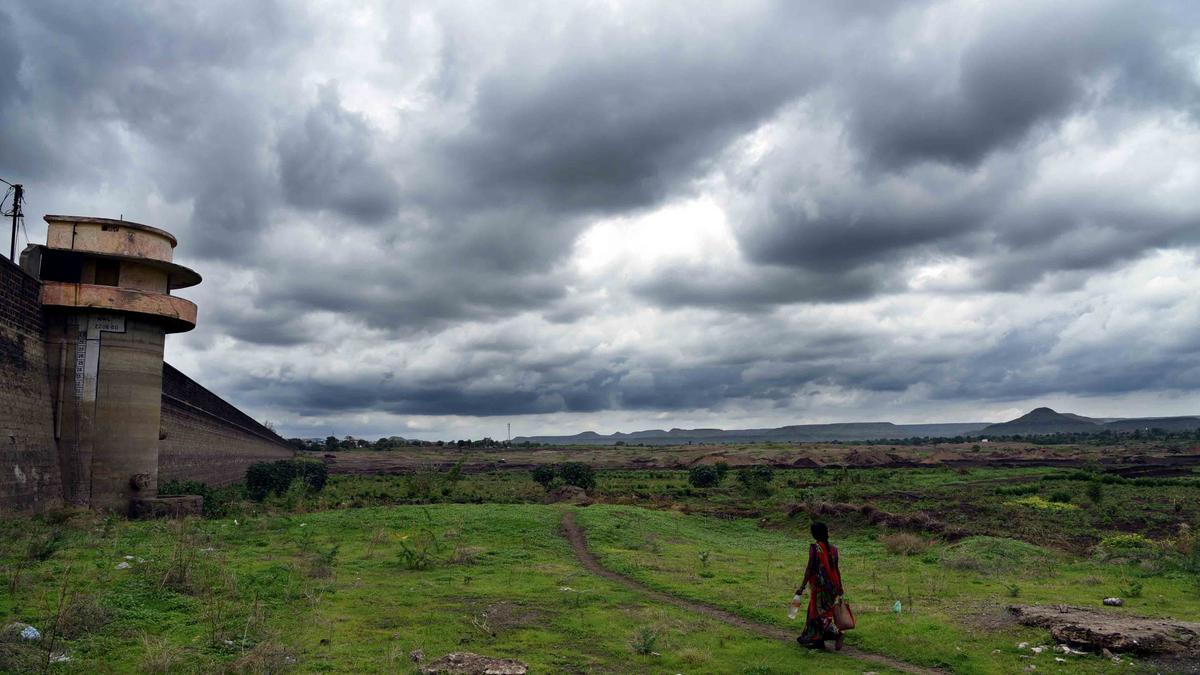
Thu Dec 05 13:05:28 UTC 2024: ## Erratic Monsoon Ravages Maharashtra’s Marathwada Region, Threatening Farmers’ Livelihoods
**Jalna, Maharashtra, December 5, 2024** – While much of Maharashtra battles severe floods, the Marathwada region faces a different, equally devastating challenge: erratic rainfall patterns that are crippling agriculture and threatening the livelihoods of thousands of farmers. A new analysis of rainfall data reveals a dramatic shift in the monsoon’s behavior, leaving farmers vulnerable to both devastating floods and crippling droughts.
The study, conducted by hydrologists Ishita Jalan and Lakshmikantha NR of the Water, Environment, Land and Livelihoods (WELL) Labs, analyzed data from the India Meteorological Department. Their findings show that while the total annual rainfall in Jalna district remains relatively stable, the timing and intensity of the rains have become increasingly unpredictable. The crucial months of July, August, and September, which historically account for 70% of the region’s annual rainfall, are now marked by extreme variability. July and August often see rainfall deficits of up to 70%, while September experiences a 50% chance of downpours deviating significantly from normal patterns.
The problem is compounded by changes in the frequency and intensity of rainfall events. The number of rainy days in August, a critical period for crop growth, has decreased by 30%, while September shows an 18% increase, leading to waterlogging just as crops mature. Furthermore, extreme rainfall events – defined as days with rainfall in the 99th percentile – have become both more frequent and more intense, increasing from an average of 59 mm/day between 1951-2000 to 70 mm/day between 2001-2023.
This unpredictable rainfall is forcing farmers to shift from lucrative kharif season (July-October) crops to lower-yielding rabi season (November-April) crops. The black soil of Marathwada, while capable of retaining large amounts of water, is prone to waterlogging, suffocating crops and causing significant losses. The region’s hydrogeology further exacerbates the issue, as the underlying basalt rock limits long-term water storage.
The researchers highlight the urgent need for new agricultural water management strategies. Current methods, relying on farm ponds, are inadequate for handling both water scarcity and excess. They propose enhancing drainage networks, improving surface water storage, and transitioning to more water-tolerant crops. This combined approach, they argue, is crucial for building a more resilient agricultural system capable of withstanding the increasingly erratic monsoon patterns plaguing Marathwada.
 First Piper