
Mon Dec 02 10:54:00 UTC 2024: ## Rare Spade-Toothed Whale Offers Unprecedented Research Opportunity
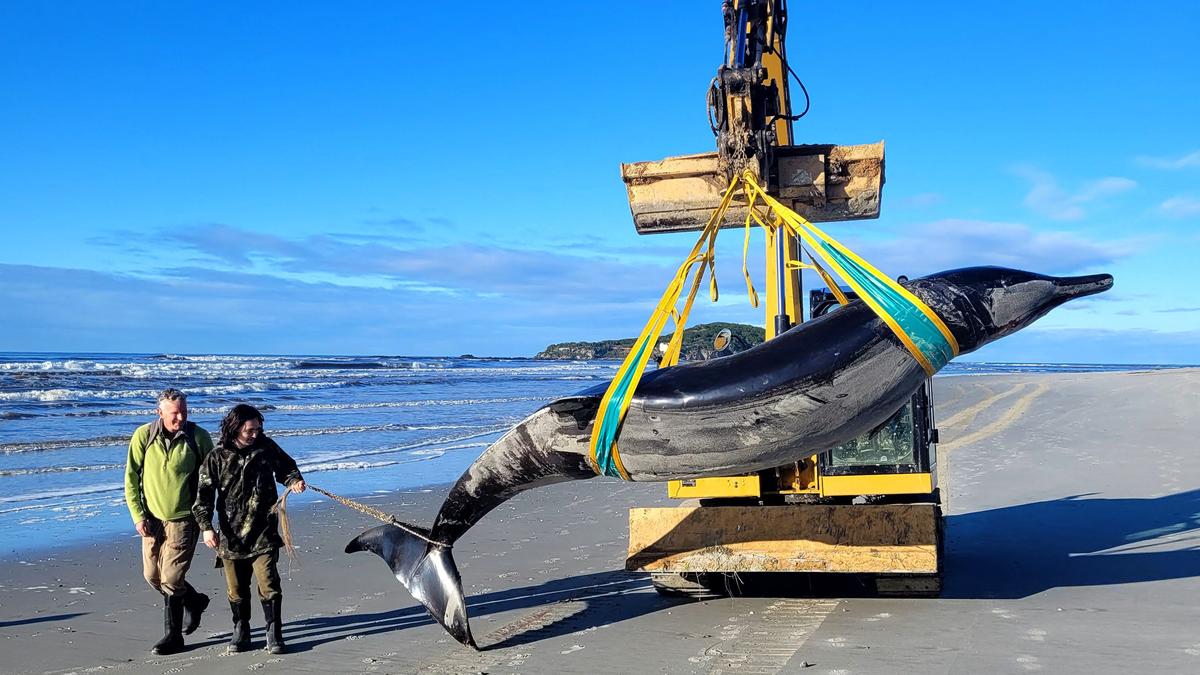
**Dunedin, New Zealand –** Scientists and Maori cultural experts in New Zealand are conducting the first-ever dissection of a spade-toothed whale, a critically endangered species rarely seen alive. The near-perfectly preserved carcass, a male measuring 5 meters long, washed ashore in July. This is only the seventh spade-toothed whale ever discovered, providing an invaluable opportunity to learn about this enigmatic species.
The research team, including international experts, will study the whale’s anatomy, diet, and sound production. They will also investigate the possibility of discovering new parasites unique to this species. The dissection is being conducted in partnership with the local Maori iwi, Te Runanga Otakou, who view the whale as a taonga (treasure) and are actively participating in the process, ensuring respect for their cultural traditions. The iwi will retain the whale’s jawbone and teeth, while the skeleton will be displayed in a museum. 3D printing will create replicas of these parts.
Little is known about spade-toothed whales. Their habitat, behavior, and even the structure of their brains remain largely mysterious. Previous discoveries were mostly skeletal remains, limiting research. This intact specimen, discovered in a New Zealand beach known as a whale stranding hotspot, offers unparalleled insights into the species’ biology and its role within the Southern Pacific Ocean ecosystem.
The research promises not only advancements in our understanding of the spade-toothed whale but also potential discoveries applicable to human health, according to comparative anatomist Joy Reidenberg from the Icahn School of Medicine at Mount Sinai. The methodical study will combine scientific expertise with Maori cultural practices, creating a unique collaborative approach to scientific discovery.
 First Piper