
Tue Dec 03 12:00:00 UTC 2024: ## Unpredictable Cyclone Fengal Highlights Challenges in Weather Forecasting
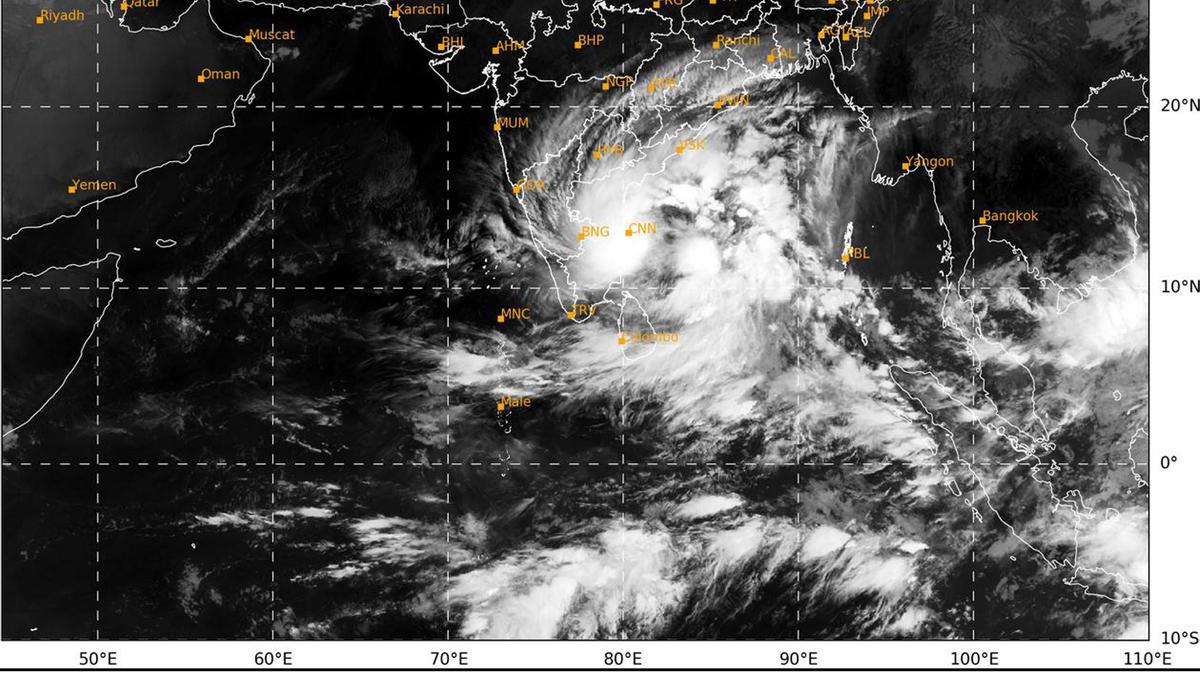
**CHENNAI, INDIA (December 3, 2024)** – Cyclone Fengal, which is predicted to bring heavy rain to parts of north Kerala and south Karnataka, including Bengaluru, has exposed the limitations of current weather prediction models. The cyclone’s unusual behavior, including its slow formation and erratic westward and northward movement, is highlighting the increasingly unpredictable nature of weather patterns in 2024.
The unexpected persistence of Fengal, even after making landfall, is attributed to prior rainfall saturating the coastal soil, providing unexpected energy for the cyclone. This, combined with the unusually warm Bay of Bengal, allowed the storm to defy typical dissipation patterns. There’s a possibility it could even survive its journey across the Arabian Sea.
This year has shattered weather model predictions. While a strong La Niña was anticipated, the eastern tropical Pacific Ocean exhibited unusual, disorganized sea surface temperatures with no significant cooling. Similarly, predictions of an Indian Ocean Dipole failed to materialize. The North Atlantic hurricane season, also predicted to be historic, was initially subdued before intensifying later.
Prof. Raghu Murtugudde of IIT Bombay and the University of Maryland attributes these failures partly to the interplay between global warming and natural climate variability. While 2024 is expected to surpass the 1.5°C warming threshold above pre-industrial levels, the inaccurate forecasts underscore the inherent uncertainties in predicting weather events. The models, he explains, can only predict probabilities, not certainties.
The unusual behavior of Cyclone Fengal and the broader global weather patterns raise questions about the influence of typhoons on the northern Indian Ocean cyclones and the northeast monsoon. The fact that favorable conditions for cyclogenesis – warm ocean, weak wind shear, moisture, and circulation seeds – did not result in a more active post-monsoon season further emphasizes the difficulties faced by meteorologists.
Prof. Murtugudde stresses the need to continue monitoring global and regional warming patterns and their interactions with natural climate modes to improve the accuracy of future forecasts, particularly regarding extreme weather events in the Indian subcontinent. The unpredictable nature of events like Cyclone Fengal necessitates a more nuanced understanding of these complex interactions.
 First Piper