
Tue Dec 03 12:00:30 UTC 2024: ## RSS Chief Urges Indian Couples to Have Three Children Amidst Population Concerns
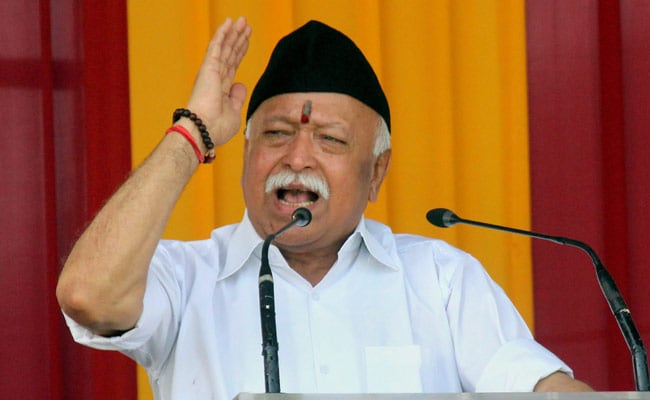
**New Delhi** – The chief of the Rashtriya Swayamsevak Sangh (RSS), Mohan Bhagwat, has called on Indian couples to have at least three children each, citing concerns about India’s declining fertility rate. Bhagwat’s pronatalist stance, voiced at a recent gathering in Nagpur, echoes similar calls from other prominent figures, including Tamil Nadu Chief Minister M.K. Stalin, who urged couples to have 16 children, and Andhra Pradesh Chief Minister Chandrababu Naidu, who is considering incentivizing larger families.
While Bhagwat framed his appeal in terms of preventing societal extinction due to a fertility rate below the replacement level of 2.1, the RSS’s concerns are also intertwined with anxieties about the changing religious demographics of India. The organization has previously expressed worries about the increasing share of the Muslim population, a concern that appears to be fueling this latest push for higher birth rates among Hindus.
This pronatalist push contrasts sharply with the successful population control measures implemented in southern Indian states like Kerala and Tamil Nadu, which have seen improvements in per capita income and service delivery but a decrease in their share of national resources. The RSS’s call for a “reformulation of the national population policy” underscores its desire to address perceived imbalances in the population distribution.
The article highlights the historical view of large populations as a national strength, contrasting it with the current reality where technological advancements are reducing the demand for human labor. While prominent figures like Elon Musk also express concerns about declining birth rates, their arguments often lack concrete plans for supporting larger families.
Critics argue that the emphasis on national duty ignores the challenges faced by women in India, including limited workforce participation and societal pressures. The author questions whether the RSS’s new emphasis on procreation signals a potential shift in its long-standing policy of celibacy for its pracharaks. The article concludes by raising questions about the underlying motivations behind this pronatalist push and its implications for India’s social and political landscape.
 First Piper