
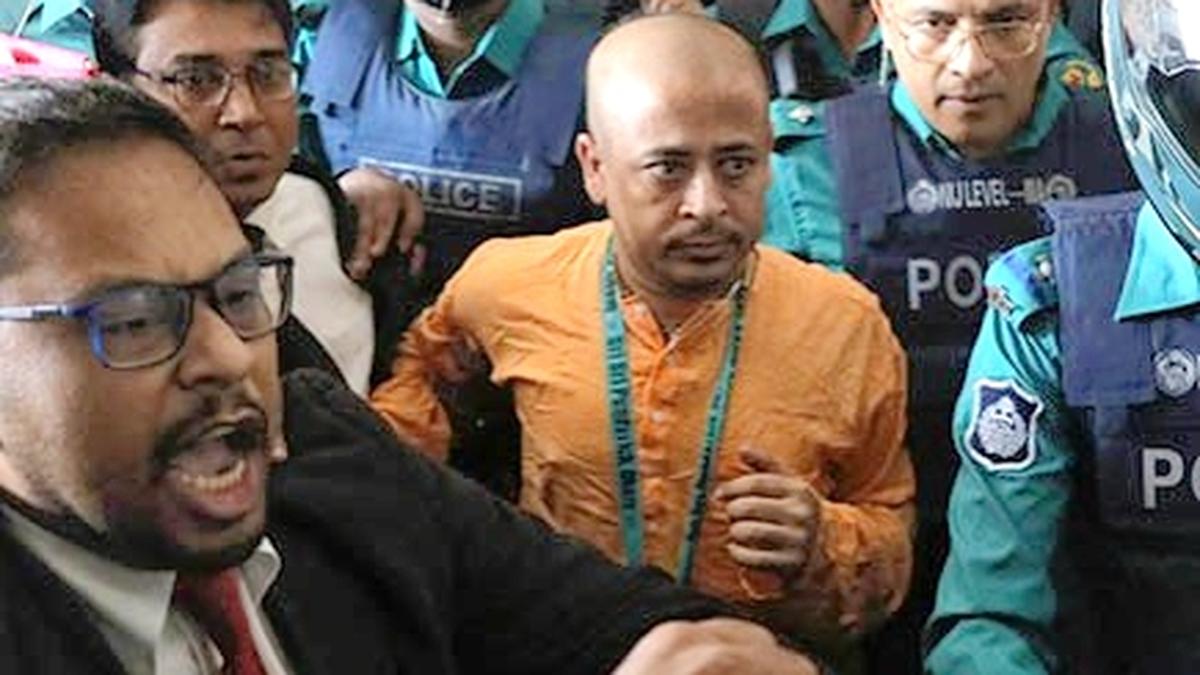
Sat Nov 30 21:30:00 UTC 2024: ## ISKCON Leader’s Arrest Fuels Communal Tensions in Bangladesh, Raising Concerns for India
**Dhaka, Bangladesh –** The arrest of Chinmoy Krishna Das, a former ISKCON leader and prominent spokesperson for minority religious communities in Bangladesh, has ignited communal tensions and raised concerns about the stability of the interim government led by Muhammad Yunus. Das was arrested on November 25th on sedition charges stemming from a rally where a saffron flag was allegedly raised higher than the Bangladeshi national flag. The incident sparked clashes, resulting in the death of a government law officer and the desecration of several temples. Over 18 individuals have been arrested in connection with the violence.
ISKCON Bangladesh has distanced itself from Das and his actions, stating that he was removed from his position and that the organization is not involved in the events surrounding the law officer’s death. However, the arrest has fueled protests in India, particularly among ISKCON followers and those concerned about the treatment of minority communities in Bangladesh. Demonstrations have been held outside Bangladeshi diplomatic missions in India, including one where an effigy of Mr. Yunus was burned.
The unrest comes amidst concerns about increasing discrimination against Hindu, Buddhist, and Christian communities in Bangladesh. These concerns have been voiced by the Bangladesh Hindu Bouddho Christian Oikyo Parishad (BHBCOP), which has criticized the government’s response to past incidents of violence against religious minorities. The BHBCOP has also expressed apprehension over the interim government’s constitutional reforms, particularly the Attorney General’s suggestion that the country’s secular constitution does not reflect the reality of its predominantly Muslim population. This has further fueled anxieties about potential discrimination and a possible exodus of minority groups to neighboring India.
The situation adds a layer of complexity to India-Bangladesh relations, already strained by the presence of former Prime Minister Sheikh Hasina in India. Ms. Hasina’s outspoken criticism of the Yunus government has created diplomatic challenges for India, particularly given the review of an Adani Group power project in Bangladesh. The uncertain future of the Yunus government, coupled with the resurgence of the Jamaat-e-Islami, a banned anti-India party, adds further instability to the region. The escalating tensions highlight a precarious situation for religious minorities in Bangladesh and pose a significant challenge to regional stability.
 First Piper