
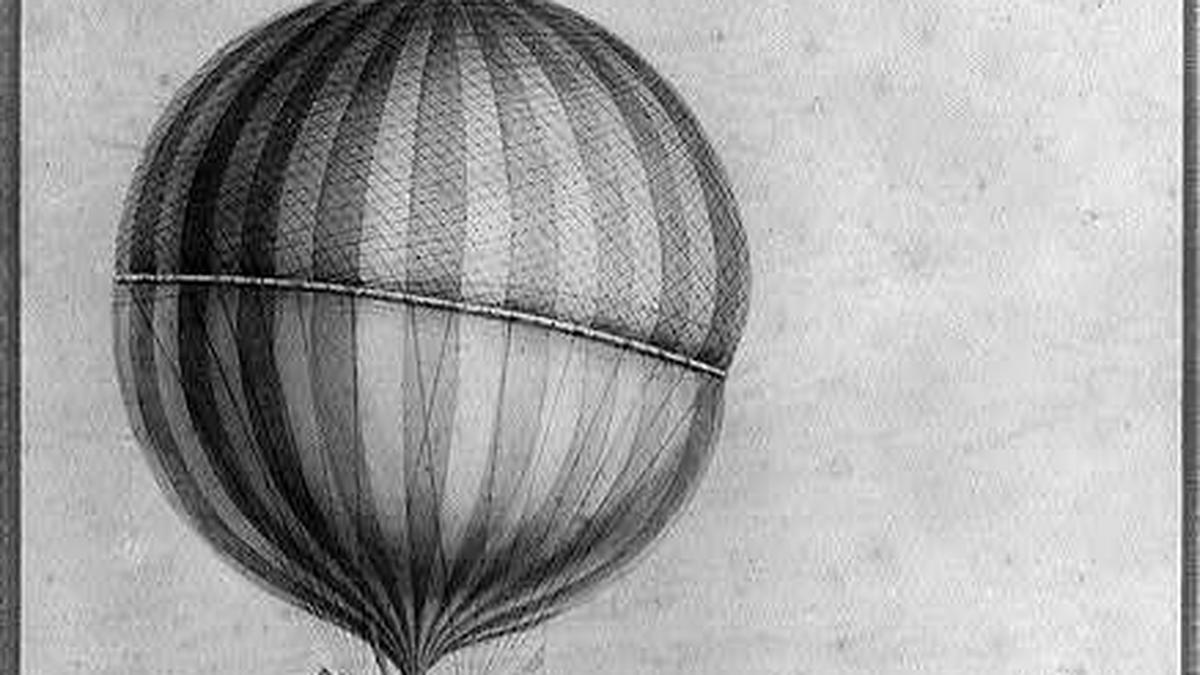
Sat Nov 30 19:13:00 UTC 2024: ## First Manned Hydrogen Balloon Flight Makes History: Paris Throngs to Witness Groundbreaking Ascent
**Paris, December 1, 2024** – On December 1st, 1783, history was made as Jacques Charles and Nicolas Robert successfully completed the first-ever manned free flight in a hydrogen balloon. The event, witnessed by an estimated 400,000 spectators in the Tuileries Gardens, marked a pivotal moment in aviation history, fueling the widespread “balloonomania” that gripped Europe.
The flight, lasting 2 hours and 5 minutes, saw Charles and Robert ascend from the Tuileries Gardens, with the Palace of Versailles visible in the background. Their ascent followed a summer of significant ballooning advancements. The Montgolfier brothers had debuted their hot air balloons earlier in the year, culminating in a flight carrying a sheep, duck, and rooster in September. Jean-François Pilâtre de Rozier had also made a tethered hot air balloon ascent before achieving the first free hot air balloon flight with François Laurent d’Arlandes.
Charles’s hydrogen balloon, a collaborative effort with the Robert brothers, was a feat of engineering in itself. The process of filling the balloon involved a risky reaction of sulphuric acid and iron nails, generating hydrogen gas that was then purified and piped into the balloon. This method, while successful, presented significant dangers due to the exothermic nature of the reaction and the flammability of hydrogen.
The flight not only achieved the groundbreaking feat of manned hydrogen flight but also provided early atmospheric measurements. Following the landing in Nesles-la-Vallée, Charles even conducted the first solo hydrogen balloon flight.
The event’s immense popularity underscored the public’s fascination with ballooning, a fascination which had a profound social impact, influencing fashion, product design, and even sparking conversations among influential figures such as Benjamin Franklin. Charles’s contribution to aviation and science lives on, with hydrogen balloons still known as “charlières” in France and his findings on gas volume and temperature now recognized as Charles’s Law.
 First Piper