
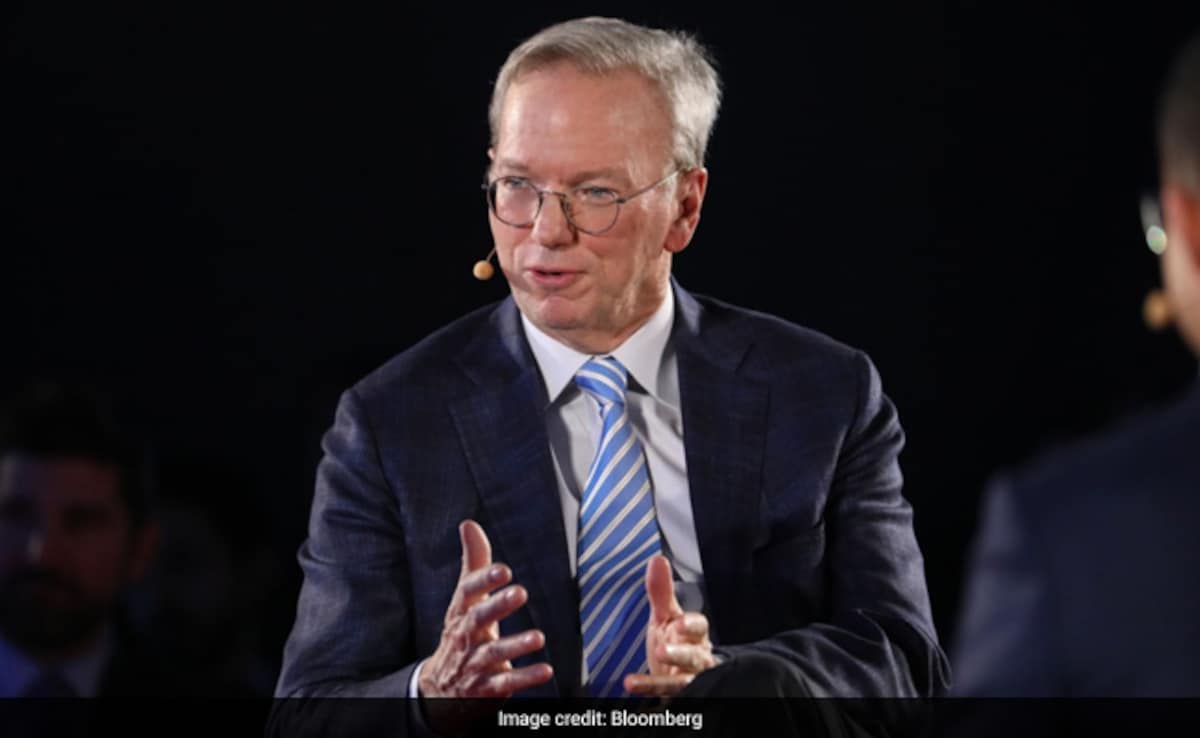
Mon Nov 18 05:38:10 UTC 2024: ## Former Google CEO Eric Schmidt: In-Office Work Crucial for Career Advancement
**San Francisco, CA –** Former Google CEO Eric Schmidt has reignited the debate surrounding remote work, arguing that in-person office work is essential, especially for young professionals seeking career progression. In a recent interview on *The Diary of a CEO podcast*, Schmidt emphasized the importance of informal networking and mentorship opportunities found within the office environment. He stated that his own career success was significantly shaped by “hanging out at the water cooler” and engaging in spontaneous interactions with colleagues.
“If you’re in your 20s, you want to be in an office because that’s how you’re going to get promoted,” Schmidt declared.
His comments are supported by recent research. A January study by Live Data Technologies, highlighted in *The Wall Street Journal*, revealed that fully remote workers were 31% less likely to receive promotions than hybrid or in-office employees. While acknowledging that remote work can boost productivity in certain situations, Schmidt voiced his personal preference for in-office work. This sentiment is echoed by other tech leaders. Meta now requires a minimum of three days a week in the office, with CEO Mark Zuckerberg citing increased efficiency among in-office engineers. OpenAI CEO Sam Altman has also criticized the widespread adoption of permanent remote work, calling it a “worst mistake” in the tech industry.
However, the relationship between remote work and productivity remains a subject of ongoing debate. A 2023 study from Stanford’s Institute for Economic Policy Research found that fully remote work reduced productivity by 10%, although hybrid models showed no significant difference.
Major corporations like Amazon, JPMorgan Chase, and Goldman Sachs are tightening their return-to-office policies, often linking in-office attendance to performance reviews and employment. Schmidt’s previous comments linking Google’s remote work policies to a decline in competitiveness against AI startups, though later clarified, further fuel the ongoing conversation about the optimal workplace model for innovation and success.
 First Piper