
Fri Nov 15 03:56:35 UTC 2024: ## Dense Smog Engulfs North India, Air Quality Hits ‘Severe’ Levels
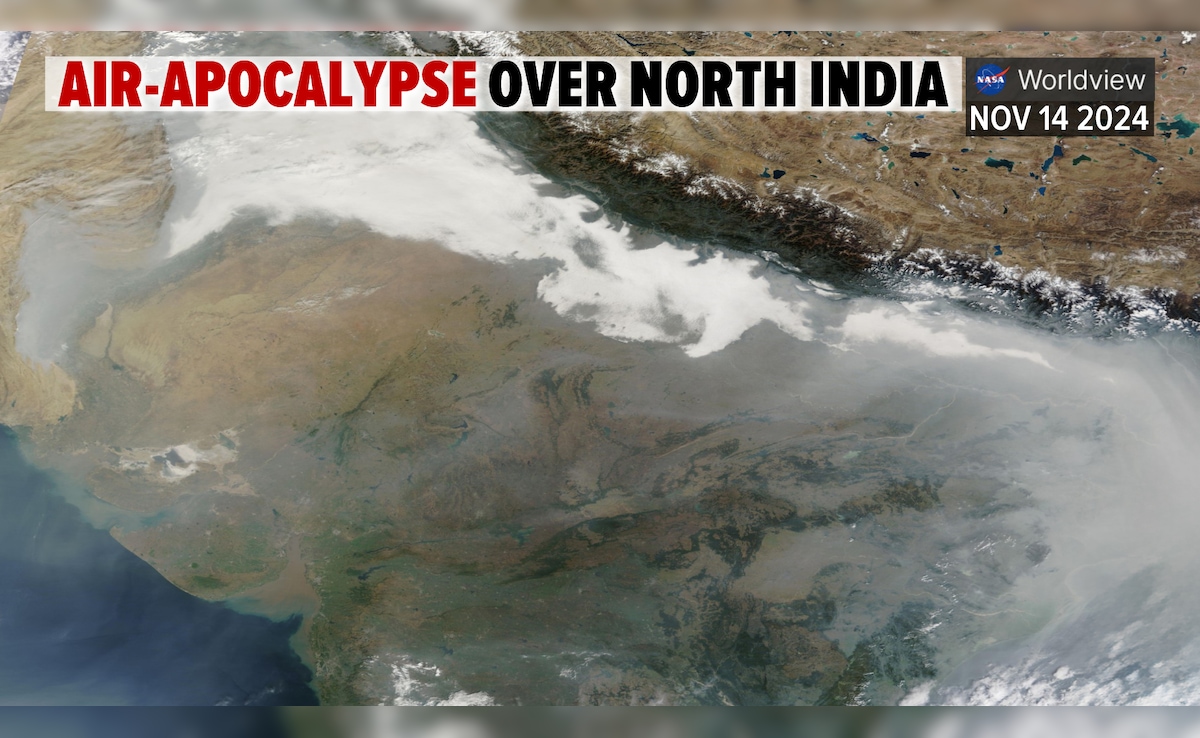
**New Delhi, November 14, 2024:** A thick blanket of smog has descended upon north India, causing low visibility, a drop in temperature, and deteriorating air quality to “Severe” levels, sparking concern across the region.
Satellite images show an alarming spread of smog across northwest India, including Delhi and surrounding areas, Punjab, Haryana, Uttar Pradesh, parts of north Rajasthan, Himachal Pradesh, and Uttarakhand.
**Thermal Inversion: A Key Factor**
Experts attribute the sudden spike in smog and pollution levels to thermal inversion, a phenomenon where warmer air sits above cooler air, trapping pollutants near the surface. “This prevents the vertical mixing of pollutants, so whatever we emit at the surface stays within the boundary layer,” explained Hiren Jethva, an aerosol remote sensing scientist at NASA Goddard Space Flight Center.
Mr. Jethva also noted that the increased occurrence of fog in November, which typically happens in December, is linked to higher levels of particulate matter (PM) acting as cloud condensation nuclei.
**Farmers’ Tactics to Avoid Satellite Surveillance?**
While authorities have praised Punjab for reducing stubble burning, Mr. Jethva claims that farmers are timing their crop burning activities to avoid detection by NASA satellites. He alleges that farmers burn crops late afternoon, after the NASA satellites have passed over the region, using the cover of cloud cover to mask their activities.
He presented evidence from South Korean geostationary satellites, which capture images every five minutes, showing a significant increase in burning activity after 2 pm, after the NASA satellites have passed.
**Delhi’s Air Quality at Record High**
Delhi’s Air Quality Index (AQI) reached 428 at 9 am today, registering the worst air quality of the season and the highest in the country. This marks a significant increase from Wednesday’s 24-hour AQI of 418.
Dr Vivek Nangia, a Pulmonology head at Max Hospital, warns of the severe health risks associated with air pollution, including respiratory illnesses, heart attacks, strokes, and various types of cancer.
**Stricter Measures Implemented**
In response to the crisis, the Commission for Air Quality Management (CAQM) has implemented stricter measures, banning all non-essential construction and demolition work and the plying of BS III petrol and BS-IV diesel cars.
**Pakistan Also Struggles with Smog**
The situation is equally concerning in neighboring Pakistan, with most outdoor activities banned in the Punjab province. Lahore, enveloped in a thick layer of smog, is currently the world’s most polluted city with an AQI of 1136.
UNICEF has called for greater efforts to reduce pollution and protect children’s health in Pakistan’s Punjab, highlighting the danger faced by over 11 million children under five.
The crisis underscores the urgent need for comprehensive and collaborative efforts to address the issue of air pollution in the region, which poses a serious threat to public health and well-being.
 First Piper