
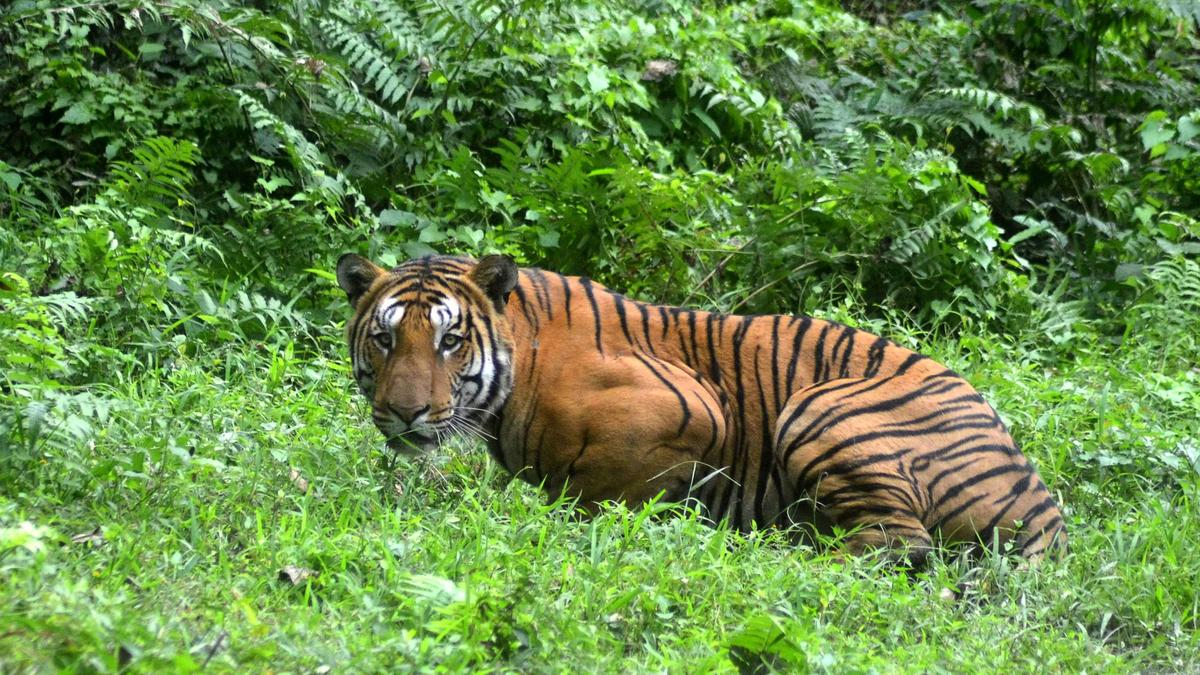
Fri Nov 08 19:47:00 UTC 2024: ## Manas National Park Tiger Population Triples in a Decade, Study Shows
**GUWAHATI, INDIA** – A new study has revealed a remarkable recovery in the tiger population at Manas National Park, a UNESCO World Heritage Site spanning western Assam and Bhutan. The tiger population tripled between 2011 and 2019, according to the study published in the Journal of Biological Conservation.
The report attributes this turnaround to a combination of increased funding, improved protection infrastructure, a larger park staff, and collaborative efforts from local communities, government, and conservation agencies. Tourism revenue has significantly boosted management budgets, playing a crucial role in the park’s success.
Despite the positive trend, the study highlights ongoing challenges such as poaching and habitat loss, emphasizing the need for continued management efforts as the tiger population approaches its carrying capacity.
The study further reveals that the tiger population density in Manas increased from 1.06 adults per 100 km2 in 2011-12 to 3.64 in 2018-19, with the potential to reach 8 or more. The report suggests that the number of tigers in the park could double by 2023 if current conservation measures remain in place.
The study’s success story is attributed to a holistic approach that includes improved patrol tactics, sustainable livelihood initiatives for local communities, and cross-border collaboration with Bhutan. International organizations like Panthera and US Fish and Wildlife Services have also contributed significantly to the park’s recovery.
“This remarkable recovery in the tiger population in Manas is a testament to the power of collaborative conservation efforts,” stated Dipankar Lahkar, lead author of the report and researcher at Aaranyak, a biodiversity conservation organization. “While challenges remain, we can look forward to a future with thriving tiger populations in this important wildlife sanctuary.”
 First Piper