
Sun Nov 03 05:55:40 UTC 2024: ## US, South Korea, Japan Conduct Joint Air Drills in Response to North Korean ICBM Test
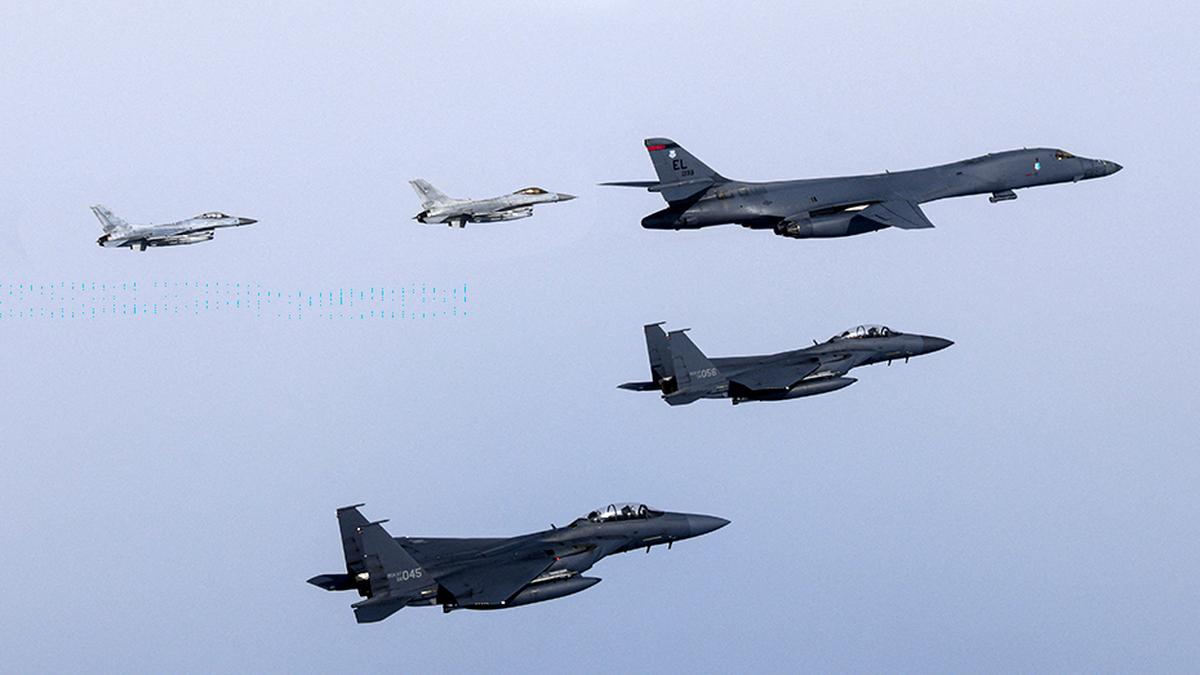
**SEOUL, South Korea** – The United States, South Korea, and Japan conducted a trilateral aerial training exercise on Sunday, November 3rd, in response to North Korea’s recent test-firing of a new intercontinental ballistic missile (ICBM). The exercise saw the deployment of a US B-1B bomber alongside South Korean and Japanese fighter jets near the Korean Peninsula.
This joint training, the second of its kind this year, demonstrates the three countries’ unwavering commitment to deterring North Korea’s growing nuclear and missile capabilities. The US B-1B bomber, known for its ability to carry a substantial conventional weapons payload, served as a clear message of the alliance’s strength and preparedness.
North Korea launched its Hwasong-19 ICBM on Thursday, November 1st, a test that marked the country’s first ICBM launch in nearly a year. The missile’s trajectory and flight duration exceeded previous North Korean launches, raising concerns about its potential to reach US mainland.
While experts believe North Korea still faces technological hurdles in developing fully functional ICBMs capable of delivering nuclear strikes, the Hwasong-19 test highlights ongoing progress in their missile program. Some observers speculate that the launch was strategically timed to coincide with the US presidential election and serve as a response to international criticism over North Korea’s reported deployment of troops to support Russia’s war in Ukraine.
The US has responded to North Korea’s missile tests in the past by deploying powerful military assets such as aircraft carriers and nuclear-powered submarines to the region. These actions have been met with anger and threats from North Korea, which views them as provocations.
 First Piper