
Mon Oct 07 21:32:34 UTC 2024: ## Nobel Prize in Physiology or Medicine Awarded for Discovery of MicroRNA
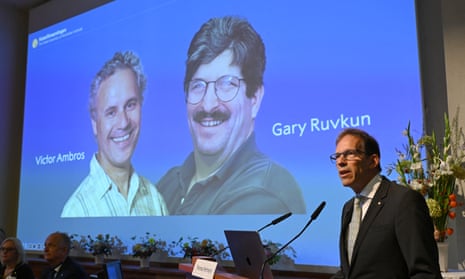
**Stockholm, Sweden** – Victor Ambros of the University of Massachusetts Medical School and Gary Ruvkun of Harvard Medical School and Massachusetts General Hospital have been jointly awarded the 2024 Nobel Prize in Physiology or Medicine for their groundbreaking discovery of microRNA and its crucial role in post-transcriptional gene regulation.
The prestigious award, announced by the Nobel Assembly at Karolinska Institutet, recognizes Ambros and Ruvkun’s pioneering work in the early 1990s, which revealed the existence of tiny RNA molecules called microRNAs. These molecules, acting as gene regulators, directly bind to messenger RNA (mRNA), effectively controlling which proteins are produced in cells.
This discovery has revolutionized our understanding of how cells, despite possessing the same DNA, can exhibit vastly different characteristics and functions. “The seminal discovery of microRNA has introduced a new and unexpected mechanism of gene regulation,” said Olle Kämpe, vice-chair of the Nobel committee for physiology or medicine.
Their work has broad implications for our understanding of embryonic development, normal cell physiology, and the development of diseases such as cancer.
While previous research focused on proteins called transcription factors as the primary regulators of gene expression, Ambros and Ruvkun’s research using the tiny roundworm C. elegans revealed a complex and sophisticated system where microRNAs play a critical role in regulating gene expression.
The discovery of microRNAs has opened a new field of research, leading to the identification of thousands of microRNAs in humans. Further research has revealed that these molecules not only prevent protein production by blocking mRNA but can also trigger its breakdown.
Professor Venki Ramakrishnan, a 2009 Nobel Prize laureate in Chemistry, hailed the award as “long awaited,” acknowledging the significance of microRNA’s role in regulating gene expression. He also expressed disappointment that David Baulcombe, whose lab discovered a similar phenomenon in plants, was not included in the prize.
Ambros and Ruvkun, who were both postdoctoral researchers in the same laboratory, will share equally a prize of 11 million Swedish kronor (approximately £810,000). The 2024 Nobel Prize in Physics will be announced on Tuesday, followed by the Chemistry prize on Wednesday.
 First Piper