
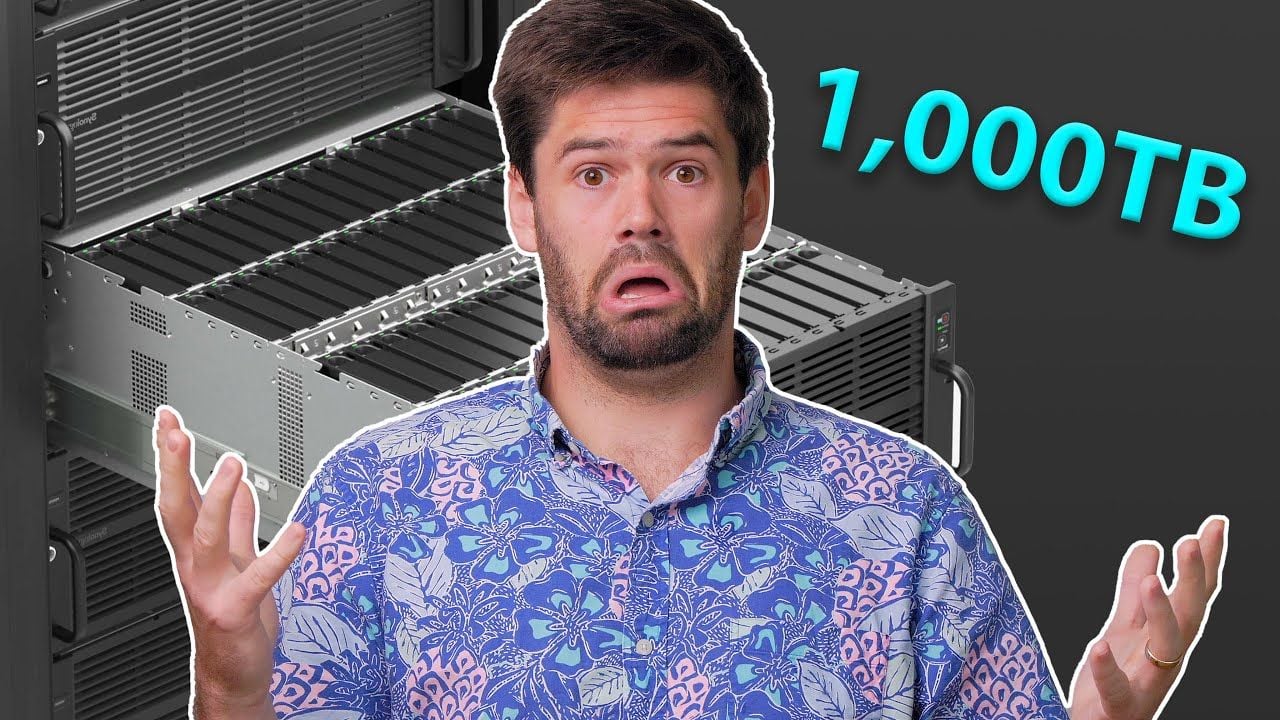
Thu Sep 19 08:16:42 UTC 2024: ## Building a Petabyte-Scale NAS System: A Guide to Massive Data Storage
**September 19, 2024**
For those with massive data storage needs, building a petabyte-scale Network Attached Storage (NAS) system may seem daunting. But with careful planning and the right approach, it’s entirely achievable. This guide provides a comprehensive roadmap to building a reliable and efficient NAS system capable of handling even the most demanding storage requirements.
**Hardware is Key:**
The heart of a petabyte NAS lies in its hardware components. High-capacity drives, typically ranging from 10TB to 20TB, are essential to achieve the desired storage capacity. Opting for enterprise-grade drives designed for NAS environments ensures enhanced reliability and performance over consumer-grade options.
Equally important are high-performance RAID controllers that efficiently manage data flow between the drives and the network. Look for controllers with advanced caching, error correction, and support for high-speed interfaces.
Finally, a robust and scalable chassis is required to house the components. Consider factors like cooling, power management, and physical security when selecting a chassis.
**Software and Configuration:**
The brain of your NAS system is the software. Choose NAS software that supports your hardware configuration and offers essential features like RAID management, data deduplication, and snapshot capabilities. Popular options include FreeNAS, OpenMediaVault, and Synology DSM.
Once you’ve selected your software, take the time to configure settings like network protocols, storage pools, and access controls. Implementing best practices for data organization, such as logical folder structures and metadata tagging, enhances data management efficiency.
**Performance Optimization:**
Optimizing performance is crucial for a smooth operation. Utilize high-speed network connections like gigabit or 10-gigabit Ethernet. Optimize network settings to minimize latency and maximize throughput.
Another performance enhancer is SSD caching. Incorporating solid-state drives as a caching layer significantly improves read and write speeds, especially for frequently accessed data.
**Reliability and Data Integrity:**
Data integrity and system reliability are paramount in a petabyte NAS. Implement RAID configurations like RAID 6 or RAID 10 for redundancy and protection against drive failures. These RAID levels distribute data across multiple drives, ensuring continued operation even if one or more drives fail.
Regular backups are essential for added data protection. Implement automated backup routines to external storage devices or cloud services for a safety net in case of catastrophic failures or disasters.
**Scalability and Future-Proofing:**
Plan for future expansion by choosing a modular chassis design that allows for easy addition of storage drives. Select RAID controllers that support expansion and can handle increased data throughput.
Consider future technology trends and ensure your NAS can adapt to new advancements without major overhauls. This includes support for newer drive technologies, faster network interfaces, or emerging storage protocols.
**Cost Considerations:**
Building a petabyte NAS involves significant financial investment. Carefully analyze costs and find a balance between budget and performance. Consider initial costs of hardware, software licenses, and necessary network upgrades. Don’t forget ongoing costs such as power consumption, cooling requirements, and maintenance.
Look for cost-saving opportunities without compromising on quality or reliability. This might include selecting cost-effective but reliable storage drives, opting for open-source NAS software, or implementing energy-efficient components.
**Security Measures:**
With a petabyte of data, security is paramount. Implement strong access controls and user authentication mechanisms to prevent unauthorized access. Use multi-factor authentication wherever possible.
Encrypt your data both at rest and in transit using robust encryption standards. Regularly update your NAS software to patch any known vulnerabilities and conduct security audits to identify and address potential weaknesses.
**Building a petabyte NAS requires dedication and attention to detail. By following this guide and adapting it to your specific needs, you can create a robust and efficient storage solution that meets your data needs now and for the future.**
 First Piper