
Wed Sep 18 00:59:26 UTC 2024: ## Kashmiri Separatists Shift to Mainstream Politics Amidst First Election Since Autonomy Revocation
**Srinagar, Kashmir -** A significant shift is underway in Kashmir’s political landscape as former separatist figures, including prominent clerics and members of banned organizations, join mainstream Indian politics. This move comes ahead of the first legislative assembly election in the region since 2019, when India revoked Jammu and Kashmir’s special status.
Among those making the transition is Sarjan Ahmad Wagay, a cleric known for his anti-India anthems. Wagay, currently imprisoned, is running for office in two central Kashmir constituencies, inspired by the success of Sheikh Abdul Rashid who won a parliamentary seat from prison earlier this year.
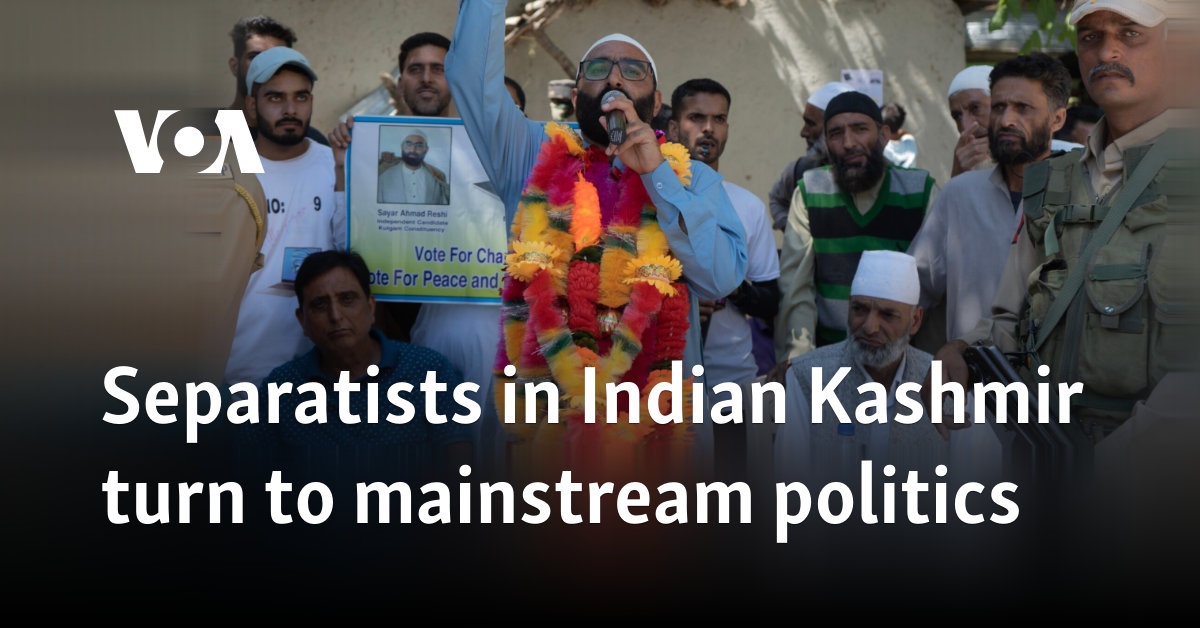
Sayar Ahmad Reshi, a member of the banned Jamaat-e-Islami, is also campaigning, despite the organization’s historical boycott of elections. Reshi, along with other Jamaat-e-Islami members, are running as independent candidates, advocating for social reform and justice.
This shift towards mainstream politics has been attributed to the revocation of Jammu and Kashmir’s autonomy in 2019, leading many to reconsider their stance. Political analyst Muzamil Maqbool suggests that the public is now exercising their democratic rights through voting.
The move has caused concern for traditional regional parties like the National Conference and the Peoples Democratic Party, who fear the Bharatiya Janata Party is attempting to divide the vote and weaken their influence.
The BJP, however, welcomes the participation of these former separatists, emphasizing the democratic right to contest elections while condemning secessionist activities.
The upcoming election is expected to be highly contested, with the inclusion of these former separatist figures adding another layer of complexity to the already volatile political landscape in Kashmir. The outcome of the election will reveal the extent to which this shift towards mainstream politics will reshape the region’s future.
 First Piper