
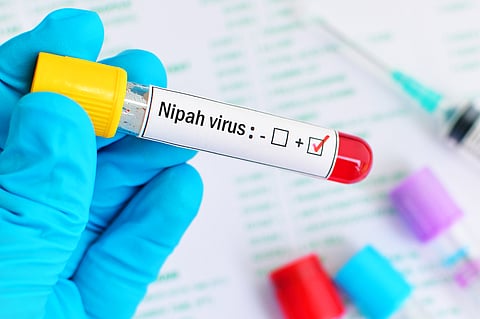
Tue Sep 17 14:02:24 UTC 2024: ## Nipah Virus Resurfaces in Kerala, Triggering Containment Measures
**Malappuram, Kerala:** The state of Kerala is once again on high alert after a 24-year-old man died from Nipah virus infection in Malappuram district. The National Virology Institute in Pune confirmed the infection, marking the resurgence of the deadly zoonotic disease in the state.
Authorities have swiftly implemented containment measures, designating five wards as containment zones and making face masks mandatory. Educational institutions and cinema theatres are closed, while shops are allowed to operate from 10 am to 7 pm. Residents have been advised to avoid social gatherings.
The victim, an MSc psychology student, had returned from Bengaluru on August 23 and experienced difficulty walking before developing fever on September 5. He was admitted to a private hospital in Perinthalmanna, where he passed away on September 9.
Health officials have initiated contact tracing and testing of 175 individuals who were in contact with the deceased. The victim’s travel history has been released to identify potential sources of transmission.
While the consumption of contaminated Averrhoa bilimbi fruit is suspected, experts remain cautious about attributing the outbreak solely to bats. Although bat colonies are being destroyed, a definitive link between bats and the Nipah virus in Kerala remains unconfirmed.
The absence of advanced virology testing facilities in Kerala continues to be a challenge, with the state relying on Pune’s National Institute of Virology for final confirmation of viral diseases. However, a Bio Safety Level-3 (BSL-3) laboratory under construction in Kozhikode is expected to be completed by the end of this year.
Experts highlight environmental factors, including dense forest cover, climate change, and increased human-animal interaction, as contributing to the recurrence of zoonotic diseases in Kerala. They also note that all Nipah victims in Kerala have been young males between 12 and 25 years of age.
Health professionals emphasize the need for improved public health infrastructure, greater awareness of zoonotic diseases, and better planning and preparedness, especially in high-risk regions. They also express concerns that environmental degradation may be exacerbating the problem, potentially extending the risk of Nipah outbreaks beyond current hotspots.
 First Piper