
Sun Sep 15 12:37:09 UTC 2024: ## Castaway’s Clever Solution: Measuring Length with a Rope
A seasoned sea explorer, stranded on a remote island with only a 10-meter rope, faced a daunting task: building a ship to escape. He needed a reliable measurement system, but had no tools other than his wits.
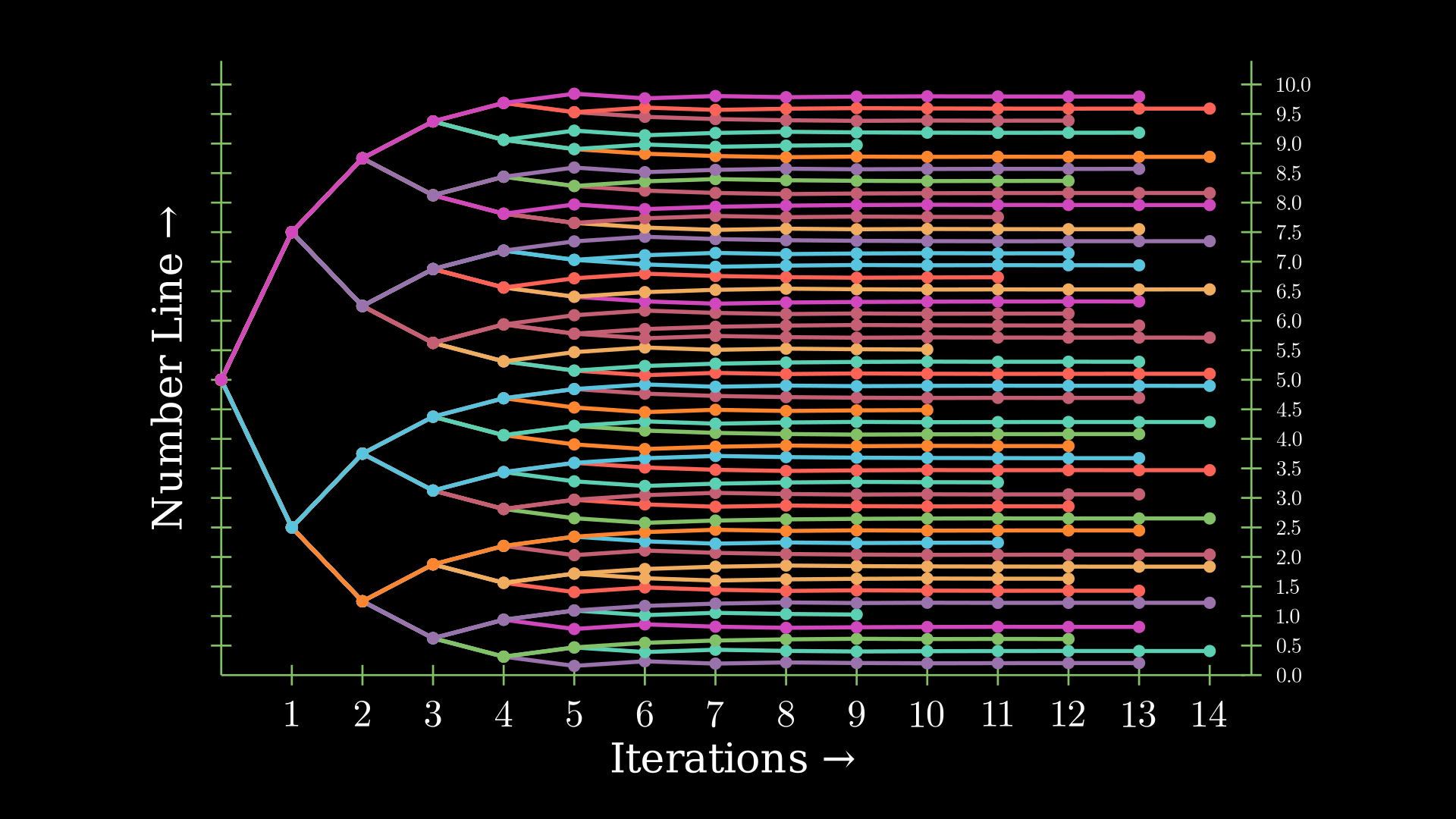
This is where the power of mathematics and a simple rope came into play. The explorer, using a clever technique inspired by binary search, devised a method to measure distances with increasing accuracy.
**The Method:**
1. **Full Rope Length:** The explorer could immediately measure 10 meters, and multiples of it (20m, 30m, etc.)
2. **Halving the Rope:** To measure distances like 25 meters, the rope was folded in half, creating a 5-meter measure.
3. **Iterative Approximation:** By repeatedly halving the rope, the explorer could measure increasingly smaller units (2.5m, 1.25m, and so on). This allowed him to approximate any remaining distance.
4. **Precision:** The method resembled a binary search, where the measurement space was halved with each step, achieving higher precision with each iteration.
**Mathematical Explanation:**
The mathematical formula for this approximation process involves:
* **n:** The number of full rope lengths used.
* **L:** The initial length of the rope (10 meters).
* **D:** The total distance to be measured.
* **r:** The remaining distance after using full rope lengths.
* **l_i:** The smaller divisions of the rope (L/2, L/4, L/8, etc.).
The explorer could estimate the remaining distance (r) using combinations of these smaller divisions (l_i), effectively narrowing down the measurement with each halving of the rope.
**Benefits and Limitations:**
This method offers a simple and efficient way to measure distances with reasonable accuracy. However, it has its limitations, particularly when measuring very small distances:
* **Visual Acuity:** The human eye’s visual resolution limits the accuracy of the method, especially when the rope length is significantly reduced.
* **Rope Flexibility:** The rope’s flexibility can introduce errors in measurement.
* **Cumulative Errors:** Small errors accumulate over multiple iterations, affecting the overall accuracy.
**Beyond the Rope:**
While the explorer’s situation highlights the practical applications of mathematical concepts, the iterative approximation method itself has wider applications, particularly in computer science and engineering. For example:
* **Binary Search:** This method is at the heart of binary search, a highly efficient algorithm used to find a specific element in a sorted array.
* **Optimization Algorithms:** Iterative approximations are commonly used in optimization algorithms, where the solution space is repeatedly narrowed down to find the optimal solution.
**The Takeaway:**
This story demonstrates the power of human ingenuity and the fundamental role of mathematics in solving real-world problems. Even with limited resources, simple principles can be used to develop effective solutions, highlighting the importance of problem-solving skills and creative thinking.
 First Piper