
Sun Sep 15 10:30:00 UTC 2024: ## Richmond’s Trolley Strike of 1903: A City Brought to Its Knees
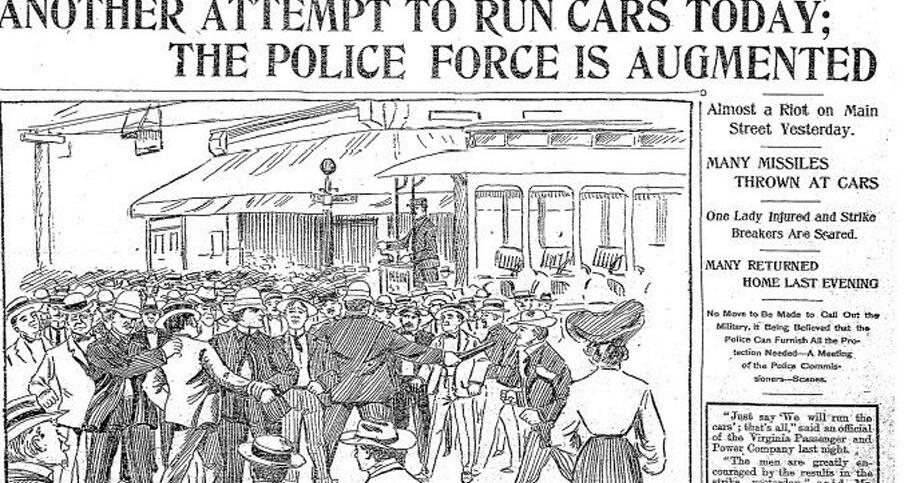
**Richmond, VA** – In the summer of 1903, Richmond, Virginia, faced a crisis unlike any other. A strike by employees of the Richmond Union Passenger Railway, the city’s first public electric streetcar line, escalated into a week-long riot that saw soldiers firing on civilians, leaving 12 injured.
The strike, sparked by the company’s refusal to grant wage increases to its workers, brought the city to a standstill. As the company attempted to resume service with strikebreakers, tensions escalated, with crowds pelting streetcars with mud and eggs. On June 22, a riot erupted at the corner of 18th and Broad, prompting Governor Andrew Jackson Montague to call in military reinforcements.
The presence of soldiers only inflamed the situation, leading to further violence and a city under de facto martial law. On June 24, a riot broke out at 29th and P streets, culminating in soldiers firing on a crowd at the Robinson & Cary Street Barn, injuring 12. The event became a symbol of the city’s struggle with labor unrest in the early 20th century.
Despite the company’s declaration that the strike was broken, the workers held firm, and the strike ultimately ended on August 24, with the workers forced to accept their initial wages. While the violence of the strike faded, its impact on the city and its relationship with organized labor remained a powerful reminder of the complexities of industrialization and the human cost of progress.
 First Piper