
Thu Sep 12 01:44:22 UTC 2024: ## Electricity Turns Sand into Rock, Offering Hope Against Coastal Erosion
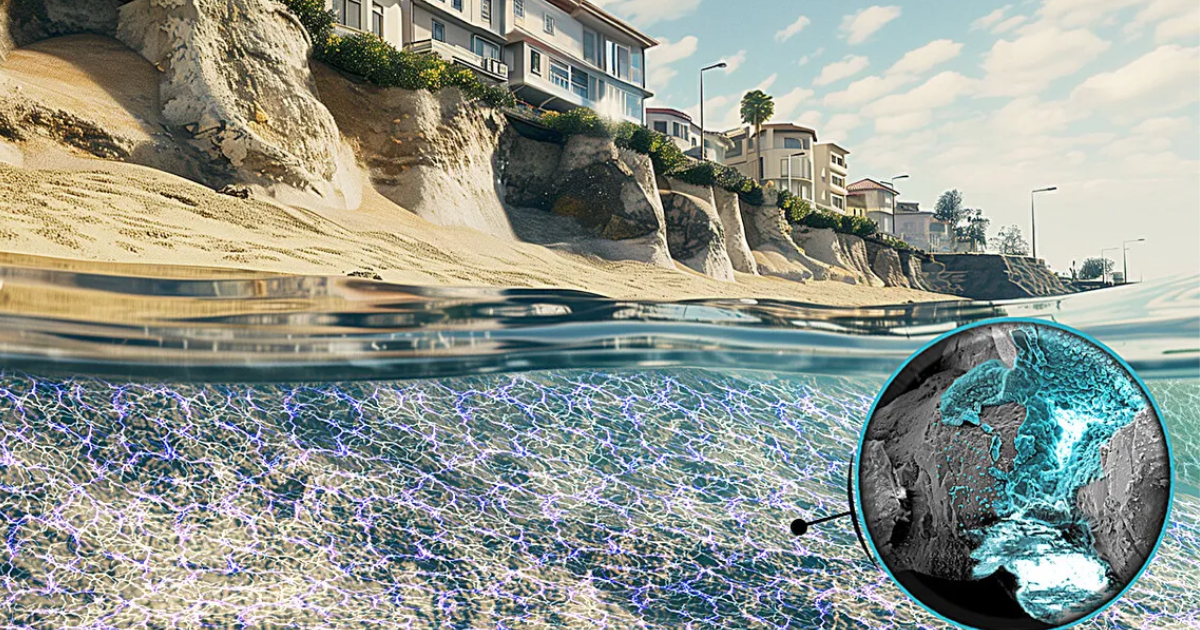
A new study published in Communications Earth & Environment offers a potential solution to the growing problem of coastal erosion caused by rising sea levels and increasingly severe storms. Dr. Alessandro Rotta Loria of Northwestern University has discovered that a small electrical current can transform wet sand into a solid, rock-like material, providing a cost-effective and environmentally friendly way to protect coastal communities.
The research found that applying just 2-3 volts of electricity to wet sand triggers a chemical reaction that creates calcium carbonate, the mineral found in corals, seashells, and limestone. This process hardens the sand, making it as strong and solid as a seawall. By increasing the electrical current, an even harder material can be produced using a mineral found in stalactites and stalagmites.
This new approach offers several advantages over traditional methods of coastal protection. Seawalls built from concrete, steel, and other materials are costly, disruptive to the marine environment, and generate significant greenhouse gas emissions. Dr. Rotta Loria’s technique is far less expensive, environmentally friendly, and reversible if climate change is reversed. Additionally, this method can be used to strengthen existing seawalls and extend their lifespan.
The study highlights the potential of this innovation for protecting coastal communities, which are home to over 40% of the world’s population. As sea levels rise and erosion intensifies, Dr. Rotta Loria’s discovery presents a promising avenue for mitigating the effects of climate change and safeguarding vulnerable coastal regions.
 First Piper