
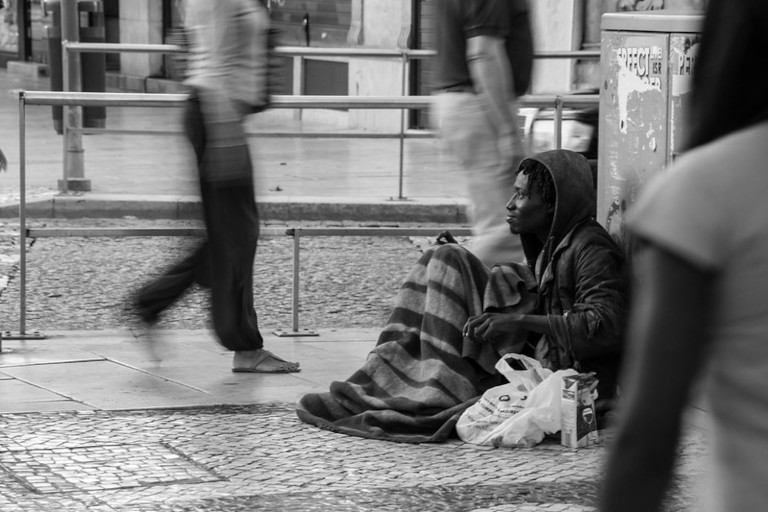
Mon Sep 09 14:32:14 UTC 2024: ## Supreme Court Ruling Fuels Homelessness Crisis: Cities Crack Down on Encampments Amidst Growing Inequality
The Supreme Court’s recent decision in Grants Pass v. Johnson, which overturned a previous ruling protecting the rights of homeless individuals, has fueled a wave of evictions and crackdowns on homeless encampments across the country. The ruling, which found that punishing homeless people with fines and jail time is not considered “cruel and unusual punishment,” has emboldened cities to aggressively clear out encampments, citing public safety concerns.
While many cities argue that they lack resources to address the homelessness crisis, critics point out that the decision only serves to displace those without homes, exacerbating the problem rather than providing solutions. The authors, Cedar Monroe and Liz Theoharis, argue that the Supreme Court’s decision echoes the historical precedent of “enclosure” in England, where peasants were forcibly removed from their land, leading to widespread homelessness and the creation of workhouses.
The authors, connected to the Kairos Center for Religions, Rights & Social Justice, emphasize the moral and social implications of the ruling, arguing that it ignores the profound inequality in land ownership that fuels the homelessness crisis. They point to the example of Brazil, where constitutional changes have empowered landless peasants to reclaim unused land and secure legal tenure, suggesting a potential model for addressing homelessness in the United States.
The authors warn that the current trend of displacement will only intensify the problem, potentially leading to an estimated 8 to 11 million people experiencing homelessness in the United States. They call for a shift in perspective, urging a focus on providing affordable housing for all, recognizing the power of the unhoused individuals who are beginning to organize for their future.
The article concludes with a call to action, urging readers to consider the systemic inequalities that contribute to homelessness and to advocate for policy changes that address the root causes of the crisis.
 First Piper