
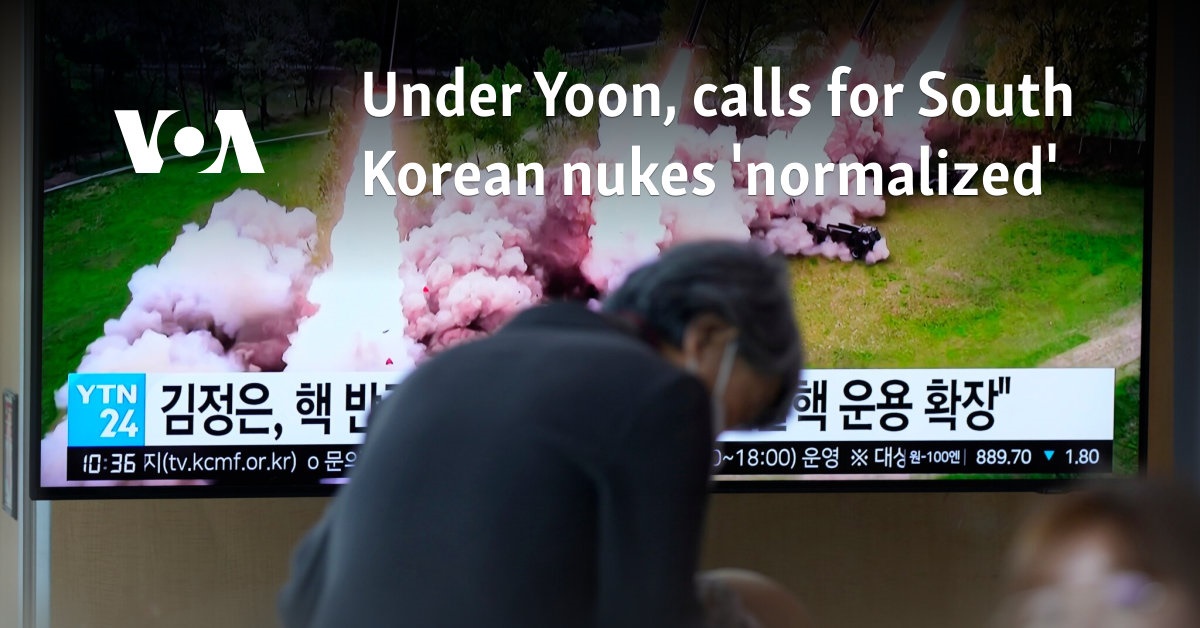
Mon Sep 09 15:14:25 UTC 2024: ## South Korea’s Nuclear Debate Heats Up, Defense Minister Entertains Possibility
**Seoul, South Korea** – A mere two years after President Yoon Suk Yeol pledged South Korea would not pursue nuclear weapons, his newly appointed defense minister, Kim Yong-hyun, has sparked controversy by openly discussing scenarios where the country might reconsider that stance.
Kim, who took office last week, has long argued that South Korea might need nuclear weapons to counter North Korea’s rapidly expanding nuclear arsenal and growing concerns about the long-term reliability of U.S. protection. He has even stated that South Korea has “no survival or future” without such a deterrent.
While a South Korean defense ministry spokesperson insists there has been “no change in the principle or position” regarding reliance on U.S. extended deterrence, the spokesperson also acknowledged that “all means and methods are open” if the security of the state cannot be guaranteed.
This public discourse marks a significant shift from the previous defense minister, who adamantly rejected the possibility of nuclear armament under any circumstances. The debate has become so mainstream that even state-backed research institutions are exploring potential nuclear armament options, including the redeployment of U.S. tactical nuclear weapons and developing South Korea’s own arsenal.
Despite concerns about the economic and security risks associated with nuclear proliferation, some analysts argue that the growing influence of pro-nuclear voices, fueled by concerns about U.S. commitment and the potential for a Trump presidency, could make the idea of South Korean nuclear weapons more palatable, if not inevitable.
The White House has emphasized South Korea’s commitments under the nuclear non-proliferation treaty and reiterated its commitment to strengthening the U.S.-South Korea alliance to deter nuclear threats. However, the ongoing debate raises serious questions about the future of the alliance and the potential for regional instability.
While the likelihood of South Korea pursuing nuclear weapons in the immediate future remains low, the normalization of this conversation, combined with the growing acceptance of the idea among policymakers, could ultimately lead to a more nuclearized Asia.
 First Piper