
Mon Sep 09 14:59:50 UTC 2024: ## Fossil Discovery Reveals Three New Prehistoric Ancestors of the Tasmanian Tiger
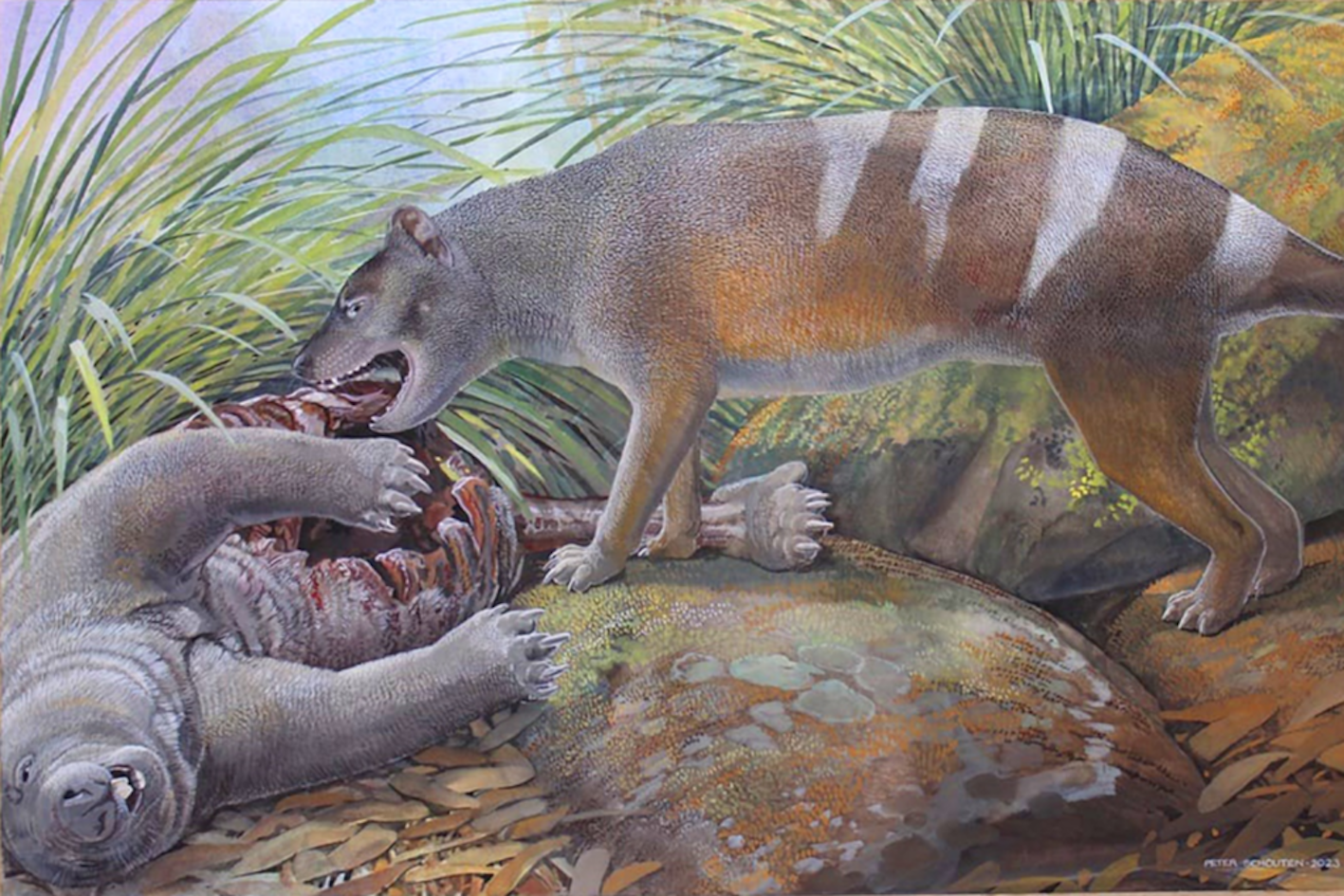
**Riversleigh, Australia** – Scientists have unearthed the remains of three previously unknown species that are the oldest known ancestors of the Tasmanian tiger, a now-extinct marsupial. These newly discovered species, named *Badjcinus timfaulkneri*, *Nimbacinus peterbridgei*, and *Ngamalacinus nigelmarveni*, roamed Australia during the Oligocene epoch, approximately 25 to 23 million years ago.
The discovery, detailed in the *Journal of Vertebrate Paleontology*, sheds new light on the evolution of the thylacinid family, which includes the Tasmanian tiger. The fossils, found at the Riversleigh World Heritage Area in Queensland, Australia, suggest a far greater diversity of marsupial carnivores than previously thought.
The largest of the newly described species, *Badjcinus timfaulkneri*, weighed around 15 to 24 pounds and possessed a robust jawbone, indicating a diet that included bones as well as flesh. *Nimbacinus peterbridgei*, weighing around 8 pounds, was smaller and likely preyed on smaller mammals. Notably, this species appears to be the earliest known direct ancestor of the Tasmanian tiger. The third species, *Ngamalacinus nigelmarveni*, weighed approximately 11 pounds and possessed specialized teeth for cutting through meat, suggesting a highly carnivorous diet.
These discoveries challenge the long-held notion that Australia’s ancient ecosystem was dominated by reptilian carnivores during the Oligocene. They demonstrate that marsupial carnivores played a significant role in shaping the ancient Australian landscape.
“The presence of three distinct lineages of specialized thylacinids during the late Oligocene highlights how quickly they diversified after first appearing in the fossil record,” explained study co-author Michael Archer. “These thylacinids exhibit very different dental adaptations, suggesting there were several unique carnivorous niches available during this period.”
The study’s lead author, Timothy Churchill, emphasized the importance of these findings, stating that “the diversity of mammalian carnivores at Riversleigh during this period rivals that seen in any other ecosystem.”
The discovery of these three new thylacinid species offers a valuable glimpse into the ancient world of Australia and provides crucial insights into the evolution of the Tasmanian tiger, an iconic species that continues to capture the imagination of scientists and the public alike.
 First Piper