
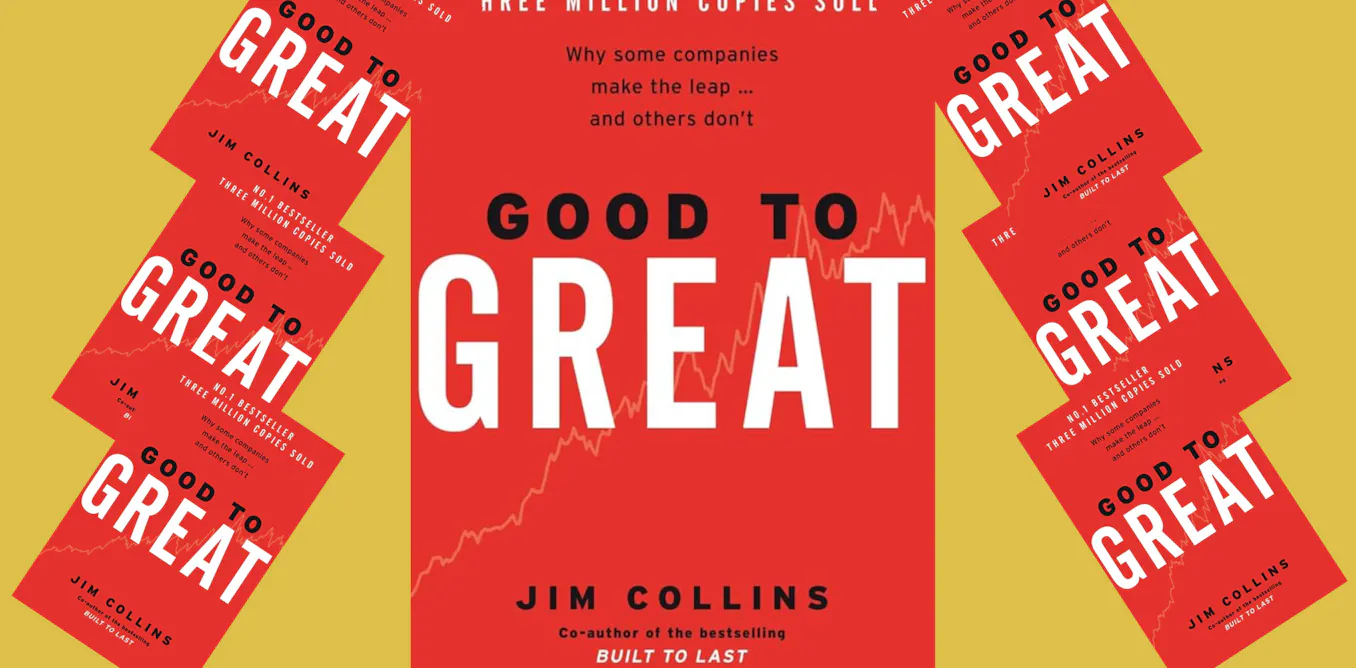
Mon Sep 09 16:13:09 UTC 2024: ## “Good to Great” Gets a Failing Grade: Management Guru Margaret Heffernan Slams Business Classic
**Bath, UK** – A leading management professor is calling for a boycott of the business best-seller “Good to Great” by Jim Collins, arguing that the book’s “pseudo-scientific” approach to management does more harm than good.
Professor Margaret Heffernan, from the University of Bath, argues that the book, which has been a consistent bestseller since its 2001 publication, makes several key errors in its analysis of successful companies.
“Collins treats management as a science, which is absurd,” states Heffernan. “Businesses are dynamic, constantly changing, and no two companies are alike. The success of one company doesn’t guarantee success for another.”
Heffernan also criticizes the book’s flawed research methods, noting that Collins’ team didn’t conduct firsthand interviews or visits to the companies they studied. Their analysis relied solely on published data and a narrow definition of “greatness” that focused solely on Fortune 500 companies in the US.
Heffernan further points out the book’s simplistic approach to leadership, which often reduces complex situations to “timeless universal answers” like hiring the right people and setting “big hairy audacious goals.”
“These concepts sound good, but they are incredibly difficult to implement in reality,” she argues. “Great people in one company can be disastrous in another, and success often depends on factors beyond the control of any CEO.”
Heffernan concludes that “Good to Great” exemplifies the “airport business book” genre: flattering to its readers while offering simplistic solutions that ultimately mislead CEOs into believing they can engineer success.
“The book’s flawed approach fosters a culture of unnecessary rules, targets, and bureaucracy, leading to disengaged employees and ultimately, a stifling of creativity and innovation,” she states.
Heffernan urges readers to instead embrace the inherent uncertainty and complexity of managing people and businesses, recognizing that “it is alive, creative, frequently unpredictable and different from one day to the next.”
 First Piper