
Mon Sep 09 14:58:19 UTC 2024: ## Dustoff: The Legacy of Major Kelly and the Evolution of Medical Evacuation Helicopters
The Vietnam War, often dubbed the “Helicopter War,” saw the critical role of medical evacuation (MEDEVAC) helicopters in saving countless lives. One such hero, Major Charles Kelly, became synonymous with the MEDEVAC operation, earning the call sign “Dustoff.” Sadly, Major Kelly met his end during a mission, succumbing to enemy fire while bravely attempting to rescue a wounded soldier. In honor of his sacrifice, “Dustoff” remains the official call sign for US Army MEDEVAC operations.
The iconic UH-1 Huey, known as the “Huey,” played a central role in the Vietnam War. Its versatility and ability to transport wounded soldiers quickly and efficiently made it a vital asset. The Huey, capable of carrying up to three patients on stretchers, a medic, and medical supplies, significantly improved survival rates for wounded troops.
Beyond the Huey, other notable helicopters utilized for MEDEVAC operations in Vietnam and beyond include the Sikorsky CH-54 Skycrane, the CH-53 “Jolly Green Giant,” and the Boeing CH-47 Chinook. The Skycrane, a heavy-lift helicopter, could transport casualties in a dedicated medical pod, while the Jolly Green Giant, famed for its in-flight refueling capabilities, could carry a large number of stretchers and medical personnel. The Chinook, also a heavy-lift helicopter, was adapted to transport casualties, medical equipment, and personnel.
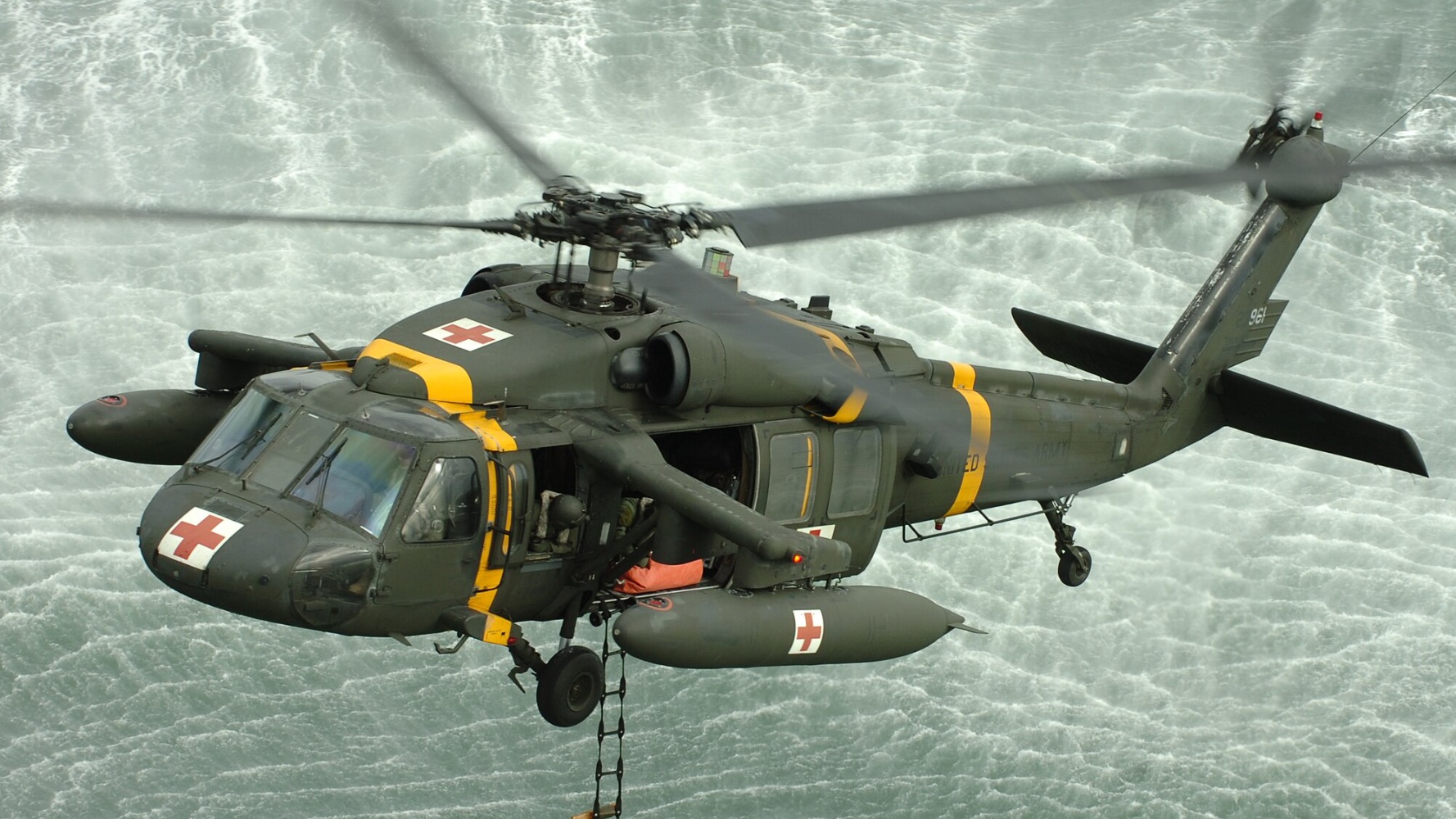
Today, the US military continues to refine its MEDEVAC capabilities with modern aircraft like the Sikorsky UH-60 Black Hawk, specifically designed for medical evacuation. The HH-60M, the latest dedicated MEDEVAC version, features advanced medical equipment, oxygen generation, and a digitized cockpit. The UH-72 Lakota, a newer light utility helicopter, serves as a less expensive alternative, freeing up Black Hawks for frontline duty.
The Bell-Boeing V-22 Osprey, a tiltrotor aircraft, offers unique capabilities for MEDEVAC. Combining the vertical takeoff and landing of a helicopter with the speed and range of a conventional aircraft, the Osprey greatly improves the chances of survival for wounded soldiers.
Technological advancements and improved training have significantly boosted the survival rates for MEDEVAC casualties. While World War II saw an 80.9% survival rate for evacuated patients, in Iraq and Afghanistan, the rate climbed to over 90%.
This article highlights the evolution of MEDEVAC helicopters, showcasing the dedication and innovation that continues to save lives on the battlefield. The legacy of heroes like Major Kelly and the enduring spirit of “Dustoff” inspire ongoing efforts to improve medical evacuation capabilities and ensure that no soldier is left behind.
 First Piper